← Back to Wood-Burning Stoves & Fireplaces
A Creative FireSpace™ · 10 September 2026
Morsø Wood Stoves — Danish Cast Iron, Model by Model
Nine cast-iron stoves, poured in Nykøbing Mors, Denmark, every one certified for a wood fire here — from the squirrel-sided 1410 to the contemporary 7110.
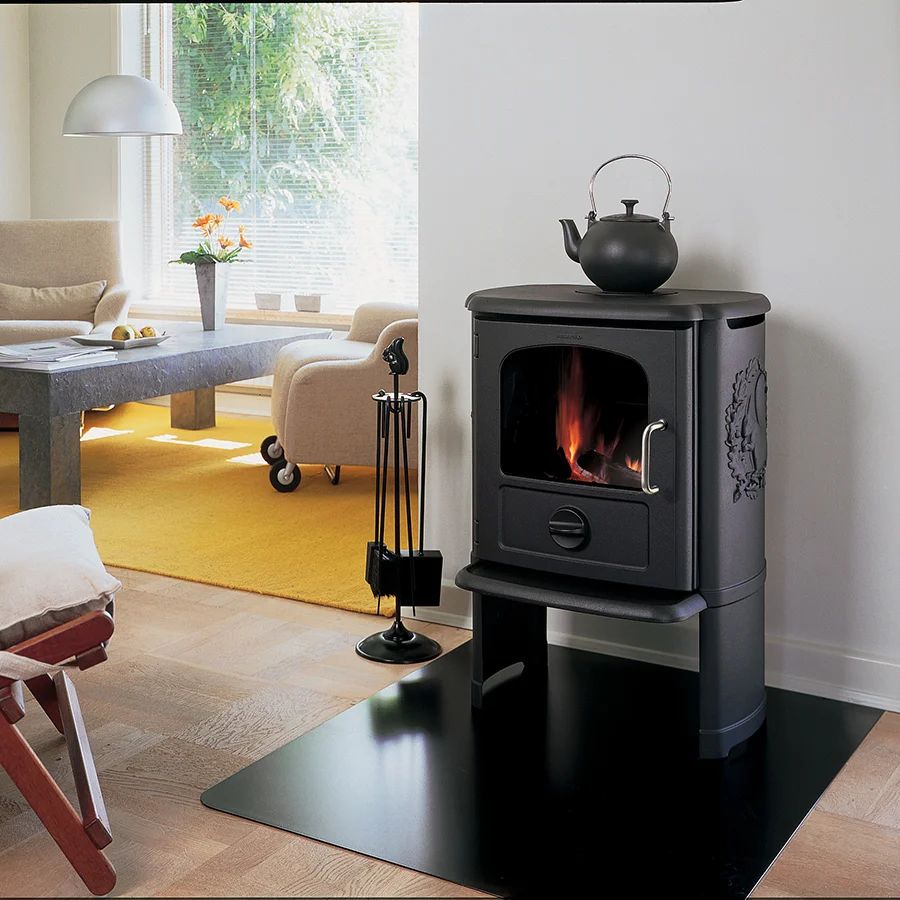
The Morsø is the stove people draw when they draw a stove: a black cast-iron box on four legs, a glass door, a squirrel on the side gathering for winter. It is poured in Nykøbing Mors, on a small island in the north of Denmark, and everything Morsø makes begins the same way, as molten iron in a mould. Cast iron is the point. It holds heat the way stone holds sunlight — warming slowly, then radiating for hours after the last flame has gone — so a Morsø does not only heat the room while it burns; it keeps the room warm while it rests. And it is drawn with the restraint of the best Scandinavian design: clean lines, honest proportion, nothing decorative that is not also useful.
We wrote about Morsø in general terms once before. This is the page for the particular: the nine stoves we can actually order, each with its own numbers, because with a wood stove the numbers are the difference between the one you want and the one your room can hold.
Start with the question that stops most wood-stove projects before they begin. Every Morsø on this page is EPA 2020 certified, which is the standard Metro Vancouver’s Bylaw 1303 asks for alongside CSA B415.1, and every one is therefore eligible to be registered and installed in the homes we work in. Morsø publishes the particulate figure for each model, and they are low: half a gram an hour for the two 2Bs, two-thirds of a gram for the 6143 and 6148, and under two grams for the classic squirrel stoves. The registration and the best-burning-practices declaration are the homeowner’s to hold, and we prepare them with the permit.
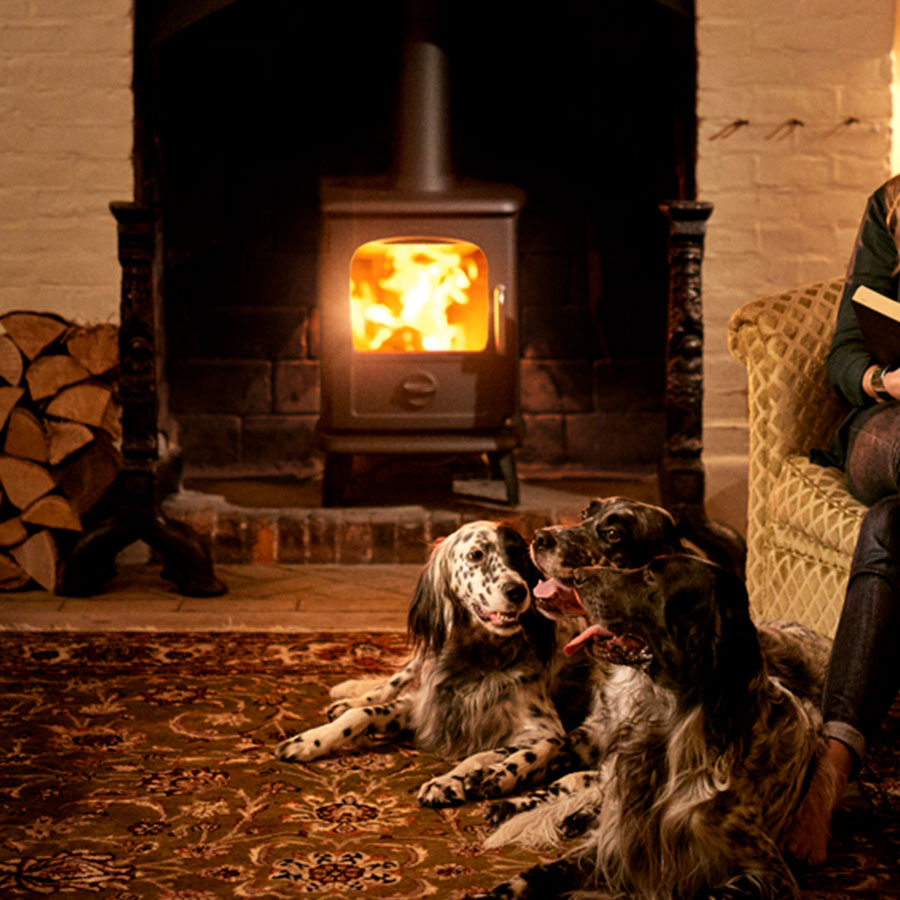
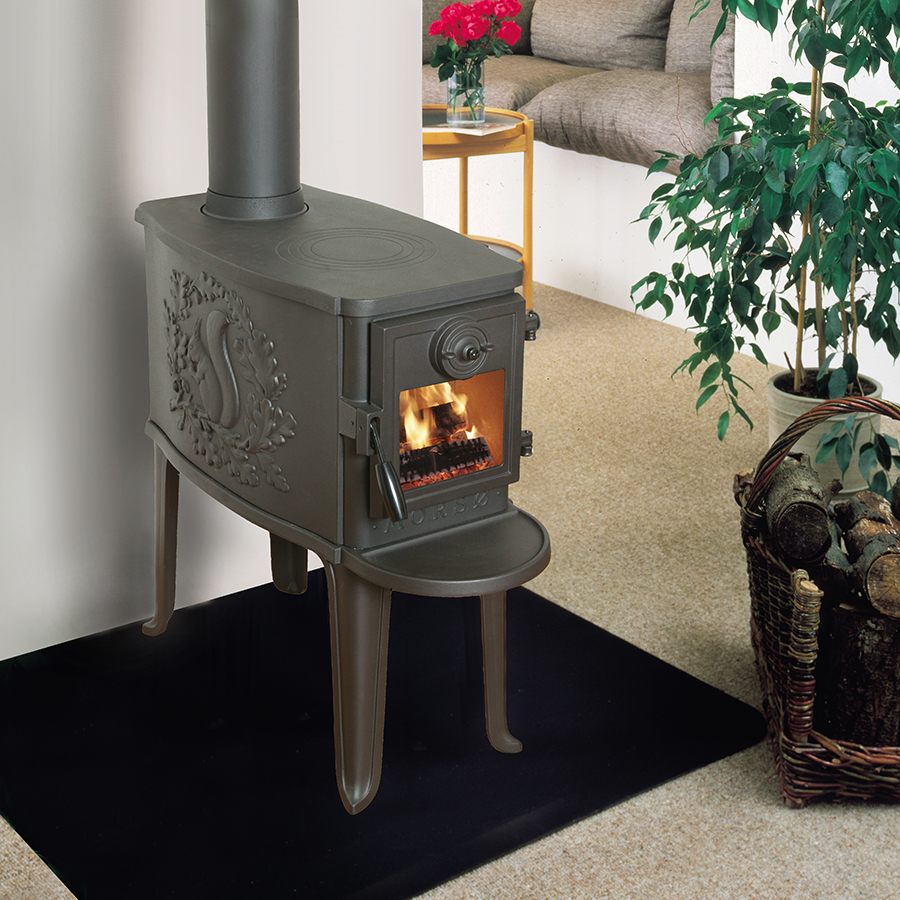
The classic squirrel stoves are four. The 1410 B is the one most people picture: a small radiant stove, 25,000 BTU for about 1,000 square feet on a 12-inch log, 215 pounds of iron with, as Morsø says, an exceptional window for a stove its size. The 1440 B is its close relative, a shade wider, in a convection form that lets it stand eight inches from a side wall — the stove for the cottage, the cabin and the small room where every inch of floor counts. The 3112 B, above, and the 3142 B below are the next size up: the same 28,000 BTU firebox on a 12-inch log, the 3112 plain-sided and rated for 1,000 square feet, the 3142 with the squirrel and rated for 1,200, both with a riddling grate and an ash pan for easy cleaning, and both able to take an outside-air supply for a tightly built house. Morsø describes them as the best of the classic design with the latest combustion principles inside, and that is a fair account.
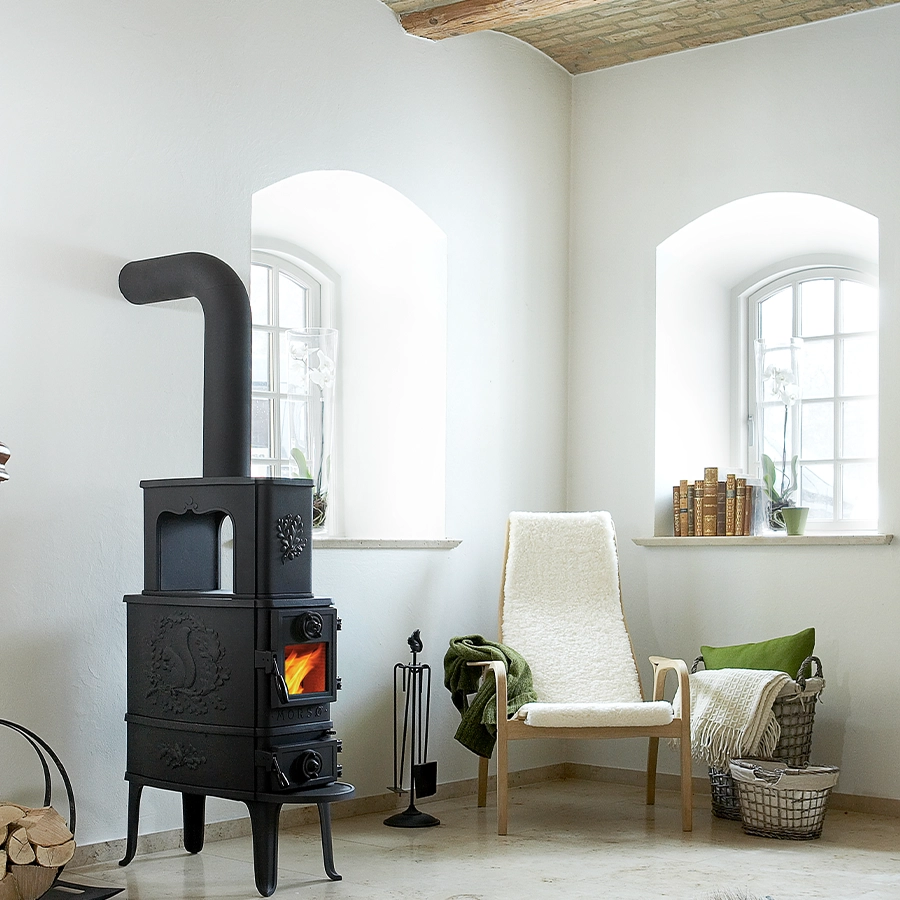
Then the 2B, which is the original article. The 2B Standard is Morsø’s own 1930s forest stove, near enough unchanged in its shape, with a glass door and modern combustion inside: 20,000 BTU for up to 1,200 square feet, a long firebox that takes an 18-inch log, and only 156 pounds, at 0.55 grams an hour. The 2B Classic, in the whitewashed room above, is the taller, more powerful version of the same idea — 32,000 BTU from the same 18-inch firebox, 253 pounds, and the cleanest figure on the page at half a gram an hour. If you want the stove that looks like a stove has always looked, this is the one, and it is not a reproduction.
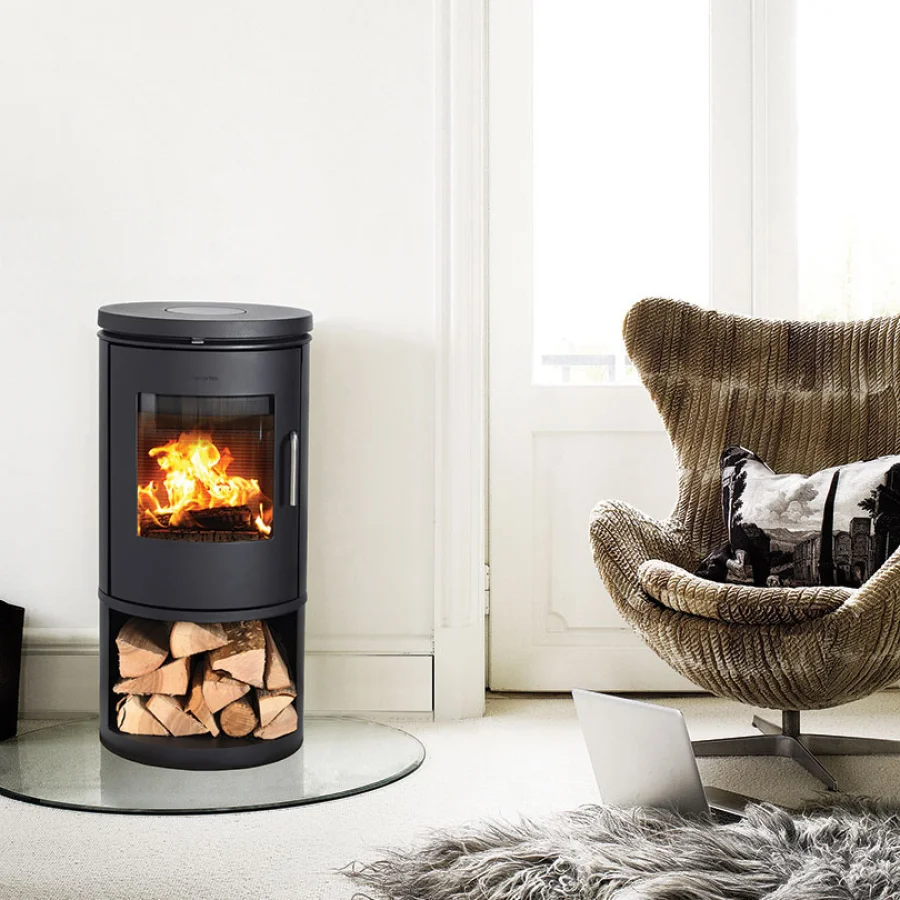
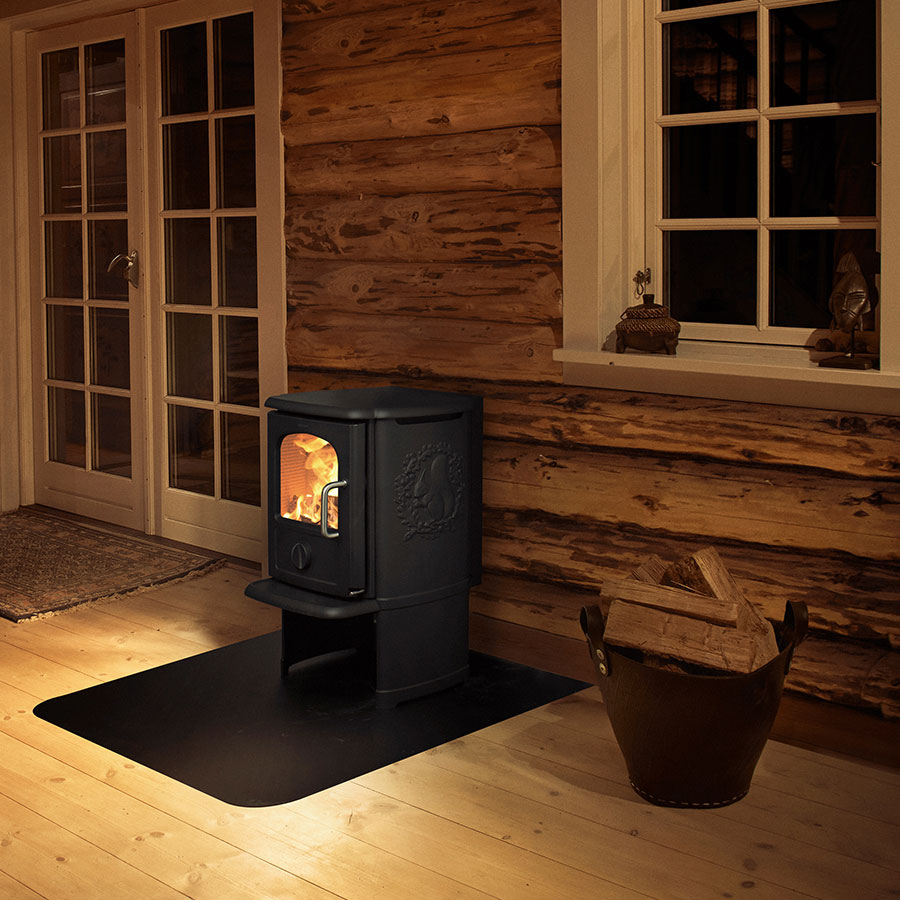
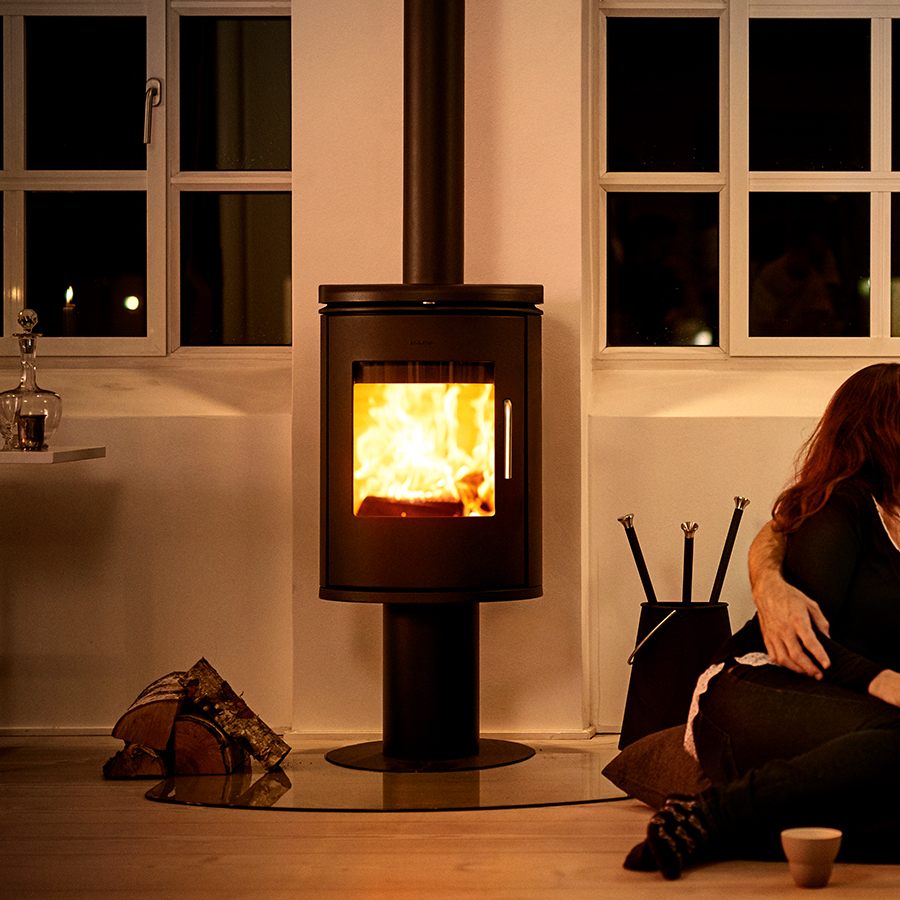
The 6100 series is the sculptural one — a rounded firebox with a large glass door, concealed hinges and, in Morsø’s words, a serene wholeness of clean lines — offered on two stands. The 6143 B, above, carries the firebox on an oval column that holds the evening’s logs. The 6148 B, below, stands on a slim pedestal, like a sculpture, as Morsø puts it. Both burn the same 11-inch log for about 1,000 square feet, both are rated at 0.67 grams an hour, and both can stand as close as two inches from the rear wall, which is what lets them sit in the middle of a room rather than in a corner of it. They are the Morsøs for the modern house that still wants iron.
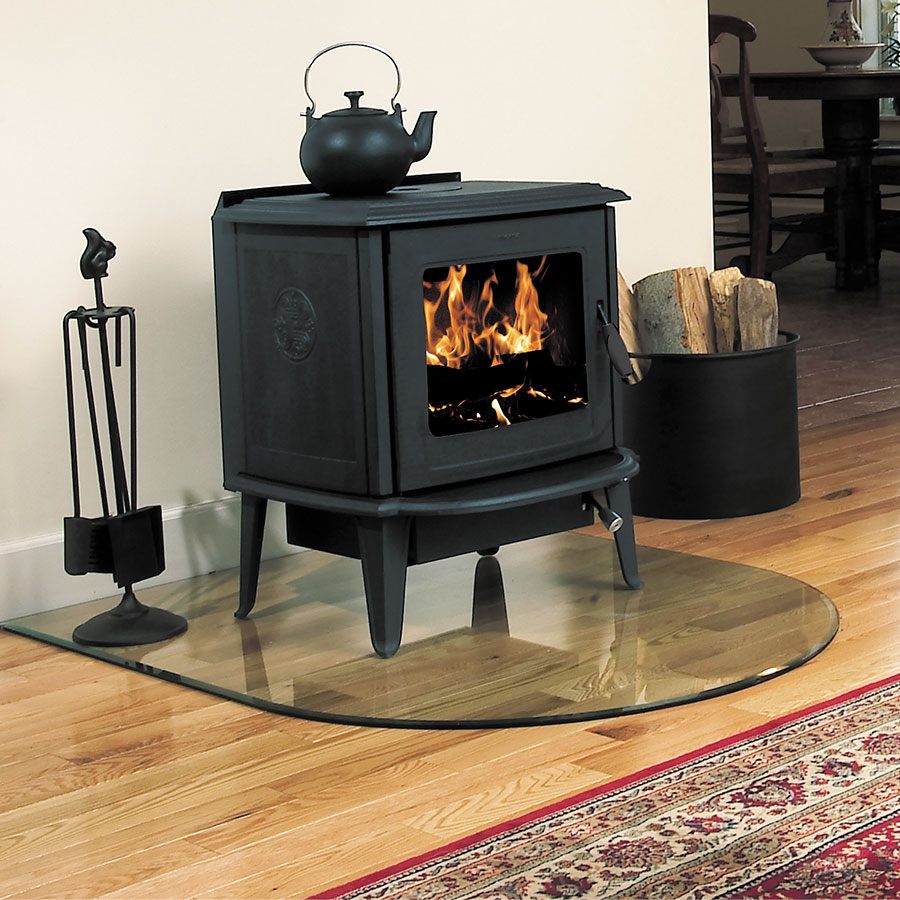
The 7110, above, is the contemporary Morsø and the most heat on this page from a freestanding stove: 37,000 BTU for 1,300 square feet, a 16½-inch log, 309 pounds, and what Morsø calls a very large glass panel without any interfering bars — the widest window of fire in the range, kept clear by an airwash that Morsø rates as its best. Low, wide and plain, it is the stove for a room that wants the fire more than the ornament. And for the masonry fireplace you already have, the same iron comes as the Morsø 5660 insert, which has a page of its own.
Iron that was once something else, and will be iron again.
Certified for installation in Metro Vancouver. Every Morsø on this page is EPA 2020 certified and eligible to be registered under Metro Vancouver’s Residential Indoor Wood Burning Emission Regulation, Bylaw 1303, with published particulate figures from 0.5 to 1.9 grams an hour. Inside the Urban Containment Boundary the appliance must be registered before it is used, and the owner files a best-burning-practices declaration renewed every three years; individual municipalities can add requirements of their own. We check the exact model against the bylaw before anything is ordered, and prepare the registration with the permit.
A cast-iron stove asks more of its placement than a gas fire does, which is the good news rather than the bad. It wants a hearth that suits it, clearances honoured to the inch — and the inches differ, from the two behind a 6148 to the twenty beside a 1410 — and a flue that draws properly and looks intentional. That is the work Maxwell Fireplace does in-house: choosing the Morsø for the room and the room’s size, measuring the clearances and the flue run, pulling the permit and preparing the Bylaw 1303 registration, and installing the stove with our own crew. The hearth and the wall around it we plan together with the trades doing them — yours, or ones we bring in. Tell us the room and we will tell you which Morsø it can hold, and what it will put up the flue.
Questions people tend to ask
Are Morsø stoves certified for installation in Metro Vancouver?
Yes. Every model on this page is EPA 2020 certified, which satisfies Metro Vancouver’s Bylaw 1303, and Morsø publishes the particulate figure for each: 0.5 grams an hour for the 2B Classic, 0.55 for the 2B Standard, 0.67 for the 6143 and 6148, 1.55 for the 5660 insert, 1.8 for the 1410 and 1440, and 1.9 for the 3112 and 3142. We still confirm the exact model against the bylaw before anything is ordered — it is the first thing we look at on any wood-burning project.
Do I have to register a wood stove, and who holds the registration?
Inside the Urban Containment Boundary, yes — and since 15 September 2025 an unregistered eligible appliance may not be operated at all, so this is not paperwork to leave until later. The registration is the homeowner’s to hold, together with a best-burning-practices declaration renewed every three years. We prepare it alongside the permit, and individual municipalities can add requirements of their own on top.
Which Morsø is right for the size of my room?
Morsø rates the 1410, 1440, 3112, 6143 and 6148 for about 1,000 square feet, the 3142 and both 2Bs for 1,200, and the 7110 for 1,300. Those are maximums, and a stove chosen at the top of its range will be run hard; we would rather size a stove to the room it actually sits in and the way the house is built, and the clearances then decide where in that room it can stand.
Which Morsø is the classic one?
The 1410 B — compact, squirrel-sided, the stove most people picture when they picture a Morsø. If you want the genuinely original article, the 2B Standard is Morsø’s own 1930s forest stove with a glass door, and the 2B Classic is its taller, more powerful version. The 3142 carries the squirrel on a larger firebox; the 6143 and 6148 and the 7110 leave it off for a modern room.
Can a Morsø go into the masonry fireplace I already have?
Yes — as the Morsø 5660 insert, which slips the same cast iron into the opening you have behind a single pane of glass, heats up to 2,200 square feet on a 20-inch log, and has a page of its own. Your surround stays; what changes is the fire inside it.
Why cast iron rather than steel?
Because of what happens after the fire goes out. Cast iron holds heat the way stone holds sunlight — warming slowly, then radiating steadily for hours, long after a thin steel stove has cooled — so a Morsø keeps the room warm while it rests. It is also endlessly recyclable: Morsø pours from as much as 98 percent recycled iron, and it will be iron again long after the house has changed hands.
What does a freestanding stove need from the room?
A hearth, honoured clearances and a flue that draws. The clearances vary more than people expect — the 6143 and 6148 can stand two inches from the rear wall, the 1410 wants twenty inches to a side wall — and they decide whether a stove can sit where you imagine it. Several models take an outside-air supply for a tightly built house. We measure the room, the clearances and the flue run on site first, then handle the permit, the registration and the installation with our own crew.