← Back to Wood-Burning Stoves & Fireplaces
A Creative FireSpace™ · 09 July 2026
Stûv 21 Wood Fireplace — Nothing Between You and the Fire
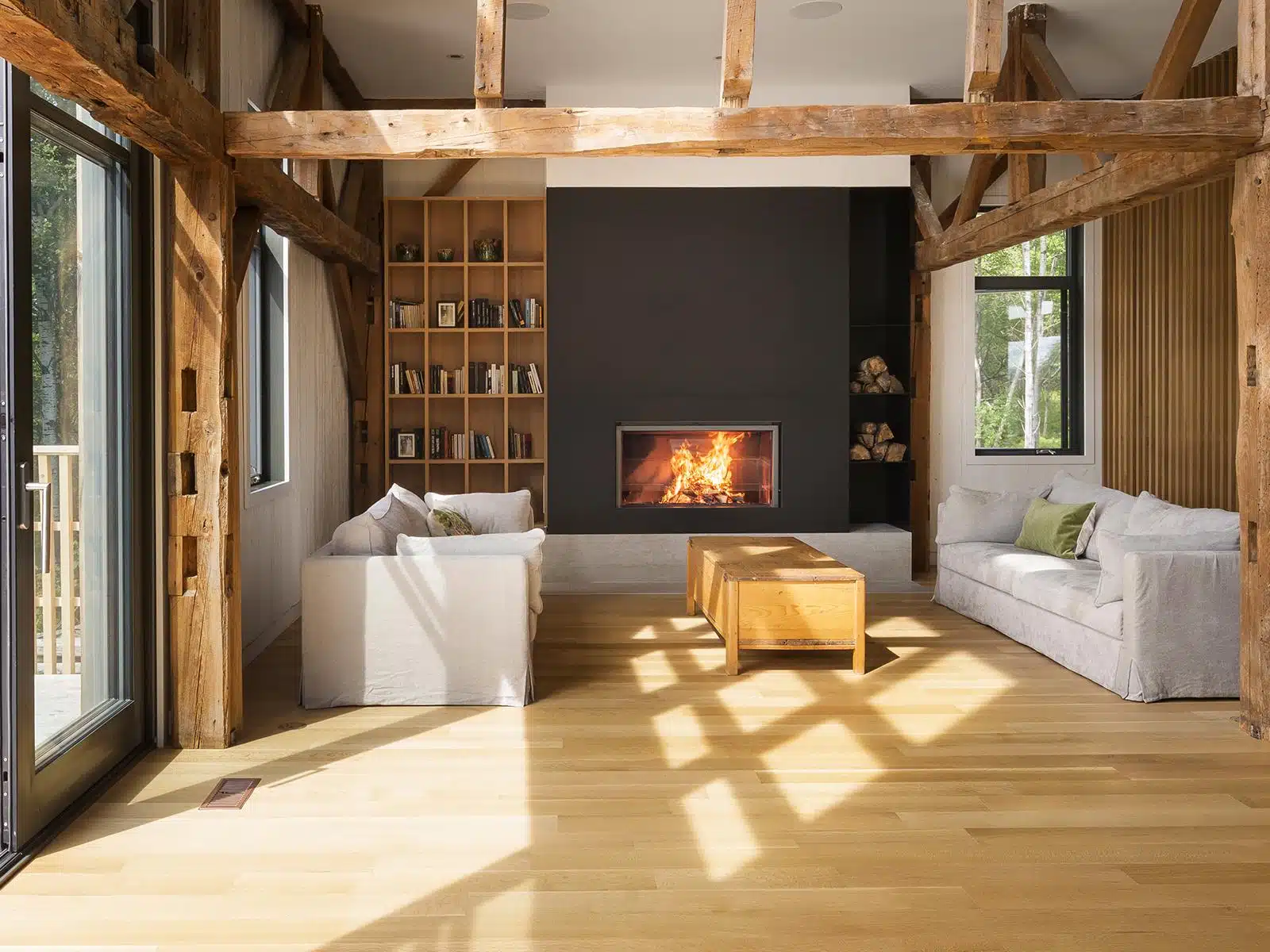
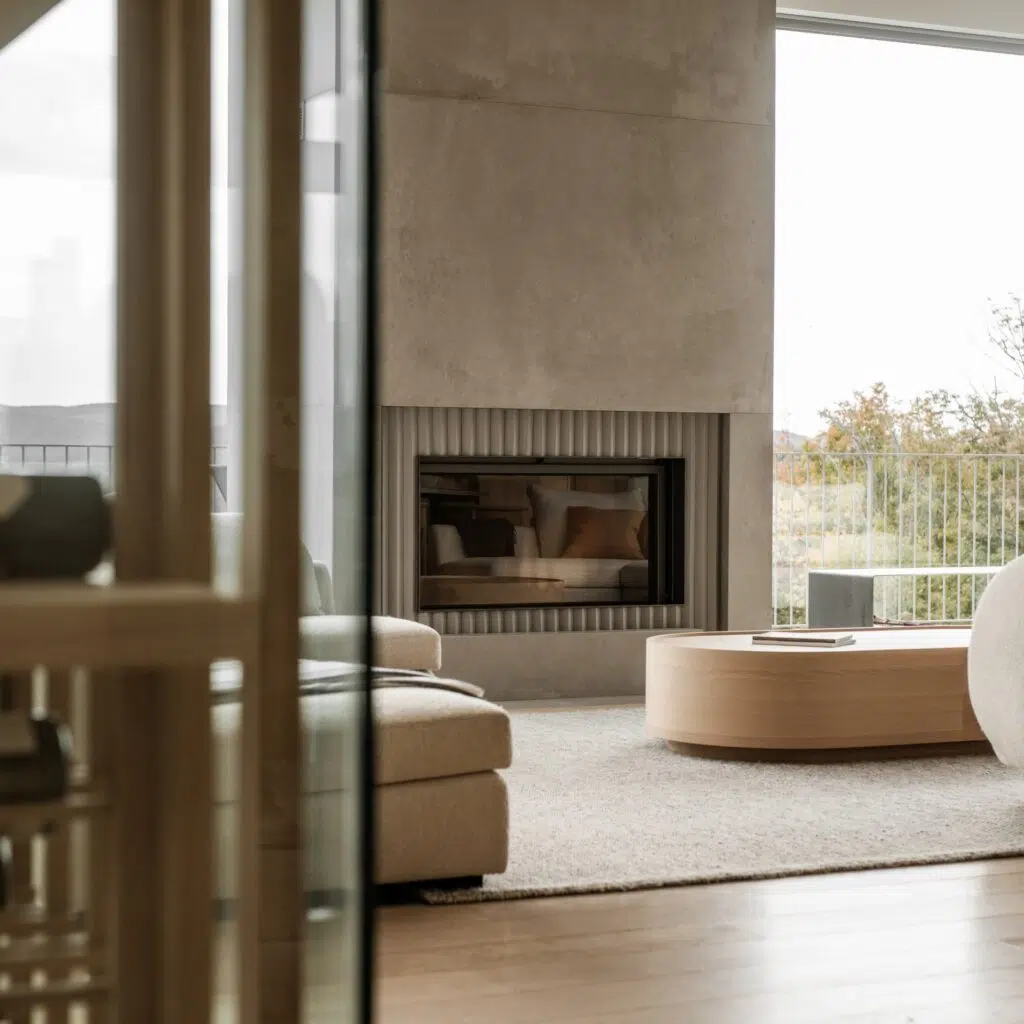
The Belgian house Stûv builds fireplaces the way an architect draws a room — by taking things away until only what matters is left. The Stûv 21, drawn by the company's founder Gérard Pitance, is the clearest expression of that idea: a fireplace pared back to a slim steel frame around a wide, shallow firebox, so that almost nothing stands between you and the fire. No heavy surround, no ornament, no thick black frame breaking up the view. Just a clean rectangle of flame set into the wall like a picture.
What makes it more than a handsome opening is what the frame hides. The glass front is a guillotine — a single frameless pane that rises straight up and disappears into the structure above. It is the whole idea of the 21 in one movement, and it changes what the fireplace is.
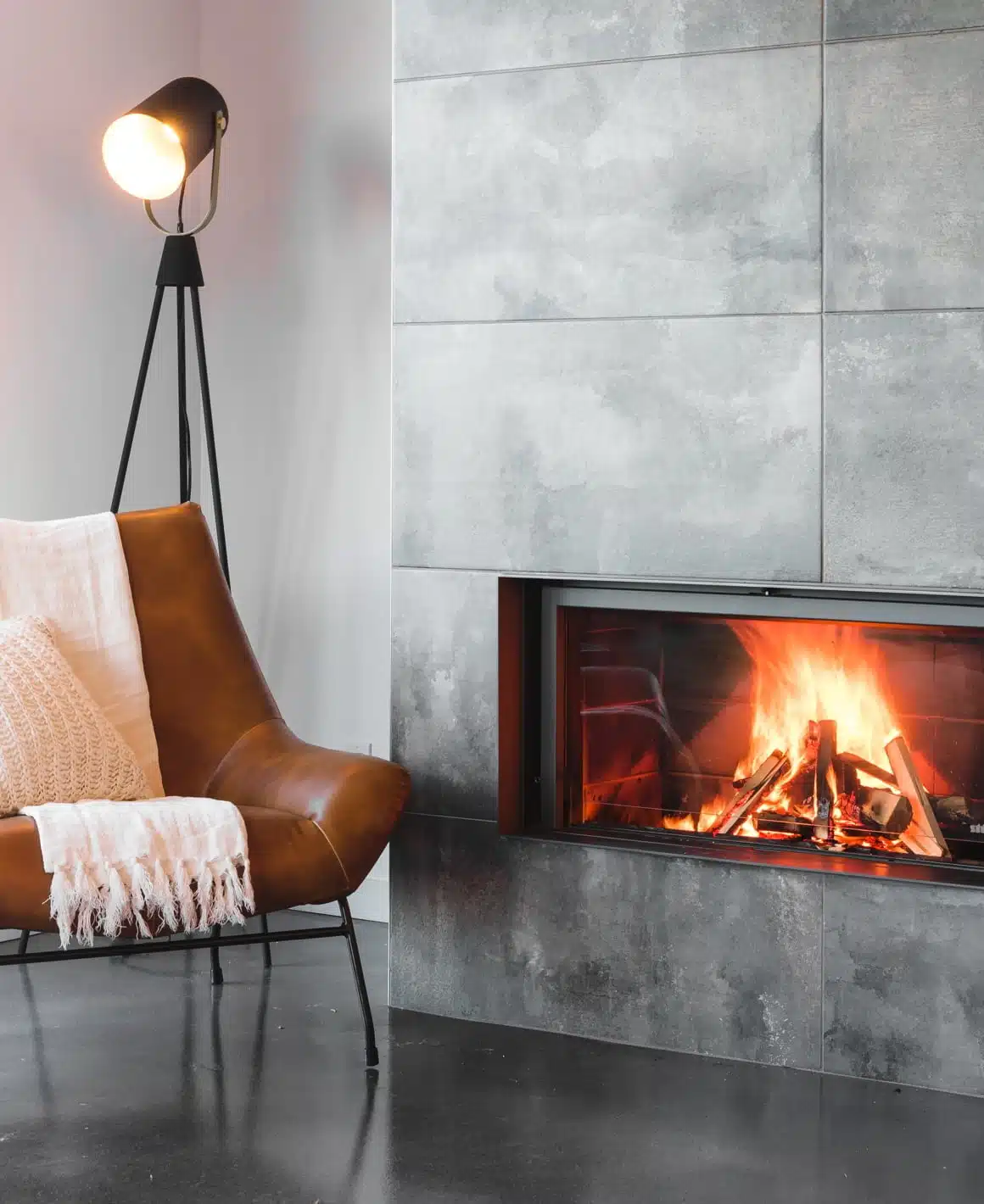
Lower the glass and the 21 is a closed, controlled wood fire — drawing its air precisely, re-burning its own smoke, and pushing that heat back into the room through convection channels built into the body. It is efficient, calm, and clean, the way a modern wood fireplace should be.
Raise the glass and it becomes something older and rarer: an open hearth, with the sound and the scent and the direct radiant warmth of a real open fire, and nothing in the way of it at all. One fireplace, two entirely different evenings — the everyday efficiency of a closed fire, and the occasional romance of an open one, chosen with a single hand movement. Few fireplaces made today can do both. Fewer still make the switch look this effortless.
The 21 is really a family, not a single model. It comes in a run of widths — from a compact firebox to one nearly four feet across — so it can be scaled to the room rather than the room built around it. Choose it single-faced to set into a wall in the usual way, or double-faced to run the fire straight through a wall as a see-through, so a single hearth warms — and connects — two rooms at once. It burns full-length 16-inch logs, and its insulated steel shell lets it be built safely into ordinary framed, combustible walls, which gives an installer real freedom in where it can go.
That range is exactly why we love placing it. A fireplace this minimal asks everything of the wall it lives in — the reveal has to be crisp, the proportions right, the finish carried cleanly to the very edge of the glass. Getting that quiet perfection is the work, and it is precisely the kind of Creative FireSpace™ we take on: the measuring, the framing, the flue, and the careful detailing that makes a fire look as though it was always part of the architecture.
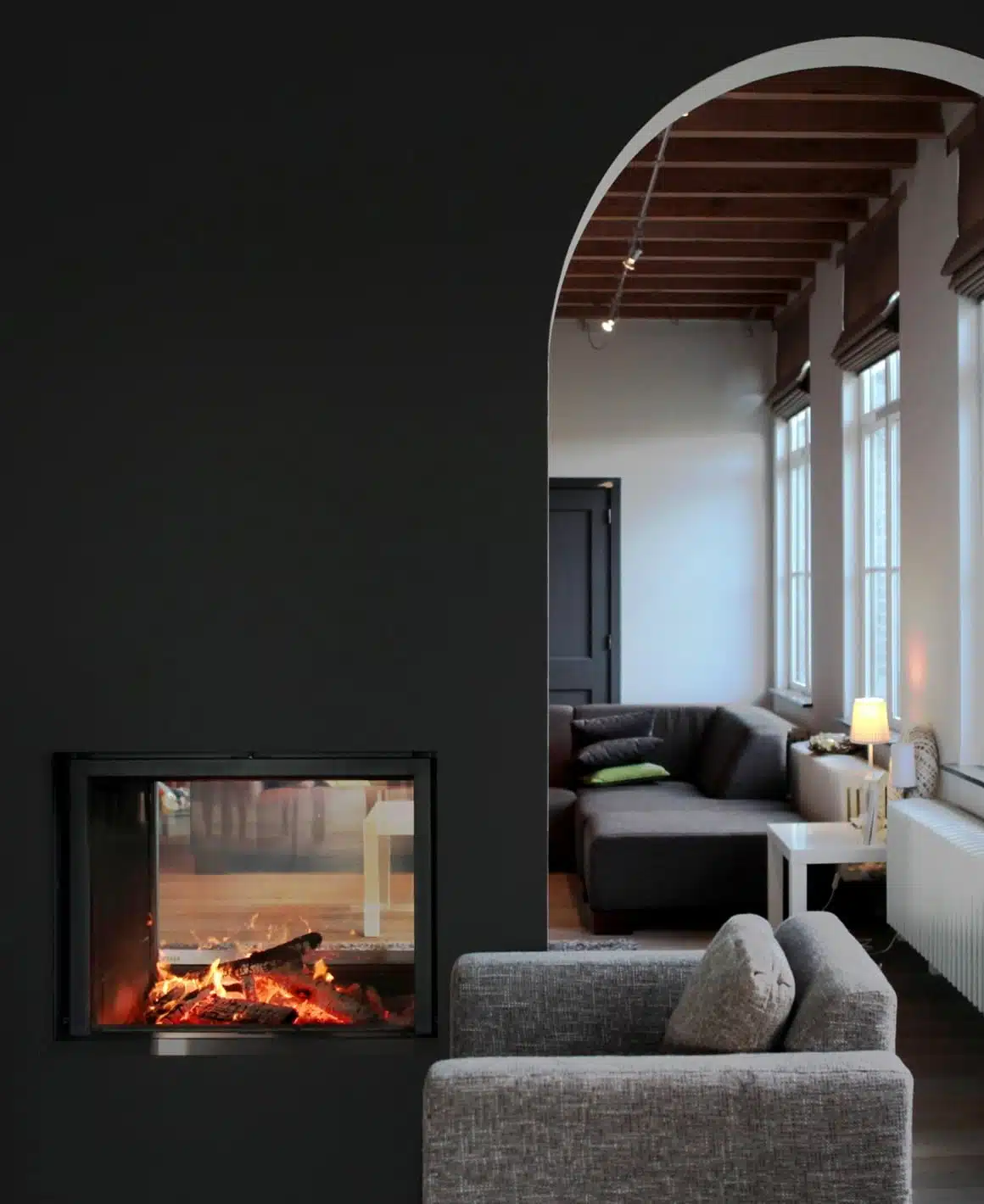
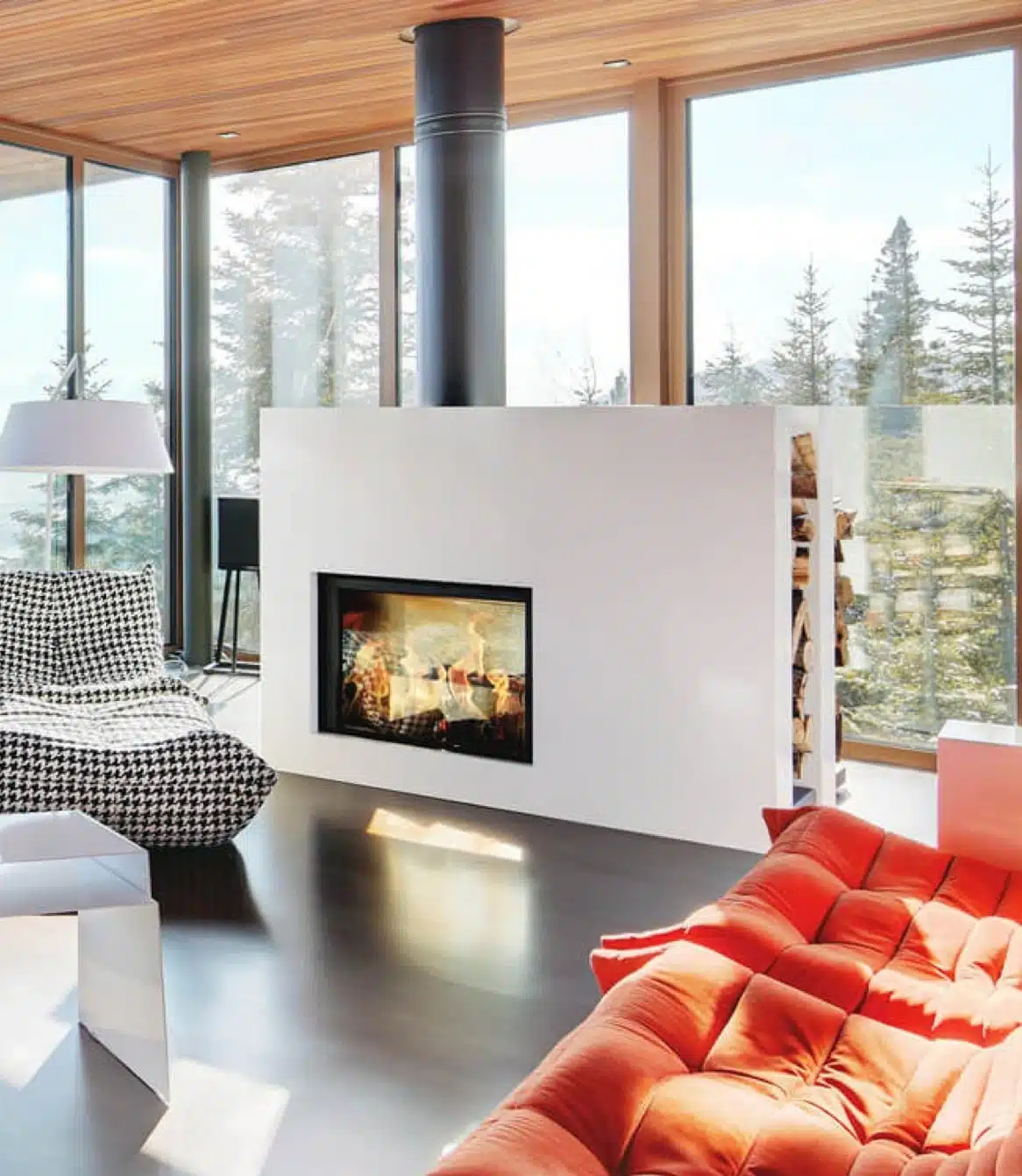
Not every room wants a wall built around its fire. For those, there is the Stûv 21 Clad — the same frame-and-guillotine fire, but delivered already dressed. Rather than a firebox you finish on site, the Clad arrives wrapped in its own casing: a clean, self-contained block that stands in the room as a single sculptural object, complete from the moment it's set down.
It's the difference between building the fireplace into the architecture and setting the architecture down whole. The Clad comes single-faced to sit against a wall, double-faced to divide and warm two spaces at once, and in a wider three-sided form that opens the fire on the front and both returns. For a renovation on a schedule, or a room where you'd rather not open up a wall, it's the shortcut to everything the 21 does — with far less on-site work.
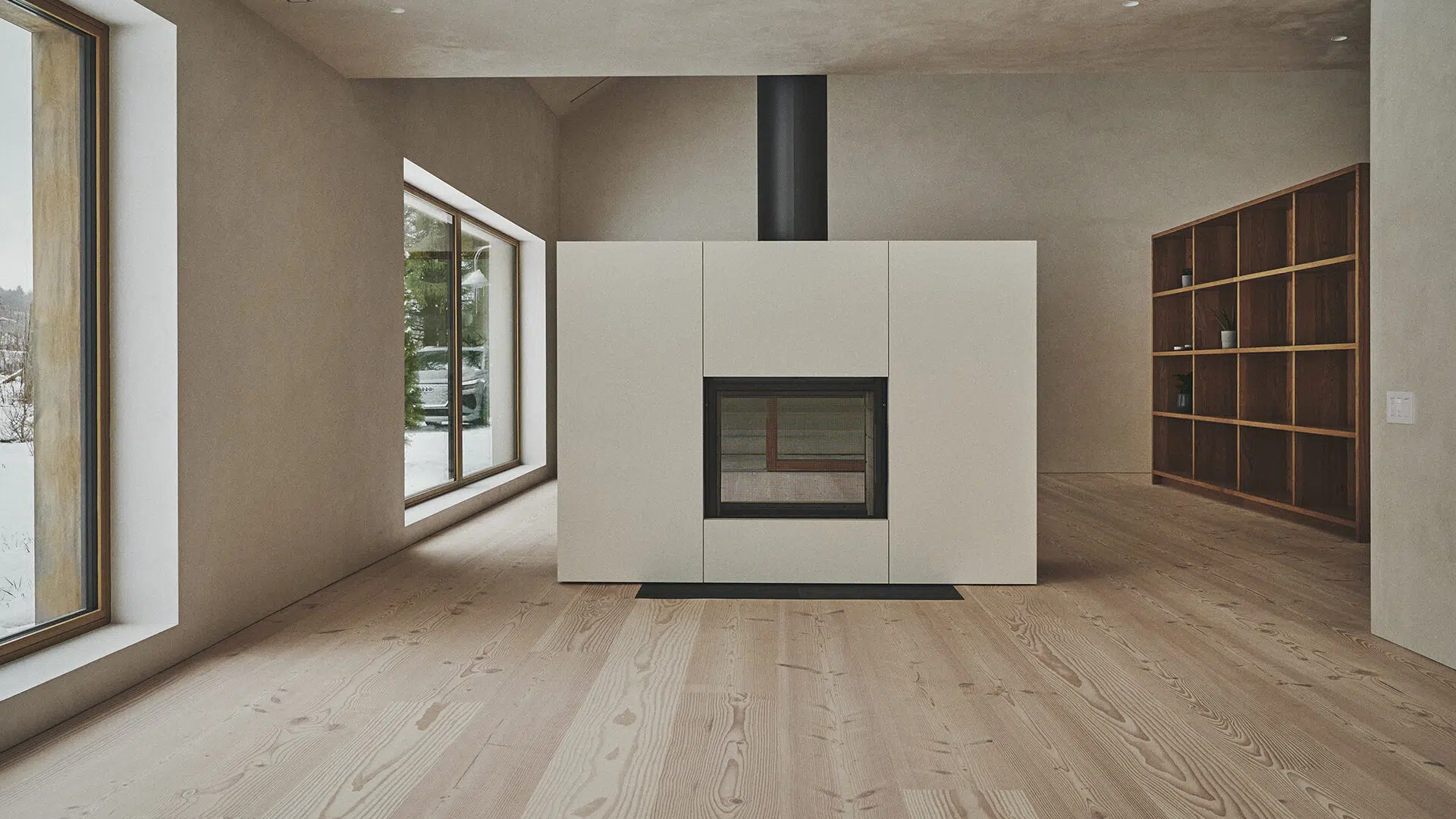
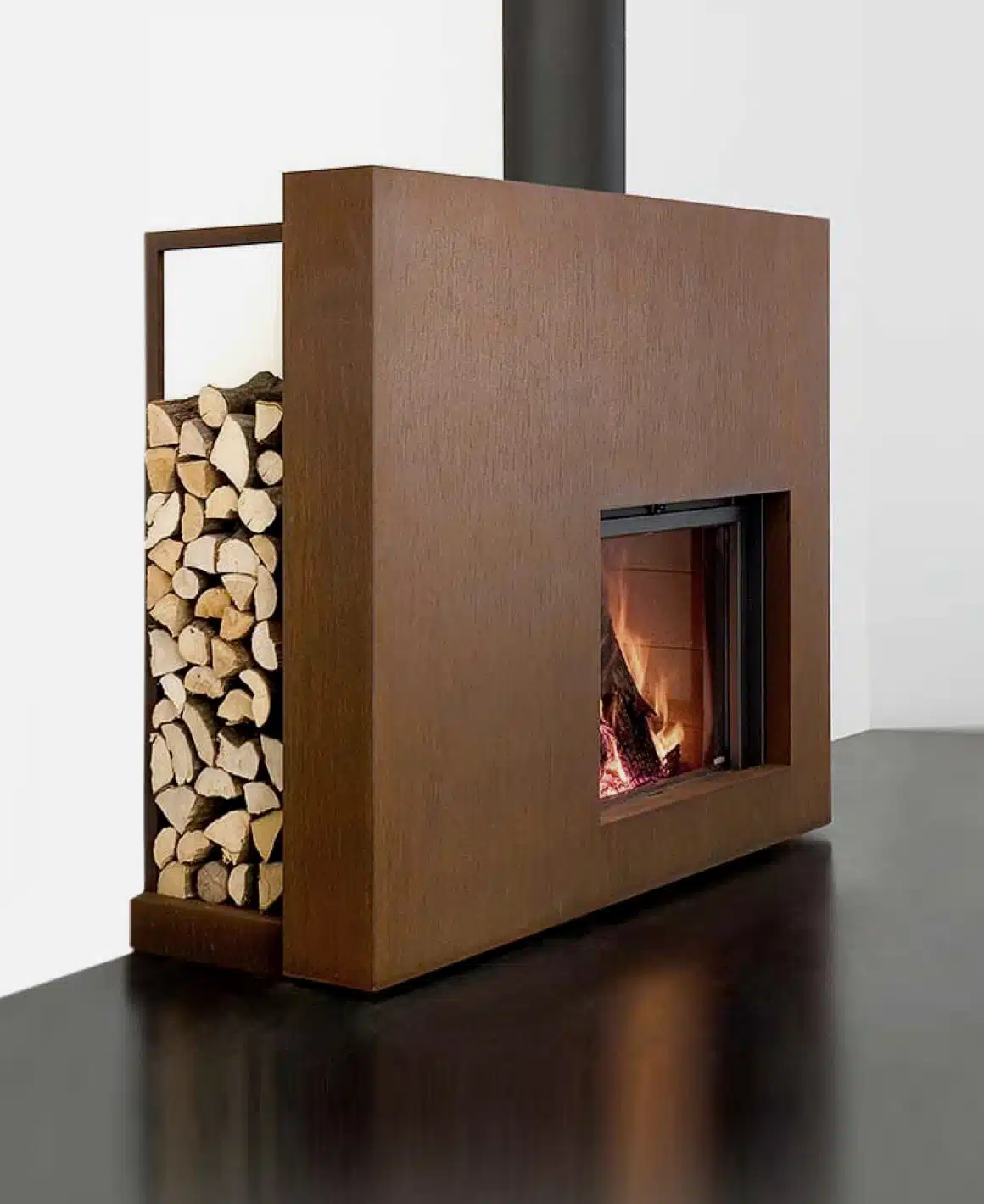
And it can be dressed to taste. Stûv's finishes run from soft whites and warm greys to a deep matte black and the rich, living patina of weathering steel — and several Clad models fold in an open log store beside the firebox, so the fuel itself becomes part of the composition, stacked and waiting like part of the design.
Built-in or clad, single-faced or see-through, compact or nearly four feet wide — the 21 bends to the room in a way few wood fireplaces can, which is exactly why it's one of our favourite things to place. Whichever form suits the space, the fire at the centre of it is the same: reduced to its essentials, precisely made, and quietly extraordinary.
A note on our local rules: wood-burning fireplaces in Metro Vancouver are subject to emissions certification, municipal bylaws, and seasonal restrictions — and open-fire operation in particular has its own requirements. We handle the measuring, permitting, lining, and installation from start to finish, and we'll tell you honestly what's possible for your home before anything is ordered. Ask us what will work where you are.
Lower the glass for a clean, closed fire. Raise it for an open hearth. One fireplace, two evenings.
Questions people tend to ask
Can I actually burn it with the glass raised, as an open fire?
That is the question worth asking first, and the honest answer has two halves. Mechanically, yes — the guillotine glass rises into the structure above and the 21 becomes a true open hearth. Legally, an open fire is not the same thing as a certified closed appliance: open-fire operation carries its own requirements under Metro Vancouver’s wood-burning rules, and what you are permitted to run depends on your municipality and on how the appliance is registered. We confirm exactly what will be allowed at your address before anything is ordered, rather than after.
Is the Stûv 21 certified for installation in Metro Vancouver?
Certification is model-by-model and width-by-width across the 21 family, so the only useful answer is a specific one. We check the exact configuration you are considering against CSA B415.1 or the EPA 2015 standard and against Bylaw 1303 before we quote it. It is the first thing we look at, because it is the one thing that can stop a project outright, and we would rather find it in week one than in week six.
Do I need to register it, and for how long?
Since 15 September 2025, an eligible appliance inside the Urban Containment Boundary may not be operated unless it is registered. The registration is the homeowner’s to hold, together with a best-burning-practices declaration renewed every three years. We prepare that alongside the permit.
Can it be built into an ordinary framed wall?
Yes — its insulated steel shell lets it be built safely into ordinary framed, combustible walls, which is a good deal rarer than it sounds and gives real freedom in where the fire can go. What the wall then has to deliver is a crisp reveal and a finish carried cleanly to the very edge of the glass, because a fireplace this minimal is unforgiving about both. That detailing is the work, and it is done in-house.
What is the difference between the Stûv 21 and the 21 Clad?
The 21 is a firebox you build a wall around and finish on site. The 21 Clad arrives already dressed — a self-contained block that stands in the room as a single sculptural object, complete the moment it is set down. For a renovation on a schedule, or a room where you would rather not open up a wall, the Clad is the shortcut to everything the 21 does with far less on-site work.
How wide does it come, and can the fire be seen from both sides?
It runs from a compact firebox to one nearly four feet across, so it scales to the room rather than the room being built around it. Choose it single-faced to set into a wall in the usual way, or double-faced to run the fire straight through the wall as a see-through, so one hearth warms and connects two rooms. The Clad adds a wider three-sided form that opens the fire on the front and both returns.
Does it burn ordinary firewood?
Full-length 16-inch logs, which is the size most cut and delivered firewood arrives as. No splitting things down to fit.