← Back to Wood-Burning Inserts
A Creative FireSpace™ · 10 September 2026
Pacific Energy Wood Inserts — A Second Life for the Masonry Hearth
Six certified wood-burning inserts, from 1.4 to 2.5 cubic feet, that turn the open fireplace you already own into a clean, registerable fire — every one of them at 1.6 to 1.8 grams an hour.
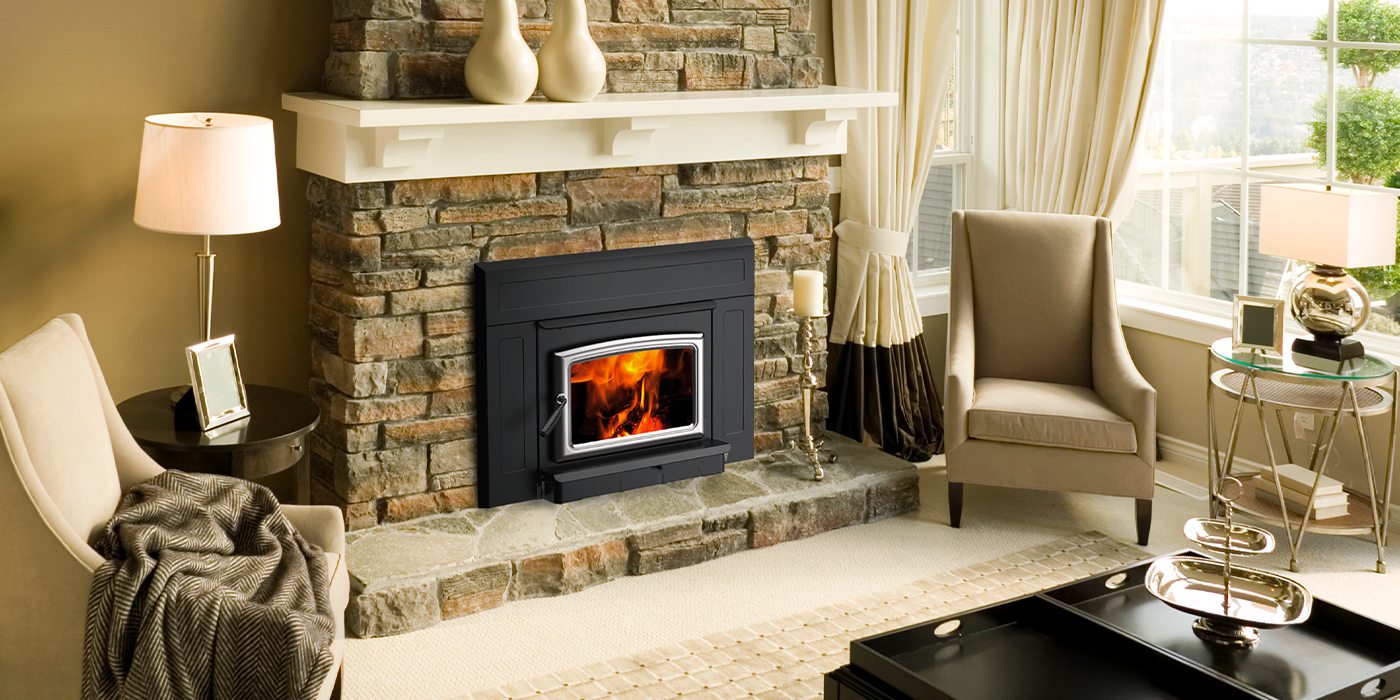
A great many of the homes we work in were built around an open masonry fireplace, and a great many of those fireplaces have not been lit in years. The reasons are the usual ones. An open hearth sends most of its heat up the chimney and draws the warm air of the house after it, so the room is colder with the fire going than without. And since Metro Vancouver’s Bylaw 1303, an open fireplace inside the urban area is not an appliance you may register, which means it is not one you may burn. The chimney stands, the brick is handsome, and the thing at the centre of the room is a decoration.
The answer is not to brick it up. It is an insert: a sealed, certified steel firebox that slides into the opening you already have, breathes through a new stainless liner run up the old chimney, and closes the gap with a surround plate. The masonry becomes the frame it always wanted to be, and the fire inside it becomes something the bylaw recognises — and something that heats the house.
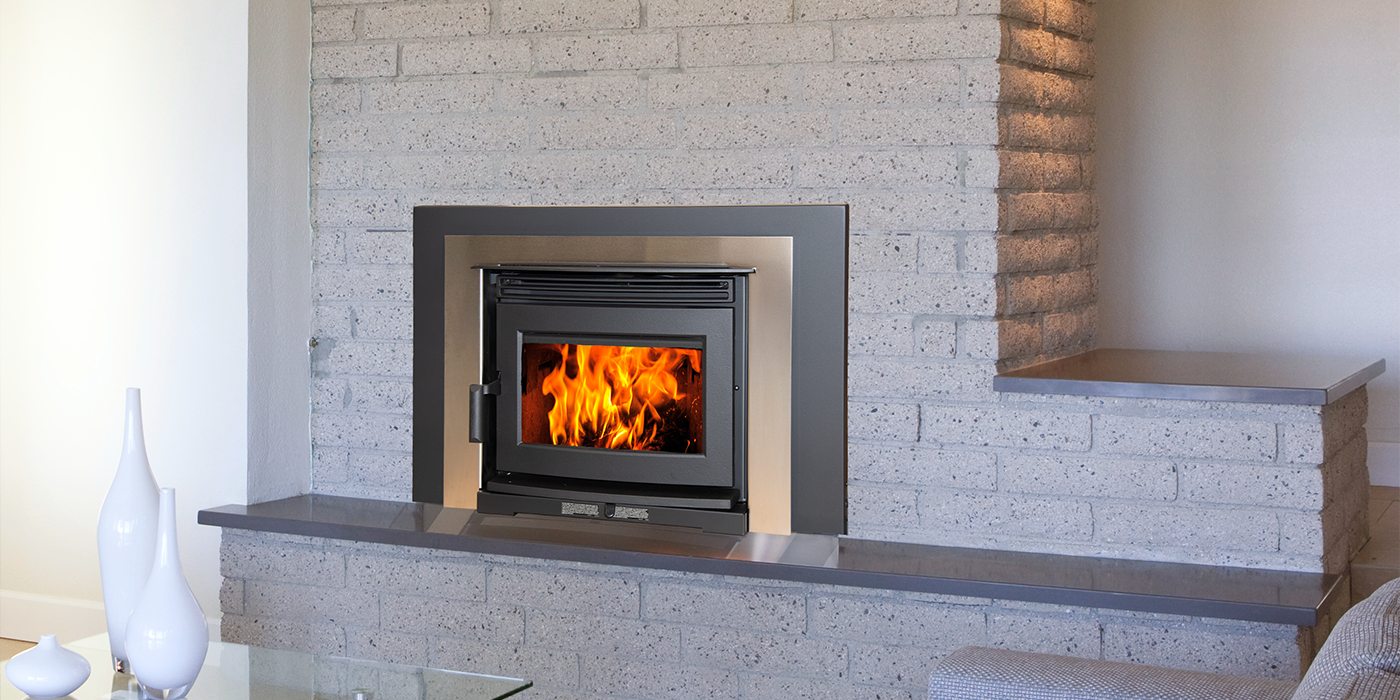
Pacific Energy builds theirs in Duncan, British Columbia. What distinguishes them is how they burn. Rather than routing the exhaust through a catalytic element that clogs and has to be replaced, a Pacific Energy insert burns its own smoke a second time: preheated air is injected through a stainless-steel tube system above the fire, and the gases that would have gone up the chimney as particulate ignite instead. The result is a firebox with nothing in it to wear out — a 304 stainless baffle, a firebox that floats on its frame so heat cycling does not stress the welds, and an airwash that keeps the glass clear — and numbers that are the whole point of the exercise.
Those numbers: every insert in the family is certified to the EPA’s 2020 standard, and their published emissions run from 1.6 grams of fine particulate an hour on the newest LE2 models to 1.8 on the largest, at efficiencies of 71 to 75 percent. That is comfortably inside what Bylaw 1303 requires, not scraping past it, and it is what makes each of these inserts eligible to be registered and burned in an urban home. Since 15 September 2025 an unregistered appliance may not be operated here at all, so this is not a detail. It is the reason to choose the insert before falling in love with it.
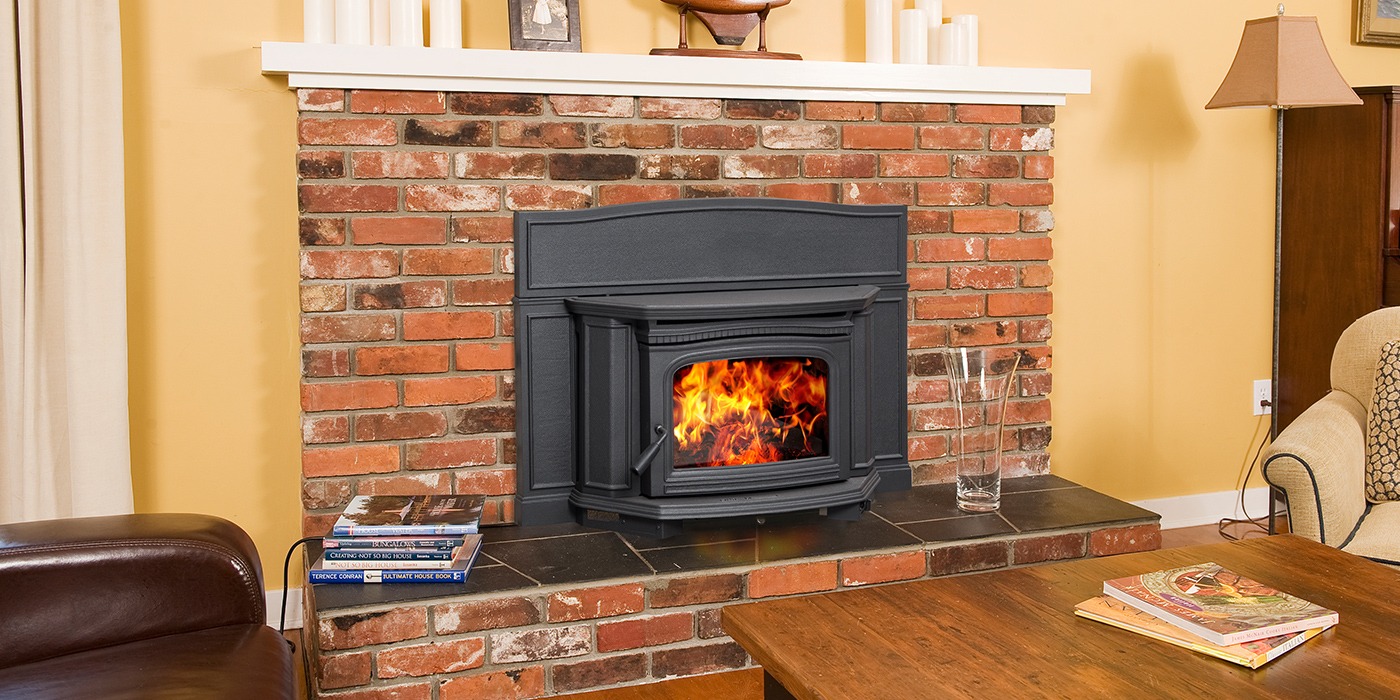
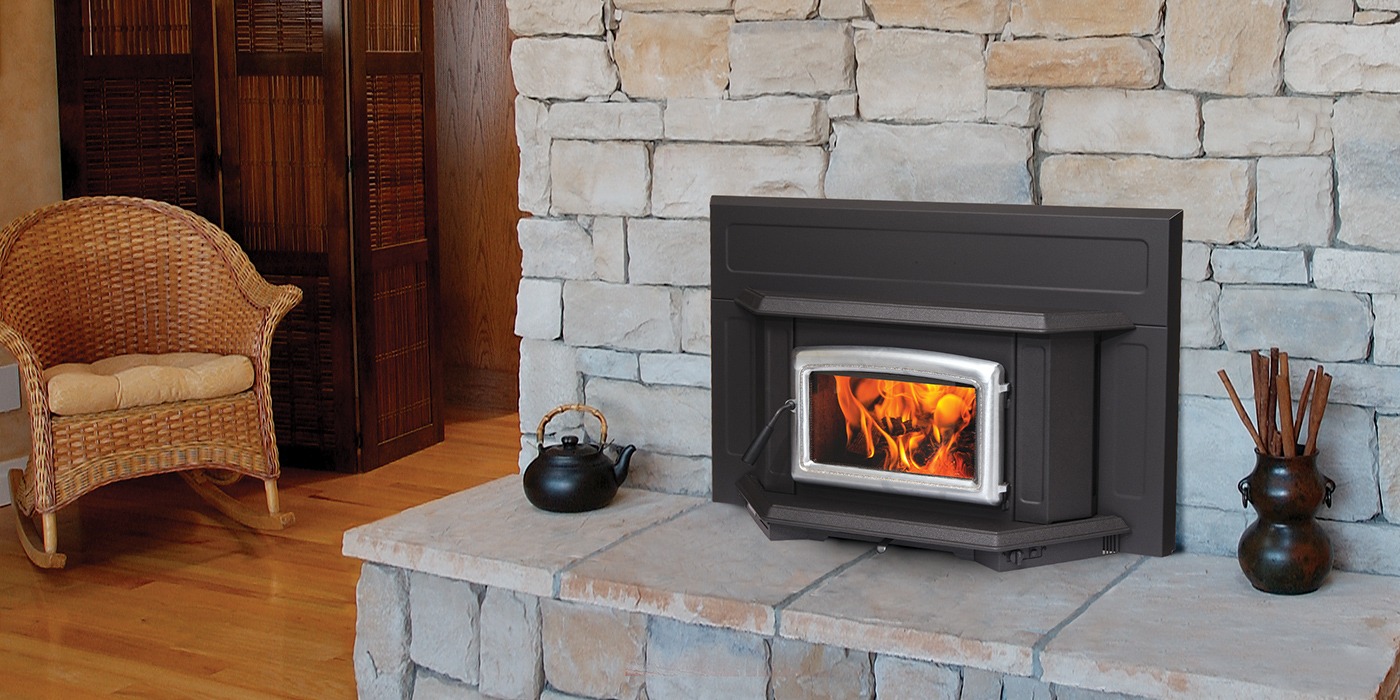
There are six, and they sort themselves by the fireplace you have. For a small masonry or factory-built opening there is the Vista Insert LE2 — 1.4 cubic feet, an arched door in three finishes, and 56,000 BTU of cordwood heat — and, on the same engine, the Neo 1.6 Insert LE2, which dresses it in a flat contemporary face with black or stainless trim. For the ordinary full-size hearth there is the Super Insert LE, the classic of the range at 2.1 cubic feet and 72,000 BTU, and the Alderlea T5 Insert LE, which puts the same firebox inside a cast-iron jacket with an arched top and pilasters — the one to choose when the fireplace has a mantel and a history. The Neo 2.5 Insert LE2 brings the largest window of glass in the family, 184 square inches of it, with 85,000 BTU behind. And for the big room there is the Summit Insert LE: 2.5 cubic feet, 99,000 BTU, 20-inch logs, and what Pacific Energy describes as ten full hours of controlled burning from a single load.
Six inserts, one way of burning
Cordwood output and Pacific Energy’s published emissions and efficiency for each.
Vista Insert LE2
The small opening
1.4 cu ft · 56,000 BTU
1.6 g/h · 75% efficient
Neo 1.6 Insert LE2
The small opening, modern
1.4 cu ft · 56,000 BTU
1.6 g/h · 75% efficient
Super Insert LE
The classic
2.1 cu ft · 72,000 BTU
1.8 g/h · 71.3% efficient
Alderlea T5 Insert LE
Cast iron over steel
2.1 cu ft · 72,000 BTU
1.8 g/h · 71.3% efficient
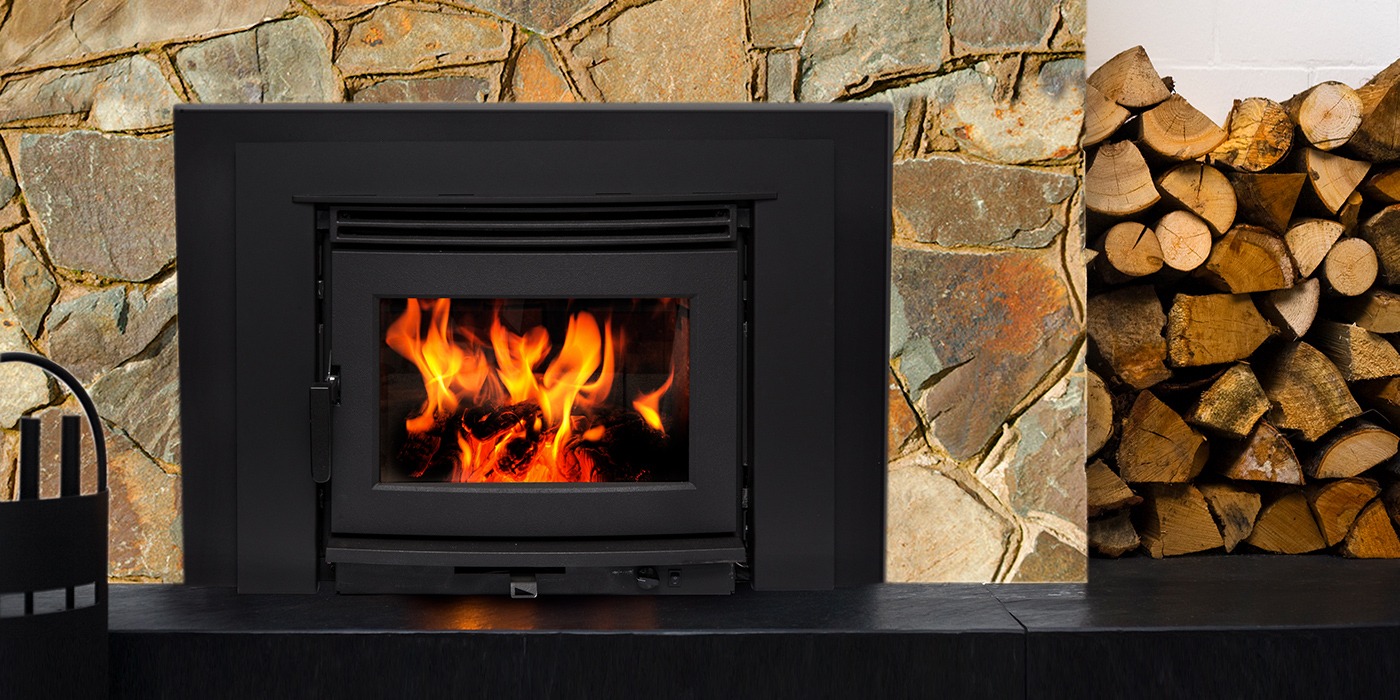
Neo 2.5 Insert LE2
The big window
1.9 cu ft · 85,000 BTU
1.6 g/h · 73% efficient
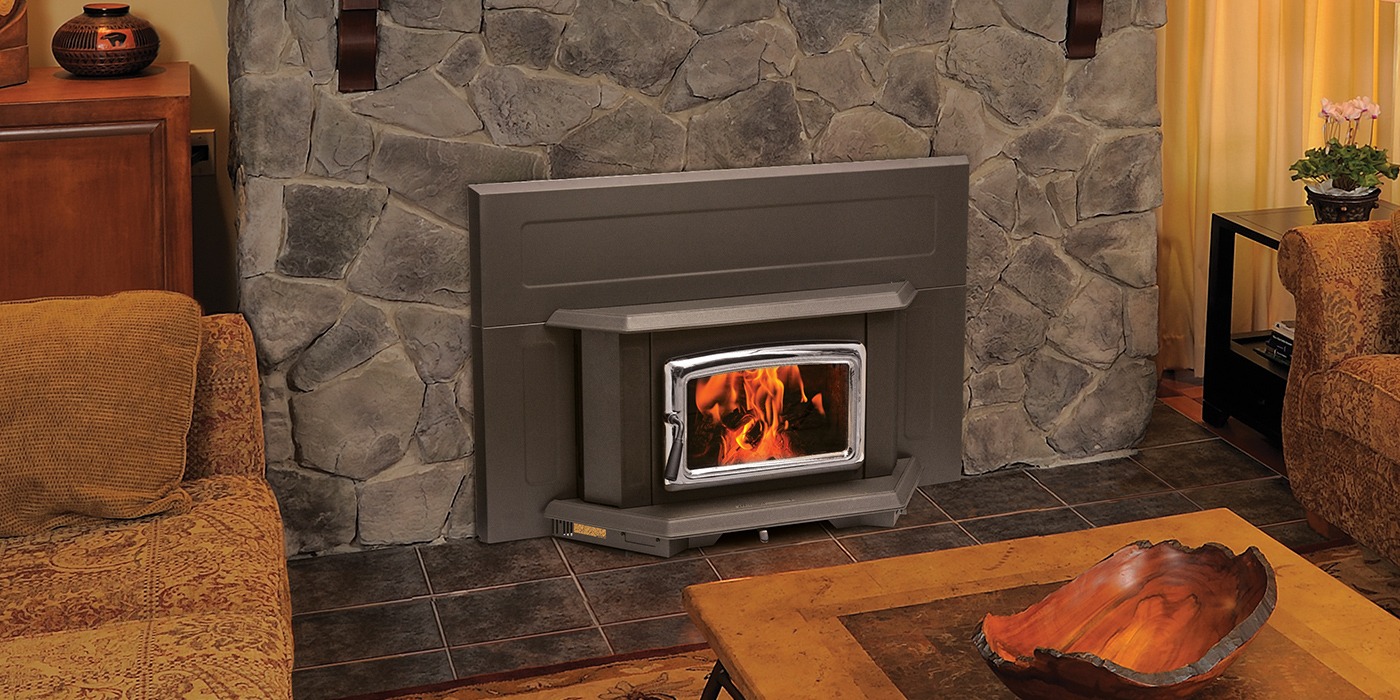
Summit Insert LE
The large room
2.5 cu ft · 99,000 BTU
1.8 g/h · 74% efficient
The rest is fit and finish. Each insert comes with a standard or oversize surround plate, so the old opening is closed cleanly whatever its proportions, and the doors come in metallic black, nickel or brushed nickel on the traditional models and black or stainless on the Neos. Two temperature-actuated, variable-speed blowers draw room air around the firebox and return it warm; they switch themselves on as the fire builds, and if the power fails the fire simply goes on burning without them, which is the quiet argument for wood in a house that loses its electricity in every winter storm. A single lever controls the air. Boost air lights it easily. None of it asks anything of you but dry wood.
A note on our local rules: every Pacific Energy insert on this page is EPA 2020 certified, with published emissions between 1.6 and 1.8 g/h, and so is eligible to be registered and burned under Metro Vancouver’s Residential Indoor Wood Burning Emission Regulation Bylaw 1303. Registration itself is the homeowner’s to hold, along with the best-burning-practices declaration that has to be renewed every three years, and individual municipalities can add requirements of their own. Beyond the paperwork, an insert is only as good as its installation: the opening measured properly, the chimney lined with a new stainless liner and sealed at the top, the surround fitted so no room air is lost behind it, and clearances honoured. Those are the parts we work out first, on site and before anything is ordered — measuring, permitting, the liner and venting design, the registration paperwork, and the installation afterward by our own crew.
The masonry stays. Only the fire changes.
An insert lives or dies by the measuring. The opening has to hold the firebox with room for the surround; the chimney has to take a liner of the right diameter for the whole of its height; the hearth in front has to meet the clearance the appliance is listed for; and the surround has to sit flat against masonry that was rarely built plumb. Get those right and the old fireplace disappears into the new one. Get them wrong and the house never stops telling you. That is the work Maxwell Fireplace does in-house — measuring the fireplace and the flue before we recommend a size, choosing the surround and the door with you, lining and sealing the chimney, pulling the permits and handling the registration paperwork, and installing it with our own crew. Bring us a photograph and a tape measure of the opening, and we will tell you which of the six it can hold.
Questions people tend to ask
Can I legally burn wood in Metro Vancouver with a Pacific Energy insert?
Yes. Every insert in this family is certified to the EPA’s 2020 standard, which satisfies the certification Bylaw 1303 requires, and their published emissions run from 1.6 to 1.8 grams of fine particulate an hour. That makes each one eligible to be registered under the bylaw and burned inside the Urban Containment Boundary, where an unregistered appliance has not been permitted to operate since 15 September 2025. The open masonry fireplace the insert replaces is the thing that was not.
Will an insert fit the fireplace I already have?
Usually, and the measuring is where we start. The Vista and Neo 1.6 are built for smaller masonry and factory-built openings; the Super, Alderlea T5 and Neo 2.5 suit the ordinary full-size hearth; the Summit needs a generous one. Each comes with a standard or oversize surround plate to close the old opening cleanly, and the flue is lined with a new stainless liner up the existing chimney. We measure the opening, the depth and the chimney before anything is ordered.
Which size should I choose?
By the room, not by ambition. The 1.4-cubic-foot Vista and Neo 1.6 heat a small to medium space; the 2.1-cubic-foot Super and Alderlea T5 and the 1.9-cubic-foot Neo 2.5 are for medium to large rooms; the 2.5-cubic-foot Summit is for a large open space and will take 20-inch logs. An oversized insert in a well-sealed house spends its life turned down and smouldering, which is neither efficient nor clean, so we would rather talk you down a size than up one.
Does it still work when the power is out?
The fire does. The blowers that push warm air into the room need power, but the insert burns and radiates without them, and a wood fire is the one heat source in the house that a storm cannot switch off. The variable-speed blowers are temperature-actuated, so they come on by themselves once the firebox is hot.
What does catalytic-free mean, and what maintenance is there?
Pacific Energy burns the smoke a second time by injecting preheated air through a stainless-steel tube system above the fire, rather than passing exhaust through a catalytic element that has to be replaced every few years. There is no catalyst to inspect or buy. The stainless baffle and tubes are built to last, the firebox floats on its frame so heat cycling does not stress the welds, and the glass is kept clear by an airwash. Beyond that, it is the ordinary care of any wood appliance: dry wood, an annual chimney sweep, and a gasket check.
Where are Pacific Energy inserts made, and where can I see one in Vancouver?
They are designed and built in Duncan, British Columbia, by Pacific Energy Fireplace Products. Come to Maxwell Fireplace in North Vancouver and we will walk you through the six inserts, the surround options and the door finishes, and take the measurements that decide which one your fireplace can hold. We serve the North Shore, Vancouver and the Sea to Sky corridor.