Regency® City Series — A Family of Modern Fireplaces
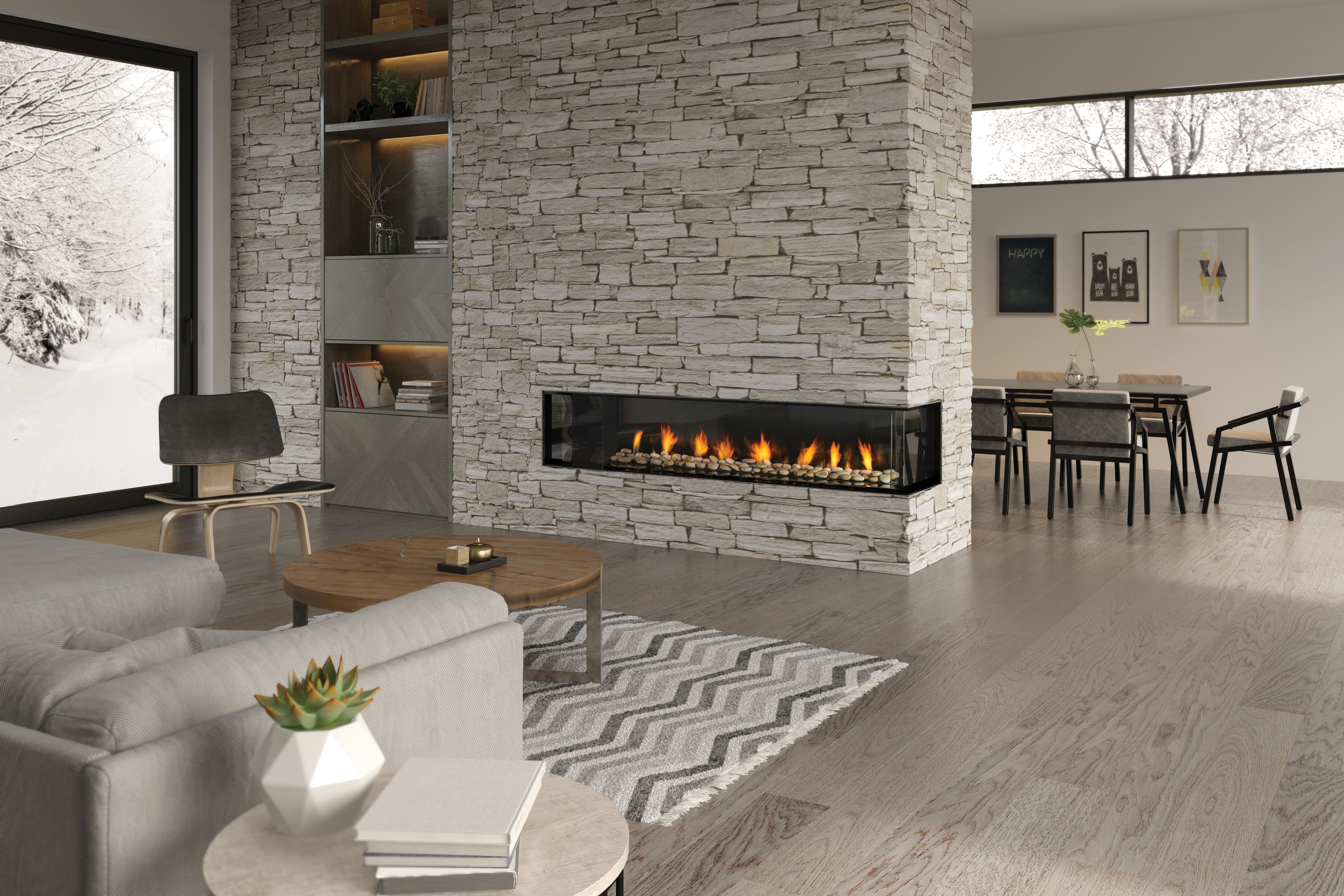
Regency named these fireplaces after cities, and once you have seen the line laid out together, the choice begins to make sense. The City Series is not a single fireplace in five sizes — it is a small family of forms, each one shaped for a different way of opening a room. A wide single-sided plane in a living room. A three-sided bay that turns a peninsula into a hearth. A corner that no longer has to be a corner. A see-through that joins two rooms across a single ribbon of flame. The city in the name is a hint about the spirit of the form; the engineering underneath them all is the same.
What you notice first is what is missing. There is no metal frame around the glass. No black border, no convection grille along the bottom, no visible mechanism. The fire sits behind a single clean sheet of glass, edge to edge, and the wall around it can be whatever the room wants — honed marble, plaster, fluted oak, painted drywall, wallpaper — carried right up to the flame without a transition. That uninterrupted edge is the design idea of the entire series, and it is enabled by one quiet piece of engineering.
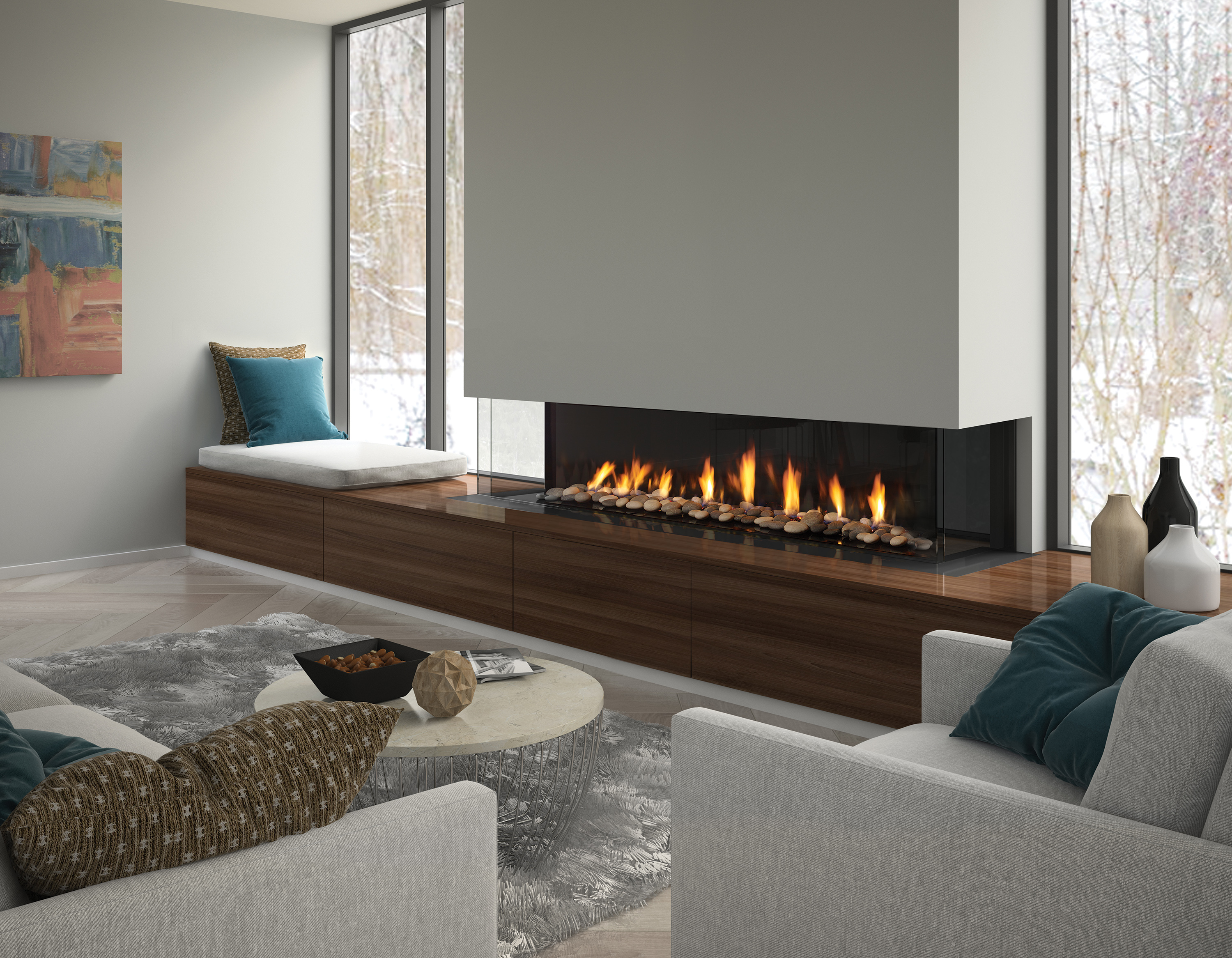
That piece of engineering is the Cool Wall System — Regency's heat management. The convective heat the fire produces, the heat that actually warms the room, is captured and directed out wherever the room would rather have it: front, side, or top of the unit. The wall directly above the glass is not asked to absorb it, and so it stays cool to the touch. That is the reason your finishing material can run flush to the fire, the reason you can hang a television or a piece of original art directly above without scorching it, and the reason a contemporary room can be planned around a real flame without the usual concessions. It is, more than anything, the reason the City Series looks the way it does.
The second piece of engineering decides where the fireplace can live. Most direct-vent gas fireplaces need an outside wall and a short, simple flue run; the City Series is built around a patented power venting system that pushes the combustion exhaust well beyond what a passive vent can reach — long horizontal runs, multiple bends, the kind of vent path that simply isn't possible without a fan-assisted system. The result is that the fire can sit on an interior wall, in the middle of a floor plan, in a condominium tower, in a hotel lobby, in the room with the view rather than the room with the chimney. For the homes we work in — where the best wall and the easy-to-vent wall are rarely the same wall — that freedom is the whole game.
Five cities, one quiet idea
The same engineering, shaped to the room it opens into.
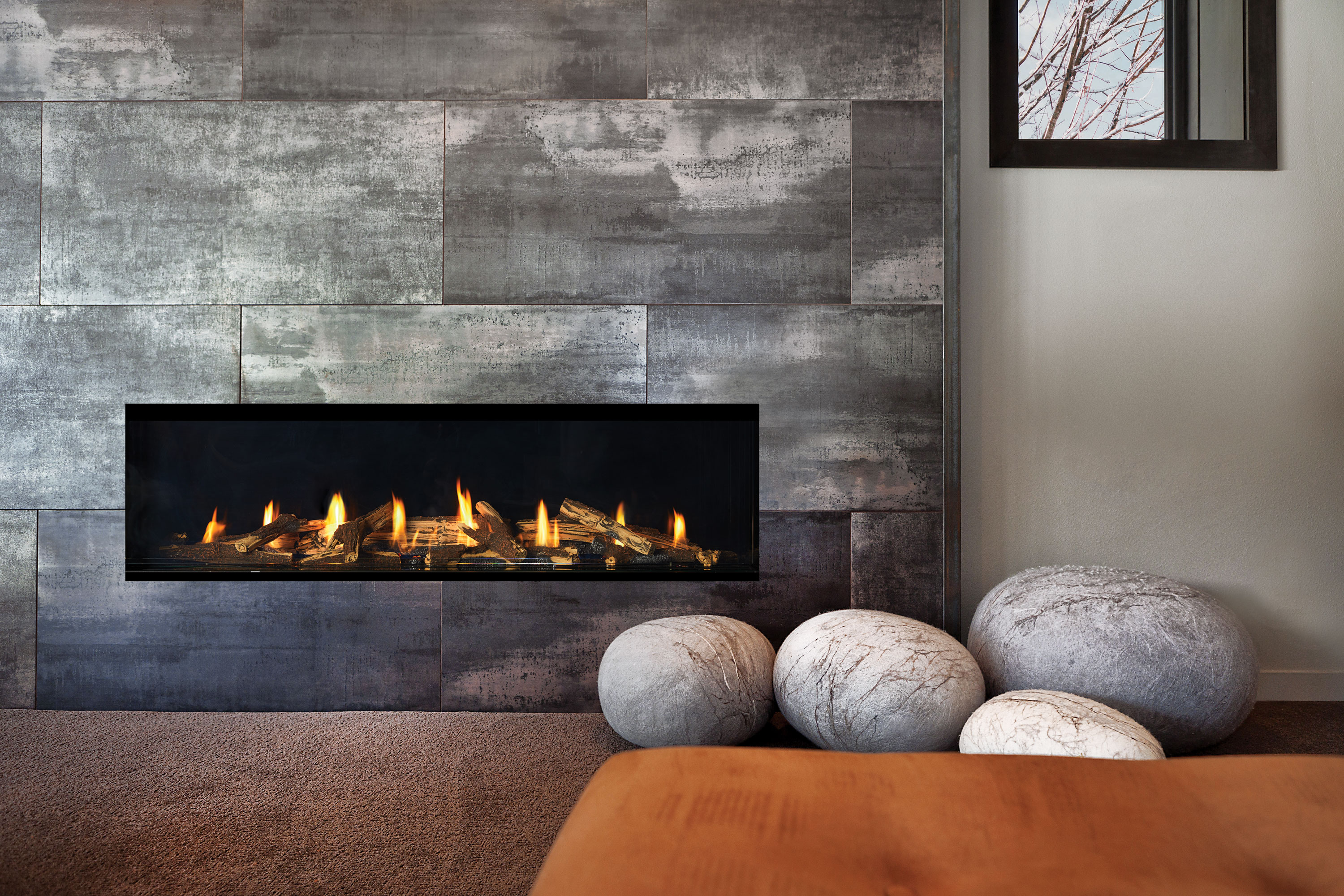
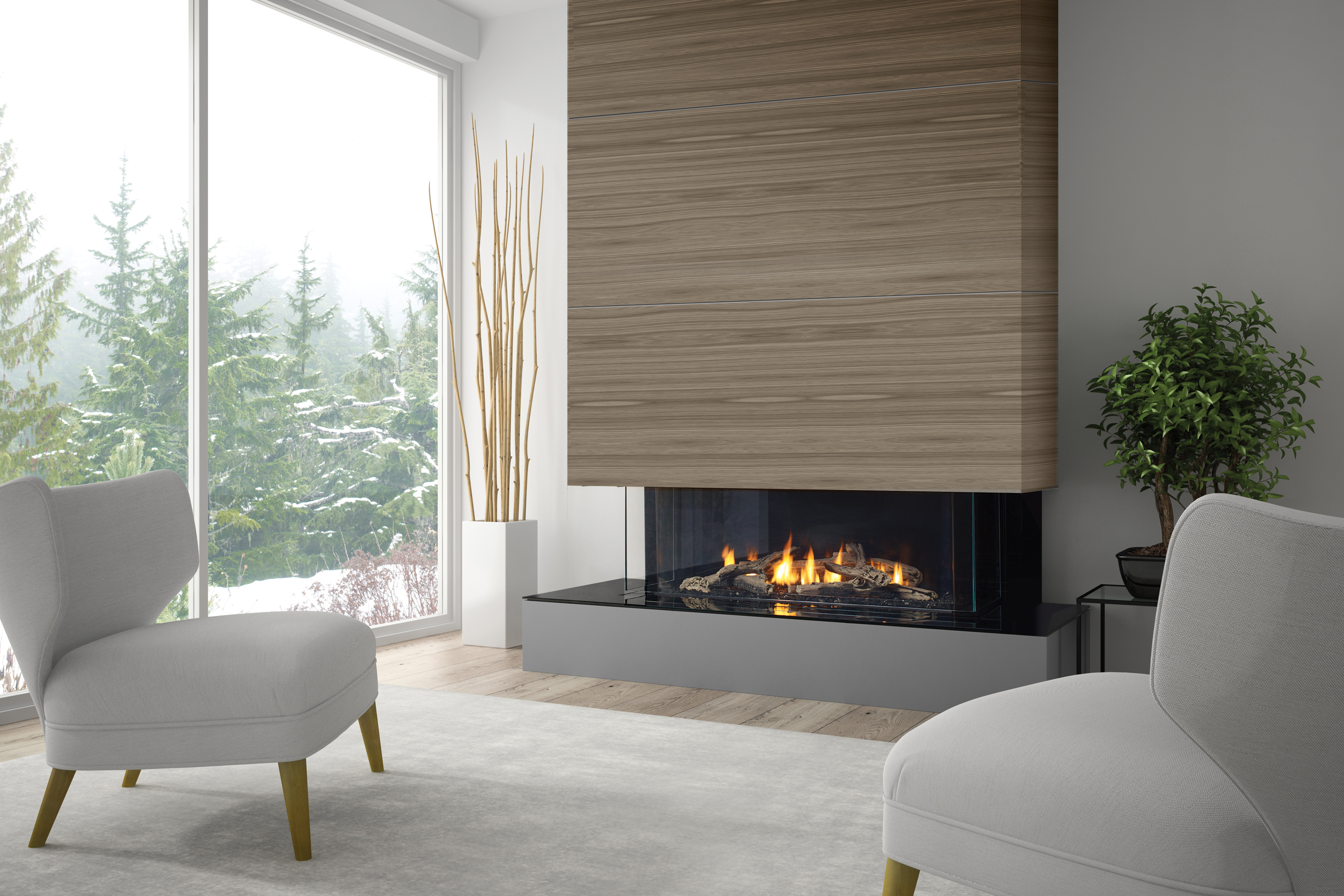
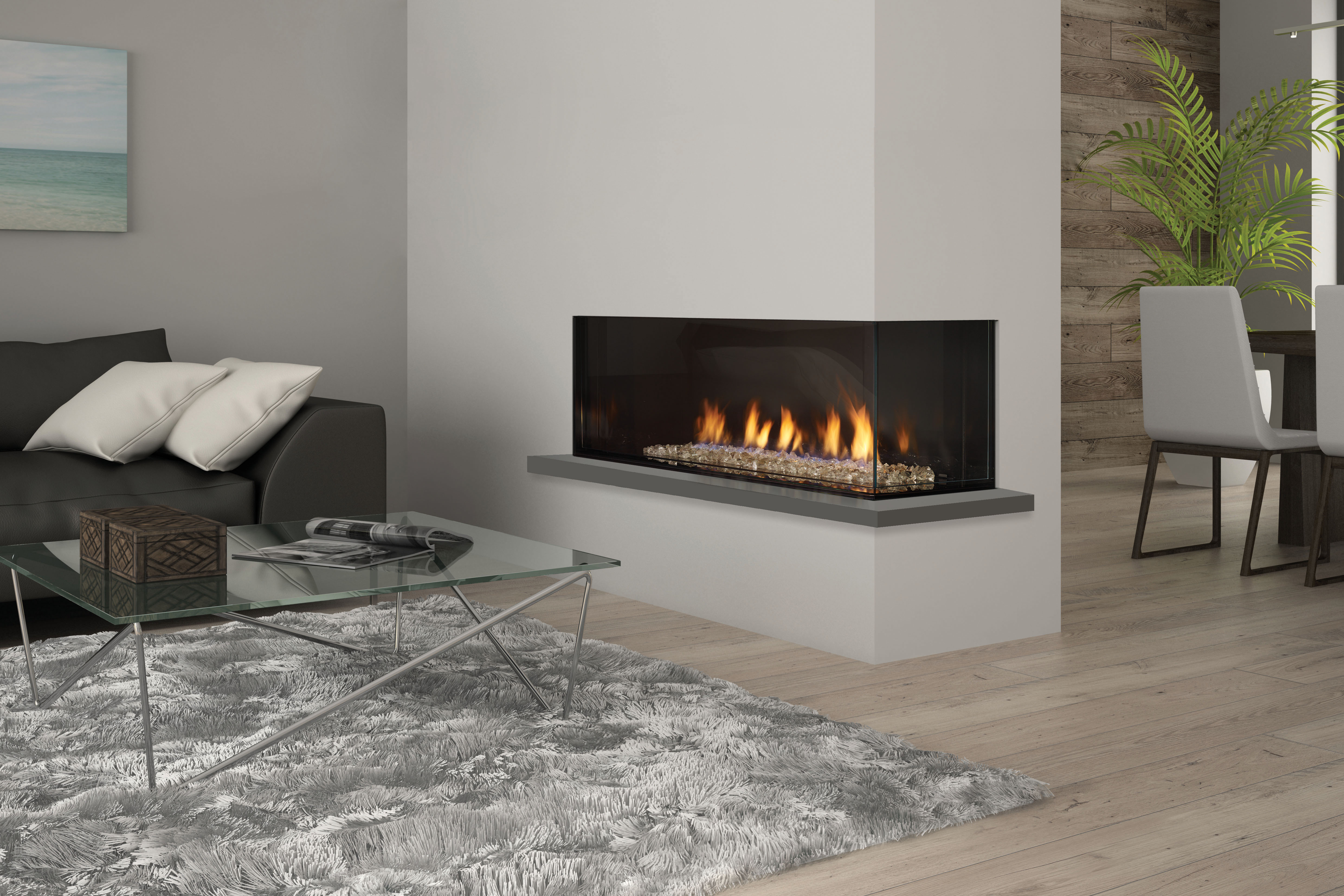
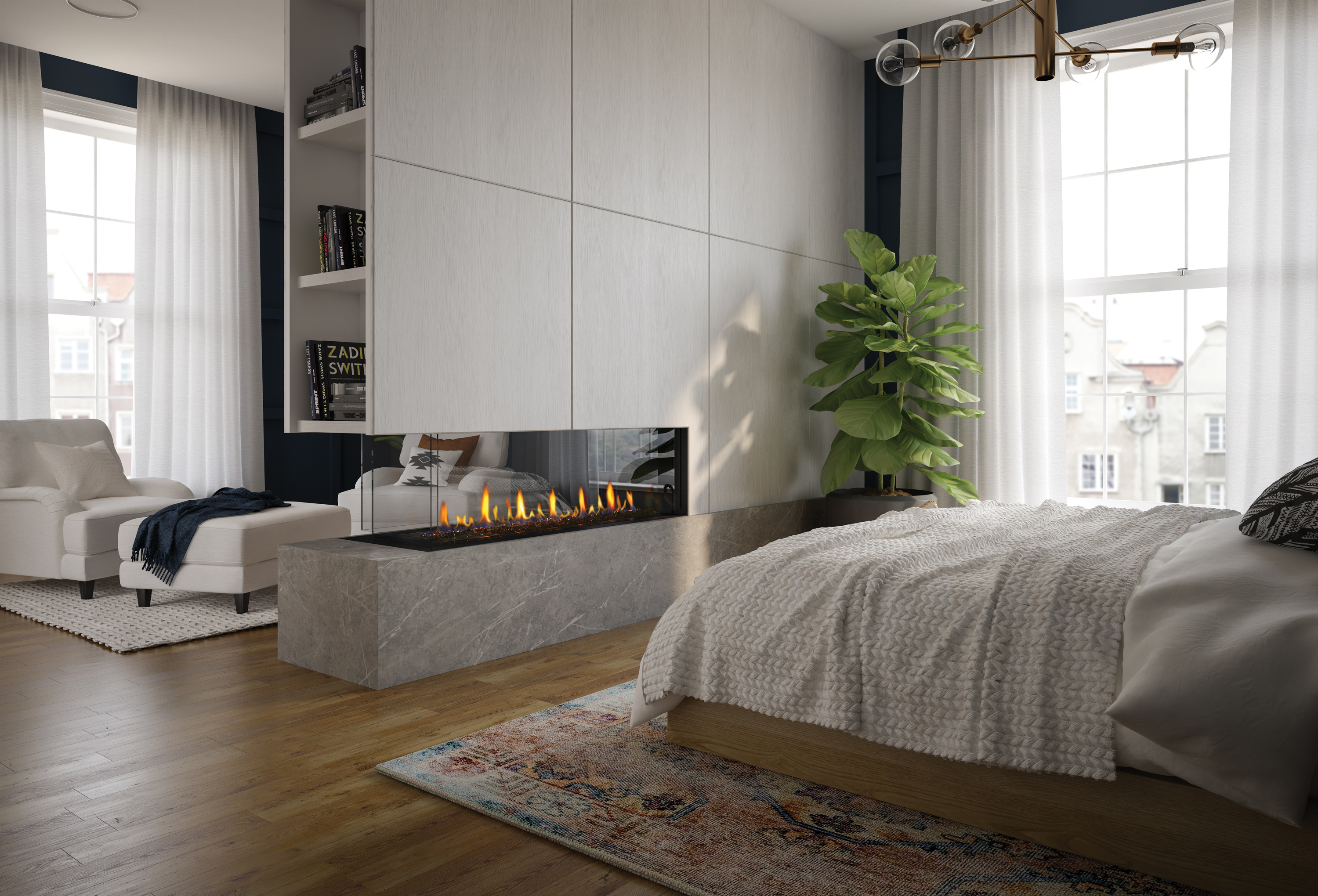
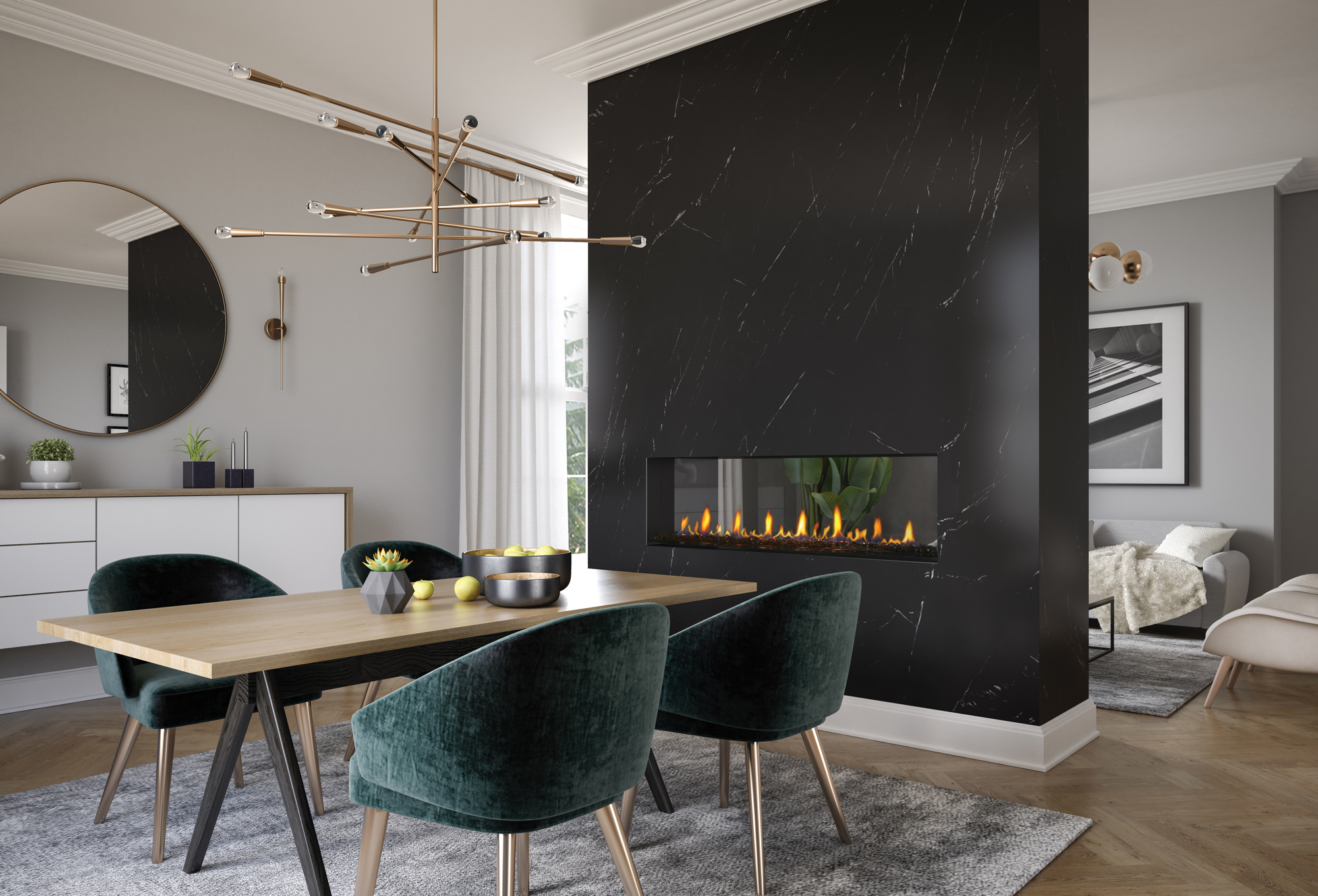
Inside the firebox, the room you are designing keeps making decisions. The bed the flame burns over can be a realistic split-oak or driftwood or birch log set; or a quieter modern field of volcanic stones, andiron lava embers, or crushed glass in black coal, ginger or iceberg; or starfire crystals in black or copper for something more jewel-like. The inner reflective panel is a deep black that doubles the flame and lengthens it visually. The 40-, 60- and 72-inch New York Views can be specified with optional extended view panels, adding up to twenty-four inches of additional glass on either side — the same fire, but framed by a longer, calmer horizon.
None of that is the whole picture, because none of it is the room yet. The City Series gives us five strong starting points and an enormous amount of freedom; what we do at Maxwell Fireplace is turn that freedom into a finished room. We walk you through which configuration suits the wall and the way the room is lived in; we choose the bed, the panel and the trim with you so the engineering disappears and only the fire remains. We plan the vent run with our installers in the room, not from a catalogue, so the power-venting freedom actually pays off where you want it. We pull the permits. We frame. We finish. We do the gas connection, the commissioning, the warranty work, and the years of service after. One team, one conversation, one project — from the first sketch to the moment we light it for you.
Available in natural gas or propane. Pier and See-Through configurations currently shipping in 60″ (50″ sizes coming). The 60″ New York View has its own dedicated piece in the Collection; let us know which form your room is asking for.
Five forms. One uninterrupted flame.
Questions people tend to ask
Is there a metal frame around the glass?
No — and that absence is the design idea of the whole series. No black border, no convection grille along the bottom, no visible mechanism. The fire sits behind a single clean sheet of glass, edge to edge, so the wall around it can be whatever the room wants — honed marble, plaster, fluted oak, painted drywall, wallpaper — carried right up to the flame without a transition.
How is that possible without scorching the wall?
The Cool Wall System. The convective heat the fire produces — the heat that actually warms the room — is captured and directed out wherever the room would rather have it: front, side or top of the unit. The wall directly above the glass is never asked to absorb it, so it stays cool to the touch. That is why your finish can run flush to the fire, and why a television or a piece of original art can hang directly above without being cooked.
Can it go on an interior wall, or in a condominium tower?
Yes. Most direct-vent gas fireplaces need an outside wall and a short, simple flue; the City Series is built around a patented power venting system that pushes exhaust well beyond what a passive vent can reach — long horizontal runs, multiple bends, vent paths that simply are not possible without a fan. The fire can sit in the middle of a floor plan, in a tower, in a hotel lobby, in the room with the view rather than the room with the chimney.
Which of the five configurations is right for my room?
The New York View is single-sided, in 40, 50, 60 and 72″. The San Francisco Bay is the three-sided bay that turns a peninsula into a hearth, in the same four widths. The Chicago Corner handles a corner, left or right, also in four widths. The Santa Monica Pier is the pier form, left or right, in 60″. The Seattle See-Through joins two rooms across a single ribbon of flame, in 60″. Pier and See-Through are currently shipping in 60″, with 50″ sizes coming.
What can the flame burn over?
A realistic split-oak, driftwood or birch log set; or a quieter modern field of volcanic stones, andiron lava embers, or crushed glass in black coal, ginger or iceberg; or starfire crystals in black or copper for something more jewel-like. The inner reflective panel is a deep black that doubles the flame and lengthens it visually.
Can the view be made wider than the standard opening?
On the 40-, 60- and 72-inch New York Views, yes — optional extended view panels add up to twenty-four inches of additional glass on either side. The same fire, framed by a longer, calmer horizon.
Is the 60″ New York View the same thing as the City Series?
It is the single-sided member of the family, and it has its own dedicated piece in the Collection because it is the one most rooms ask for. The engineering underneath every configuration is the same — the city in the name is a hint about the spirit of the form.
A fireplace is only half of it. The other half is who places it.
Maxwell Fireplace is North Vancouver’s Creative FireSpaces™ — and we stay involved in every part of the job. The fireplace itself is ours from the first conversation to the final flame: design and placement, permitting, delivery, installation, and the care that comes after. When the work runs to a surround, a mantel, tile or millwork, we plan it with the trades doing it — yours, or ones we bring in — so the fire and the wall are drawn as one thing rather than two. One point of contact, and nothing lost in the gap between trades.
It’s exactly why a City Series belongs with us. Five configurations are five different conversations with a wall, and choosing between them — then choosing the bed, the panel and the trim until the engineering disappears — is the work that turns freedom into a finished room — and that is the difference between an appliance and a centrepiece. We serve homeowners and contractors across Greater Vancouver, the North Shore, and the Sea to Sky Corridor — Squamish to Whistler and Pemberton — and we’d love to show you what’s possible for your room.