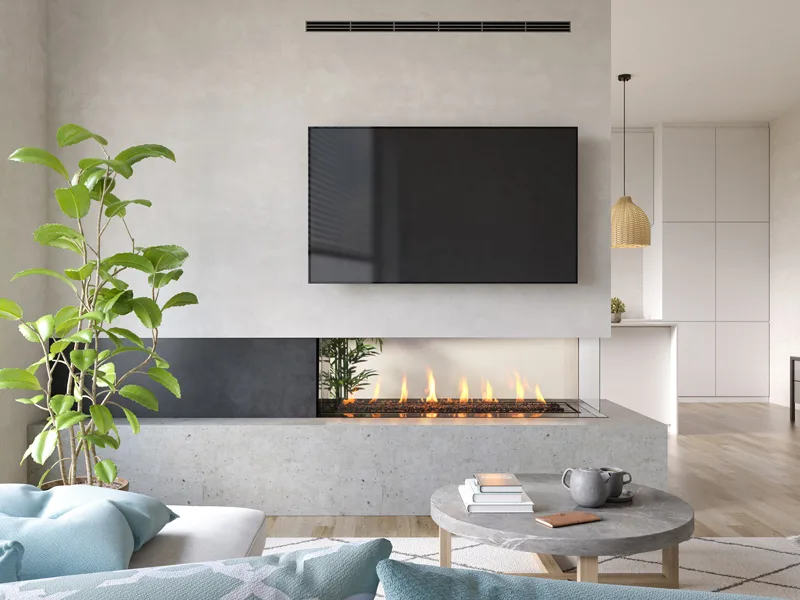
There was a time when a fireplace was a box you stood near. The wall around it was bricked or stoned, a respectful gap stood between it and the rest of the room, and anything within arm's length of the flame was understood to be in the heat zone. The fire had its territory, and the room worked around it.
That assumption is what modern fireplaces have undone — and it's the reason heat management has become the single most important feature you should ask about. Today the expectation is a flush, frameless face. The wall finish carries right to the glass. The television sits directly above. Art lines the wall around it without warping or yellowing. None of that is possible unless the fireplace itself has been engineered to control where its heat goes.
Every manufacturer we carry has built a system for this — and each of them gives it a different name.
Valor — HeatShift™ System
If there's a system that defines what modern heat management can do, it's Valor's HeatShift™ System. A custom-engineered duct captures the heat that would otherwise build up directly above the firebox and redirects it where you actually want it — to an adjoining room, up to a second floor, across the home through hidden channels in the ceiling or wall. The space immediately above the fireplace stays cool because the heat is no longer there; it's been carried away by design. Available on the J and K series of Valor's linear heater models — the 1500, 1600, 1700, and 1800 — it's the reason a Valor linear can sit beneath an art wall, a flat-screen, or a flush plaster finish that would never tolerate a conventional fireplace.
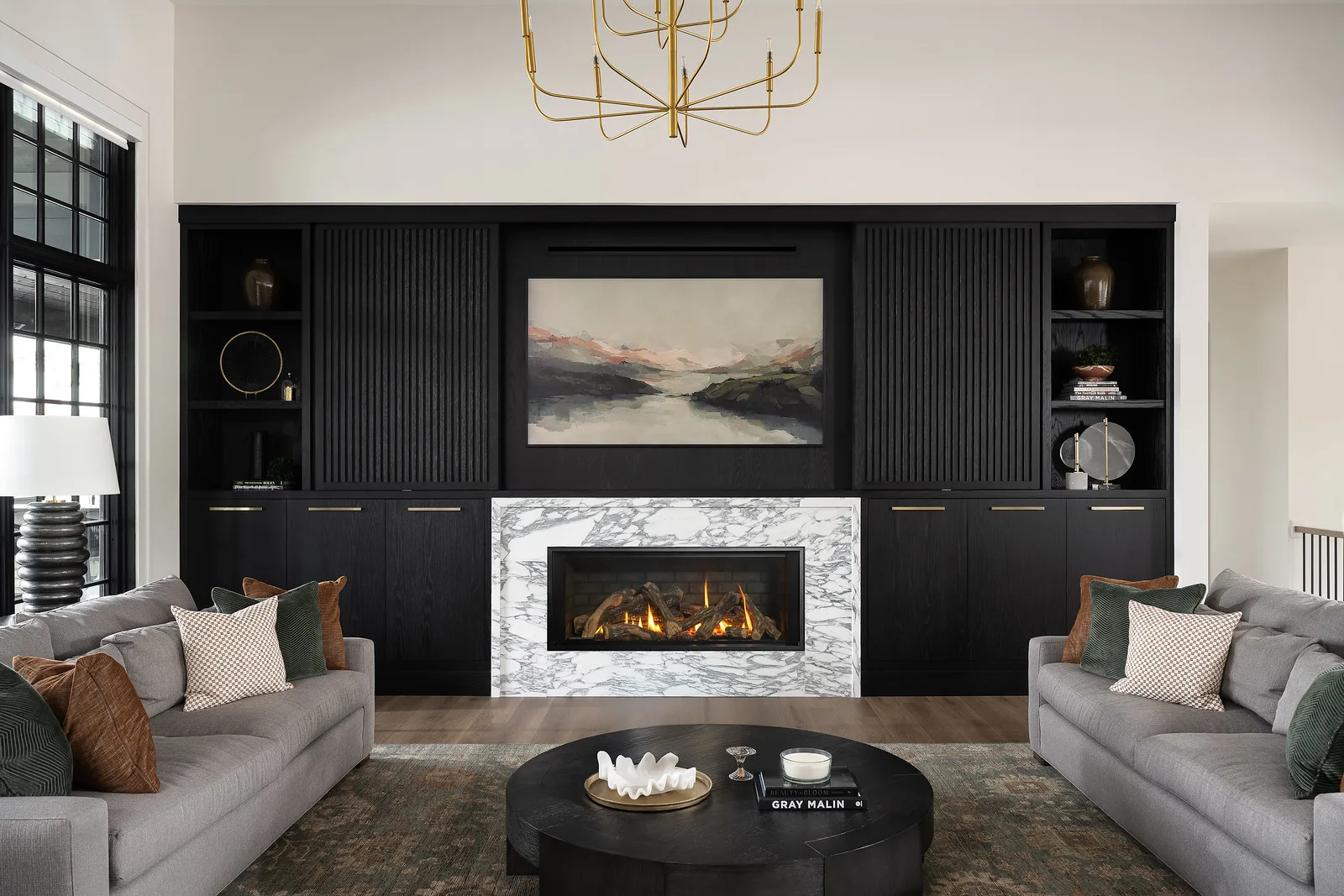
Regency — Cool Wall System
Regency's Cool Wall System keeps surface temperatures low enough to run finishing materials — tile, marble, wood cladding, painted drywall — right to the very edge of the glass. No metal border, no mandatory surround, no awkward transition. The same engineering directs heat away from the area directly above the unit, so TVs and art can sit overhead without concern.
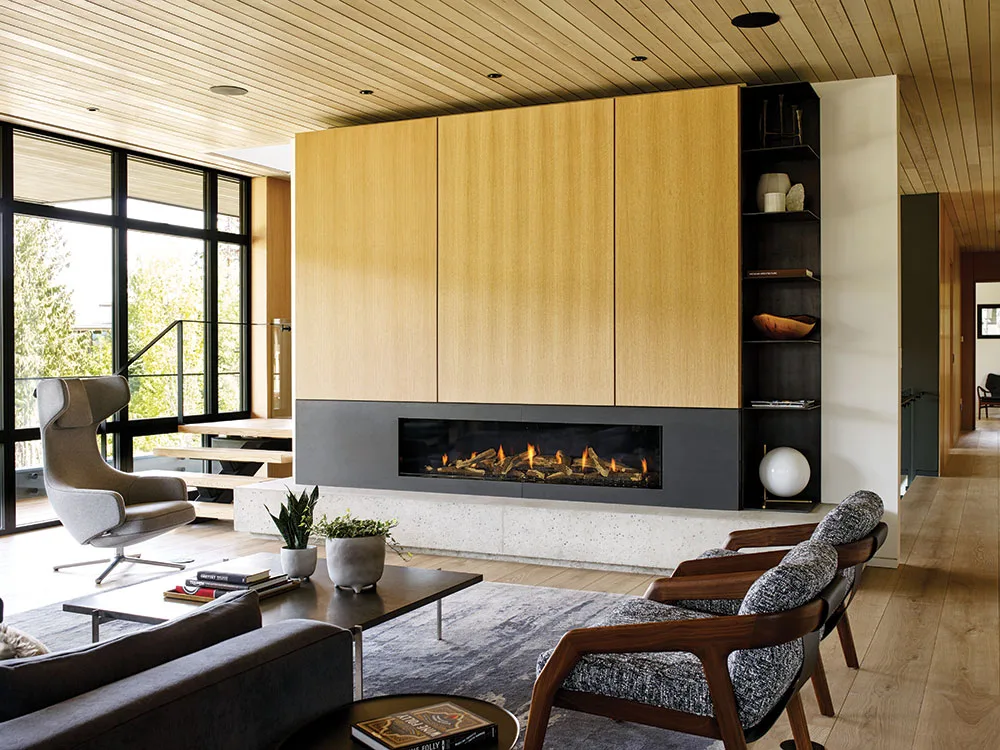
Ortal — Cool Wall Technology
Ortal builds their entire linear fireplace range around the same principle. Their Cool Wall design lets any wall finish — natural stone, custom millwork, painted plaster, glass tile — extend without break to the firebox itself. It's how Ortal's fireplaces achieve the seamless, architectural look they're known for: the wall doesn't end at the fireplace; the fireplace is the wall.
Marquis — Heat-Zone System
Marquis takes a more redirective approach. Rather than minimizing heat at the wall, they collect it and send it somewhere useful. The Heat-Zone duct system captures warm air from above the fireplace and routes it to another part of the house — an adjoining room, an upstairs space, or vented outside in shoulder seasons. The wall above stays cool because the heat literally isn't there anymore.
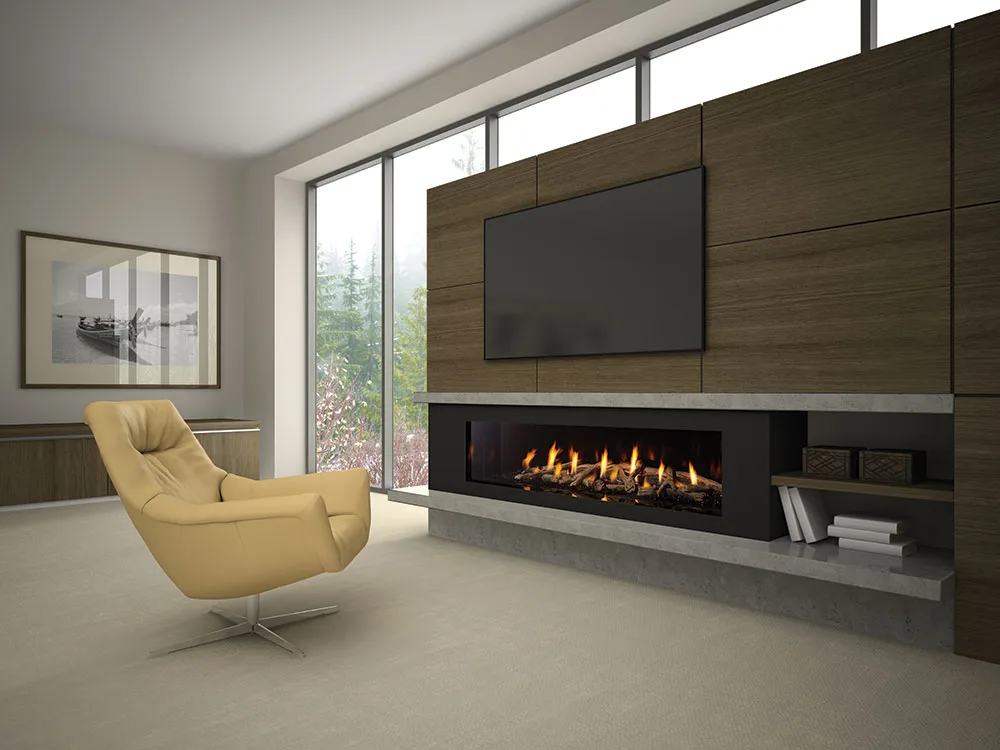
Montigo — Heat Management Cool Wall Systems
Montigo names it directly: their Heat Management Cool Wall Systems combine both approaches into a single engineered package. The fireplace's face and the wall behind it stay cool while warm air is distributed where it's actually useful — across the room rather than concentrated above the unit. Their wide linear and see-through designs, paired with flexible venting, make Montigo a frequent choice for the more architecturally ambitious installs we see.
The Same Idea, Solved Five Ways
The vocabulary differs from brand to brand, but the underlying idea is the same: control where the heat goes, so the rest of the room can be designed freely. A flush wall, a mounted TV, a piece of original art, a quiet evening — none of these are accidents. They're the result of choosing the right heat management system for the install at the very start.
At Maxwell Fireplace we treat heat management as one of the first decisions in a fireplace project — not the last. The right system depends on your wall, your ceiling, the placement of a TV, the kind of finishing material you're planning, and the way the room is meant to live. From assessment through finishing, every detail is considered in-house. One conversation, one team, one Creative FireSpace™ that performs as quietly as it looks.