Few people have watched the fireplace change as closely as Noel Cormack. As president of Maxwell Fireplace, he has spent a career turning fireboxes into focal points — and seen the whole industry shift from selling appliances to designing spaces. We pulled up two chairs by a lit showroom fire and asked him to walk us through it: where fireplace design is heading, how far it has come, and what actually separates a good installation from a great one.

Let's start simple. When someone walks into the showroom today versus, say, fifteen years ago — what's the biggest difference in what they're looking for?
The biggest change is that people no longer think of a fireplace as an appliance. Fifteen years ago, a lot of customers came in with a practical question — "I need something to heat this room, what's the most efficient box you have?" It was a purchase, almost like buying a furnace. Today they come in with a photograph of their living room and a feeling they're chasing. They want to know how the fire will look on the wall, how it will sit with the television, what the surround should be. The conversation has moved from heat output to design — and honestly, that's a much more interesting conversation to have.
What hasn't changed is that a fire still does something to a room that nothing else can. People feel it the moment one is lit. Our job now is to make sure the thing delivering that feeling looks as considered as the rest of the home.
So what are the trends actually driving fireplace design right now?
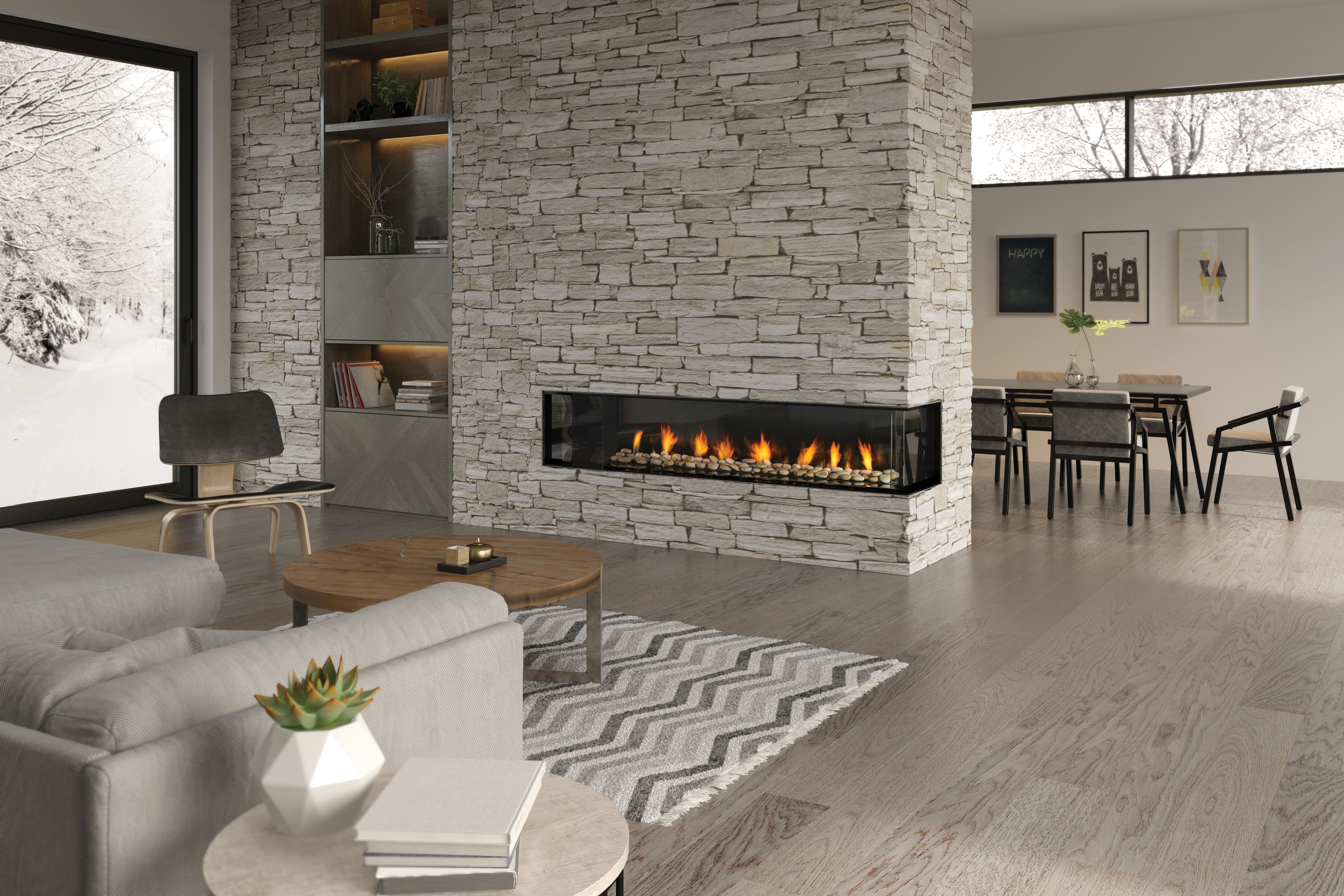
Three big ones. The first is the move to a bigger, taller viewing area. Linear is still the language — wide, architectural, clean — but we've moved past the low, narrow slot of fire. Today people want more glass and more flame in front of them: a viewing area is now more like 50 inches wide by 18 to 20 inches tall. It's tall and wide rather than low and wide, so it reads less like a strip in the wall and more like a picture window of fire. That's where we're at today, and it pairs naturally with the way people build now — open plans, big windows, clean lines.
The second is minimalism at the opening itself. Frameless fronts, no visible louvres, a sheet of glass and then fire. Manufacturers have worked incredibly hard to hide everything that used to interrupt the view — the vents, the trim, the mechanicals — so the fire can just be the fire.
The third is heat management, and it's really the quiet revolution behind everything else. A modern fireplace no longer just radiates off the front and hopes for the best — we can now direct the heat in so many ways. We can push the warm air out through the top or the sides, we can duct it away to warm a different room entirely, and cool-wall systems keep the surround itself safe to the touch so the finish above and around the fire is protected. You can even run the fire mostly for ambiance on a mild evening without overheating the room.
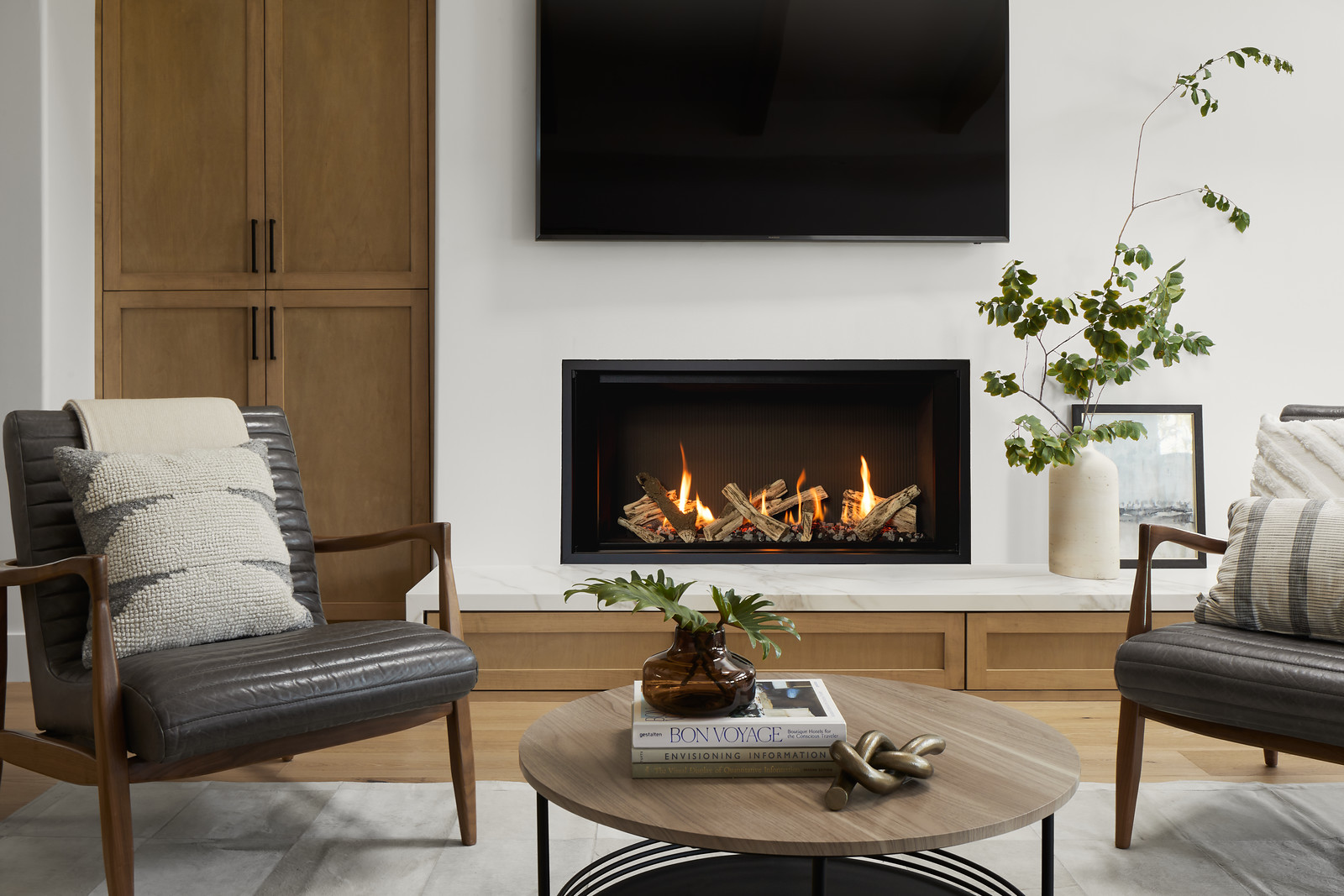
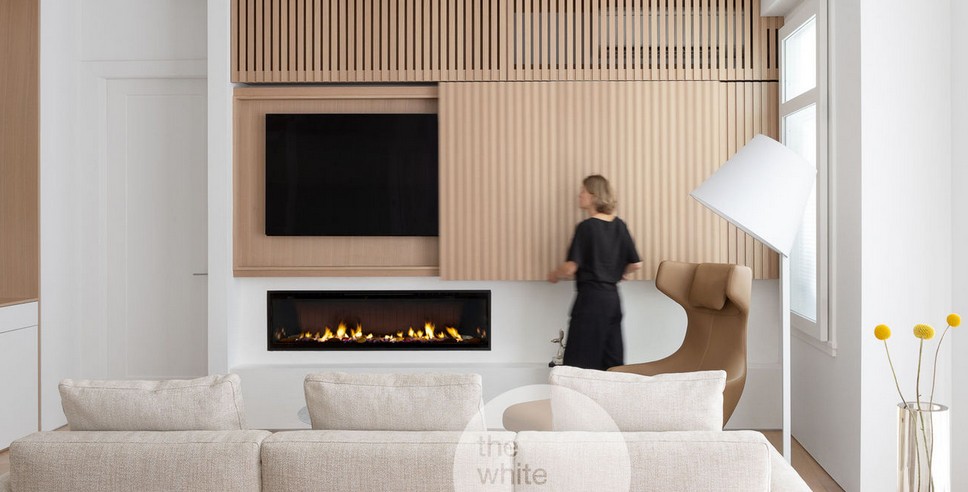
And because we can control the heat that precisely, the design possibilities open right up. The clearest example is the television. In most homes today the TV and the fireplace want the same wall, and that used to be a fight — now you can mount a screen directly above the fire without cooking it, and finish the wall in materials that would never have survived the old radiant heat. That one capability has quietly reshaped how entire rooms get laid out.
You've been in this trade a long time. How has the industry itself evolved — not just the styles, but the technology and the rules?
Enormously, and mostly for the better. When I started, the wood-burning fireplace was still the default in a lot of homes, and efficiency was almost an afterthought — a huge amount of the heat went straight up the chimney. Then regulation caught up. Air-quality rules across the region tightened dramatically on open wood burning, and that pushed the whole market toward cleaner, sealed, high-efficiency gas and, more recently, electric.
The engineering leap in gas has been remarkable. The flames on a good modern gas fireplace are genuinely convincing now — the log sets, the ember beds, the way the fire moves. And direct-vent technology changed everything about where a fireplace can physically go, because you're no longer tied to a traditional masonry chimney. That single advance is why fireplaces started showing up in the middle of a home instead of only against an outside wall.
The newest chapter is electric and water-vapour fire — flame effects with no combustion at all. A few years ago I'd have called those a novelty. Today the best of them are genuinely beautiful, and they let us put a "fire" in places a real flame could never go: a bedroom, a condo with no gas line, a wall that's fully surrounded by cabinetry. The category has grown up fast.
Here's a surprise, then. You said regulation pushed people away from wood — but you're telling me wood burning is actually making a comeback?
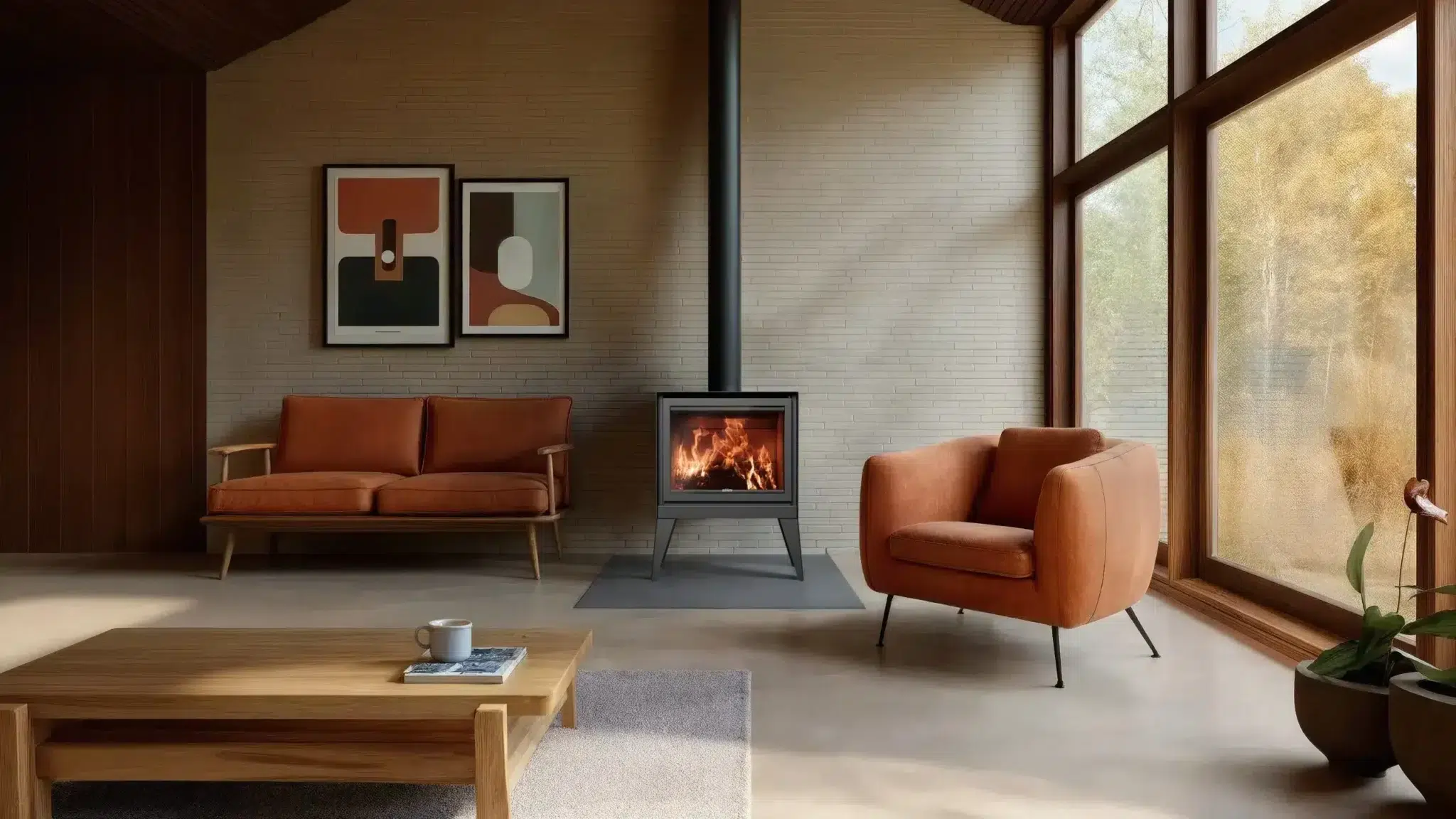
It really is, and it's one of the most exciting things happening in our market right now. People assume the tighter emission rules ended wood burning — but what they actually ended was the old, open, inefficient fireplace that sent most of its heat, and its smoke, straight up the chimney. In its place has come a whole new generation of low-emission wood inserts and freestanding stoves that burn clean enough to meet today's standards while putting out serious, dependable heat. We are hitting it big on these right now.
The momentum here in the Vancouver area has genuinely surprised me, and it's coming from two directions at once. There are the retrofits — a homeowner with an old, drafty masonry fireplace who drops in a modern high-efficiency wood insert and suddenly has a heat source that actually works, looks current, and burns responsibly. And there are the new-home builds, where a freestanding stove is designed in from the very beginning as the architectural centrepiece of the room. A few things are driving it: a real appetite for energy resilience — a wood stove keeps a home warm when the power goes out, and people remember that — the authenticity of a genuine fire that no other heat source quite replicates, and technology that finally lets you have all of it without the environmental guilt.
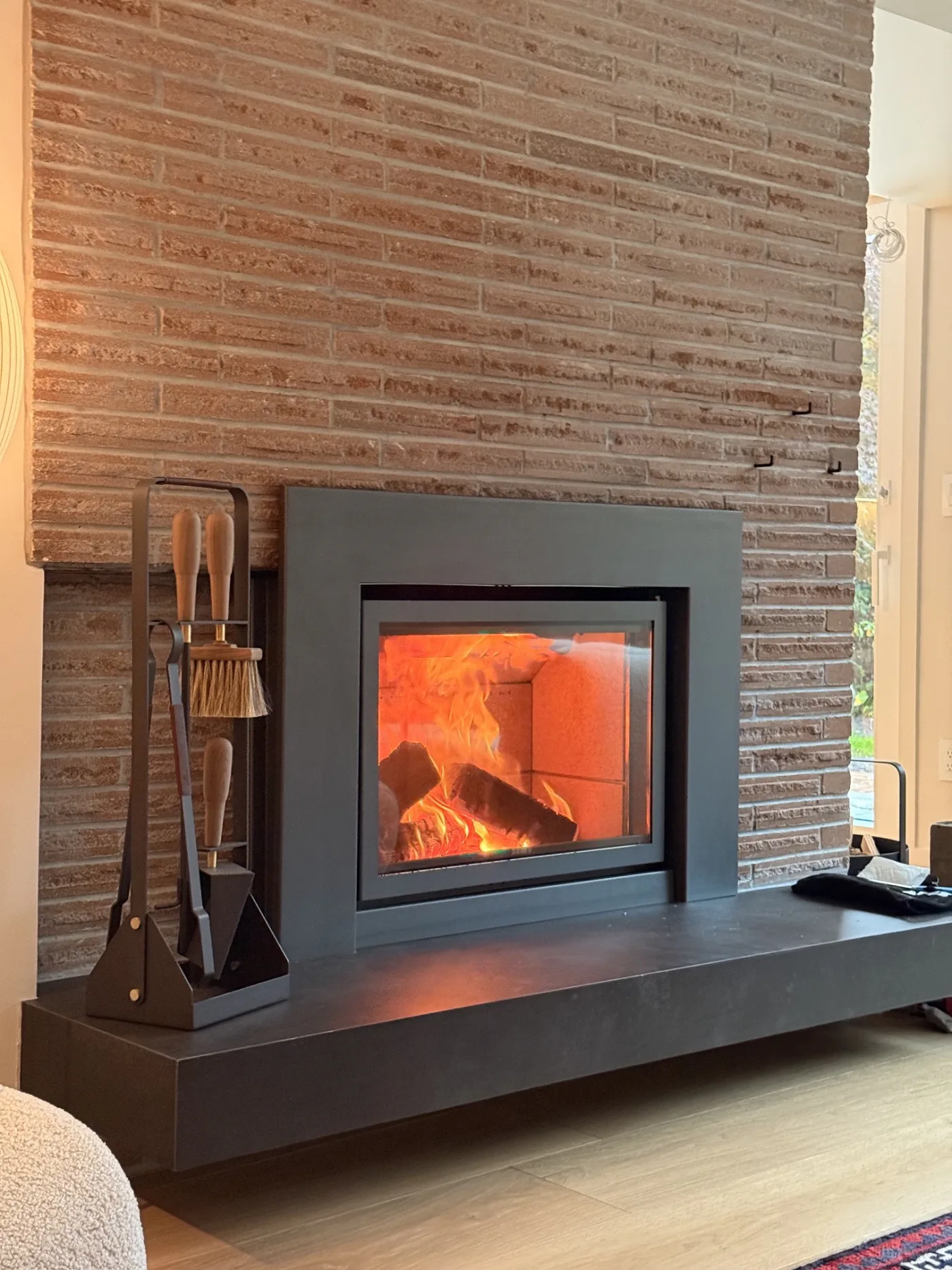
This is exactly the kind of project where our experience earns its keep. Fitting a modern insert into an existing masonry opening, or lining a chimney for a new stove, is not a drop-in job — the sizing, the flue, the clearances, and the surround all have to be right, or you lose both the efficiency and the look. Whether it's a retrofit or a new build, we plan and install the whole thing in-house, so the finished Creative FireSpace™ by Maxwell Fireplace burns as beautifully as it looks.
With all of that choice, it must be easy for a homeowner to feel overwhelmed. What sets Maxwell Fireplace apart when they walk through the door?
We don't sell fireplaces off a shelf. What we build is what we call a Creative FireSpace™ by Maxwell Fireplace — the whole environment around the fire, not just the box. A beautiful fireplace dropped into a badly planned wall will always look like it was dropped in. The magic is in everything around it: the placement, the proportions, the surround, the sightlines, the way it resolves with the architecture.
So when you come to us, you're not just choosing a unit. We help you select the right fireplace, firebed, and finish for the space; we plan the vent run; we handle the framing, the permits, and the in-house installation; and we coordinate the finishing trades so the wall around the fire looks intentional rather than assembled. One team, one point of contact, from the first conversation to the final flame. That's the part a lot of people don't realize they need until they've lived through a project that didn't have it.
That placement and installation piece keeps coming up. Why does it matter so much?
Because the design freedom everyone loves in modern fireplaces — the see-through models, the linear widths, the anywhere-placement that direct venting allows — only pays off if the placement and the venting are handled with real care. A see-through fireplace between a living room and a dining room is stunning when the framing, the clearances, and the finish are worked out in advance. Rushed, it's a source of problems that can stall an entire renovation.
Decades of doing this means we've already solved, in advance, the things that usually derail a fireplace project. We know how these units behave in a real wall, not just in a brochure. That experience is quietly the most valuable thing we bring — it's the difference between a fireplace that looks like it was always meant to be there and one that looks added on.
Last question. For someone just starting to think about a fireplace, what's the one piece of advice you'd give them?
Come and see a fire in person before you decide anything. A fireplace is one of the few things in a home you really can't judge from a screen — you have to stand in front of a burning fireplace to understand what it does to a space. So come into the showroom, watch a few of them burn, and tell us about your room. Bring the photo, bring the feeling.
And start the conversation early — before the walls are closed up, ideally. The best Creative FireSpaces™ we've ever built are the ones where we were in the room, so to speak, from the beginning. Get us involved early and we can design the fire into the home rather than around it. That's when the result stops looking like a fireplace you bought and starts looking like a part of the house that was always supposed to be there.
Want to continue the conversation? Visit our showroom at 1380 Pemberton Ave, North Vancouver, or call us at 604-987-1293 — we'd love to help you imagine what a Creative FireSpace™ by Maxwell Fireplace could look like in your home.