Ortal — Freedom of Design
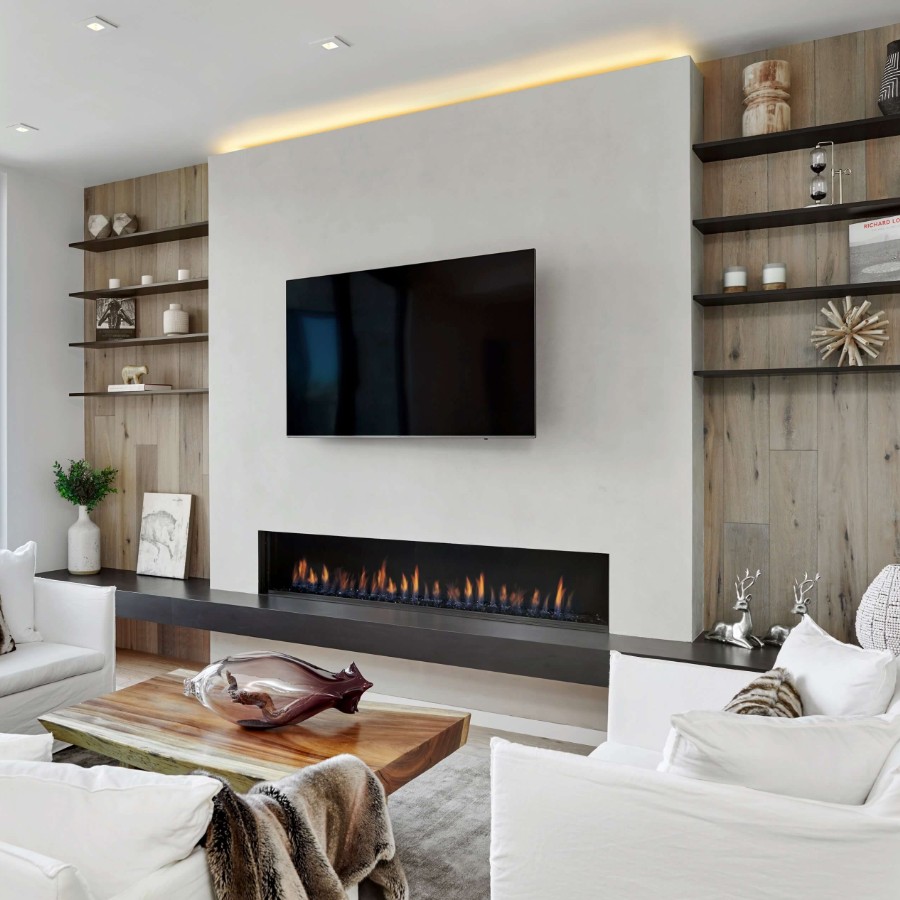
Ortal makes the kind of fire you design a room around. Engineered in a way few fireplaces are, its fireboxes read less like an appliance hung on a wall than an opening cut into one — a wide, uninterrupted plane of flame behind a single clean sheet of glass. The view is the point. A Front Facing 44H opens nearly forty-four inches across and twenty-two high; the larger frames run wider still. It is a landscape of fire, not a porthole.
And the fire inside it is genuinely good — tall, full, and even across the whole width, with no cold corners and no gaps. You choose the bed it burns over: realistic split logs, smooth river pebbles, or crushed glass, set against a black reflective interior that mirrors the flame and gives it depth. Lit low on a quiet evening or run hard on a cold night, it holds its picture.
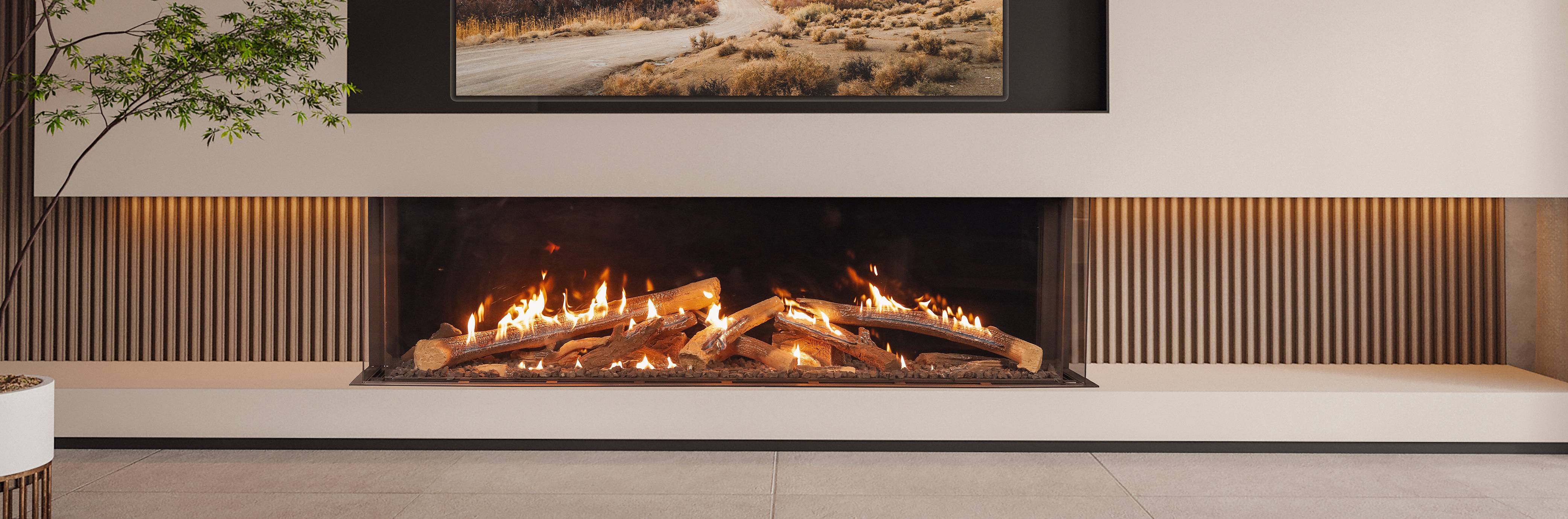
What lets you build that fire into the heart of a room is the way Ortal handles its heat. Its Passive Cool Wall Technology draws the convective heat up and releases it into the room before it can collect behind the wall — continuously, with no fan, no extra wiring, and no background hum. The wall directly above the glass stays remarkably cool, which is why you can do the thing most fireplaces forbid: hang a television, or art, or simply finish in a material that would otherwise scorch, right above the fire. Heat where you want it; a cool, clean wall where you don't.
The second piece of engineering is the one that decides where a fireplace can go at all. Conventional direct-vent fireplaces have to sit near an outside wall — the flue can only run so far. Ortal's Power Vent system changes the math entirely. A fan-assisted vent moves the exhaust as far as 165 feet from the firebox, through long runs, around as many as twelve bends, even downhill. That means the fire can live on an interior wall, in the centre of a floor plan, in the room that has the view rather than the room that happens to have the chimney. For the homes we work in — where the best wall and the easy-to-vent wall are rarely the same wall — this is the major factor. It is the difference between where a fire is allowed and where you actually want it.
One fire, many forms
The same engineering, shaped to the room it opens into.
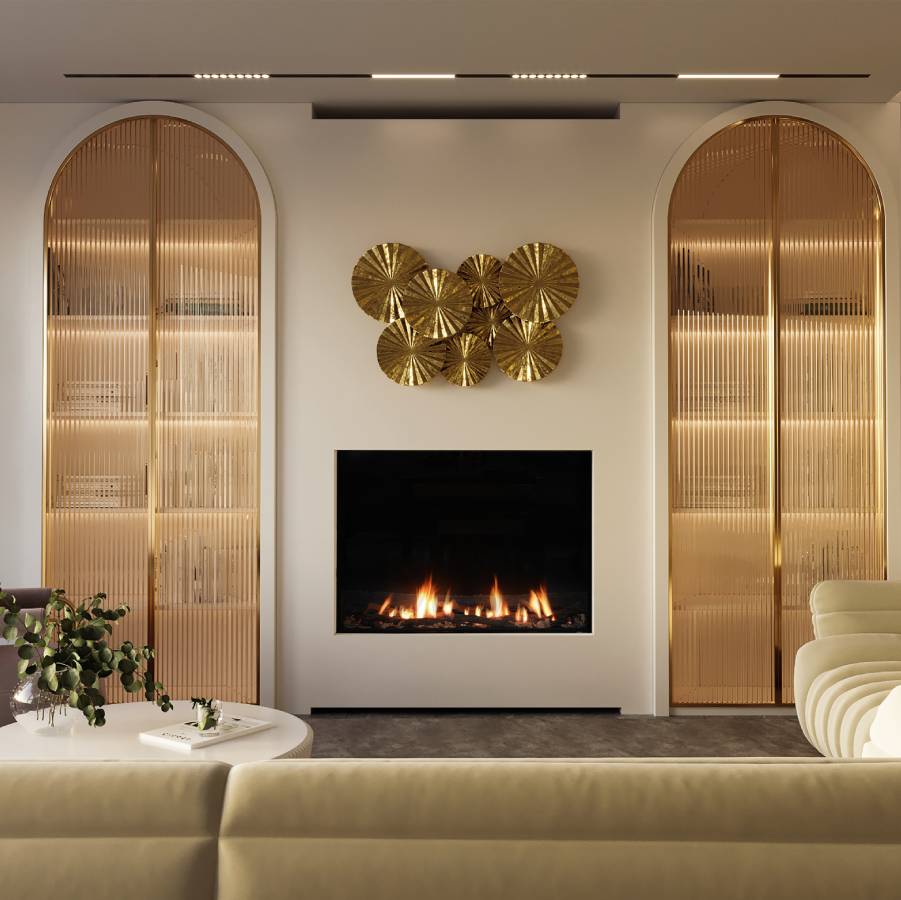
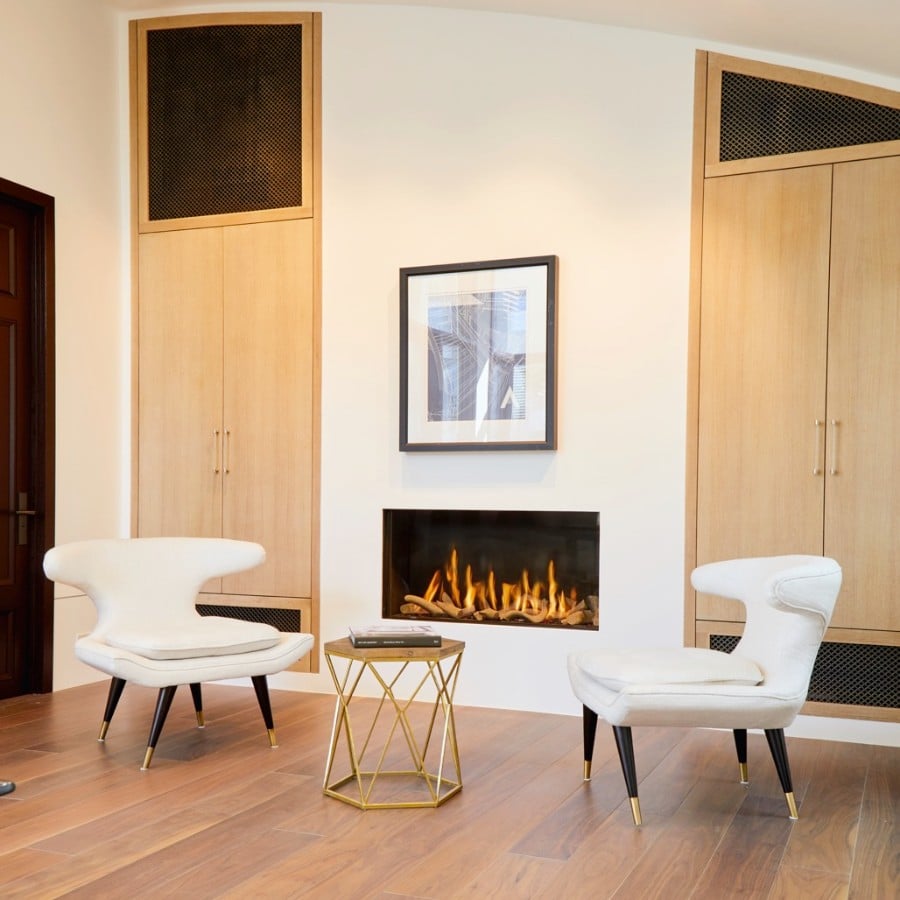
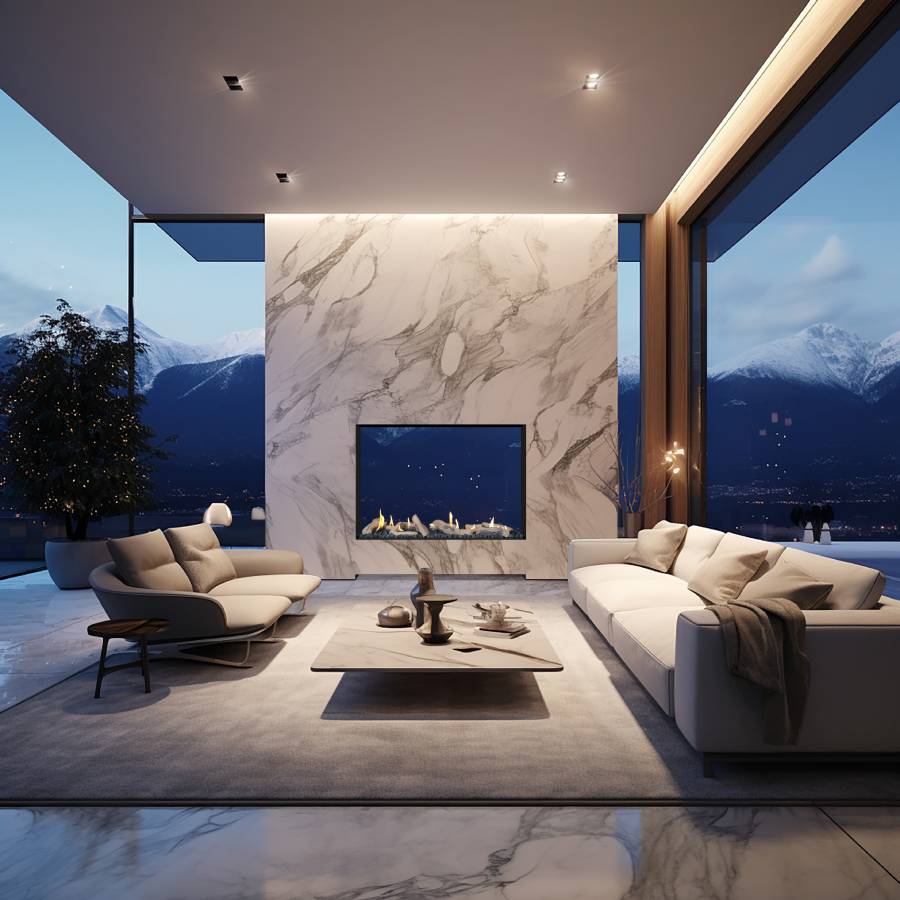
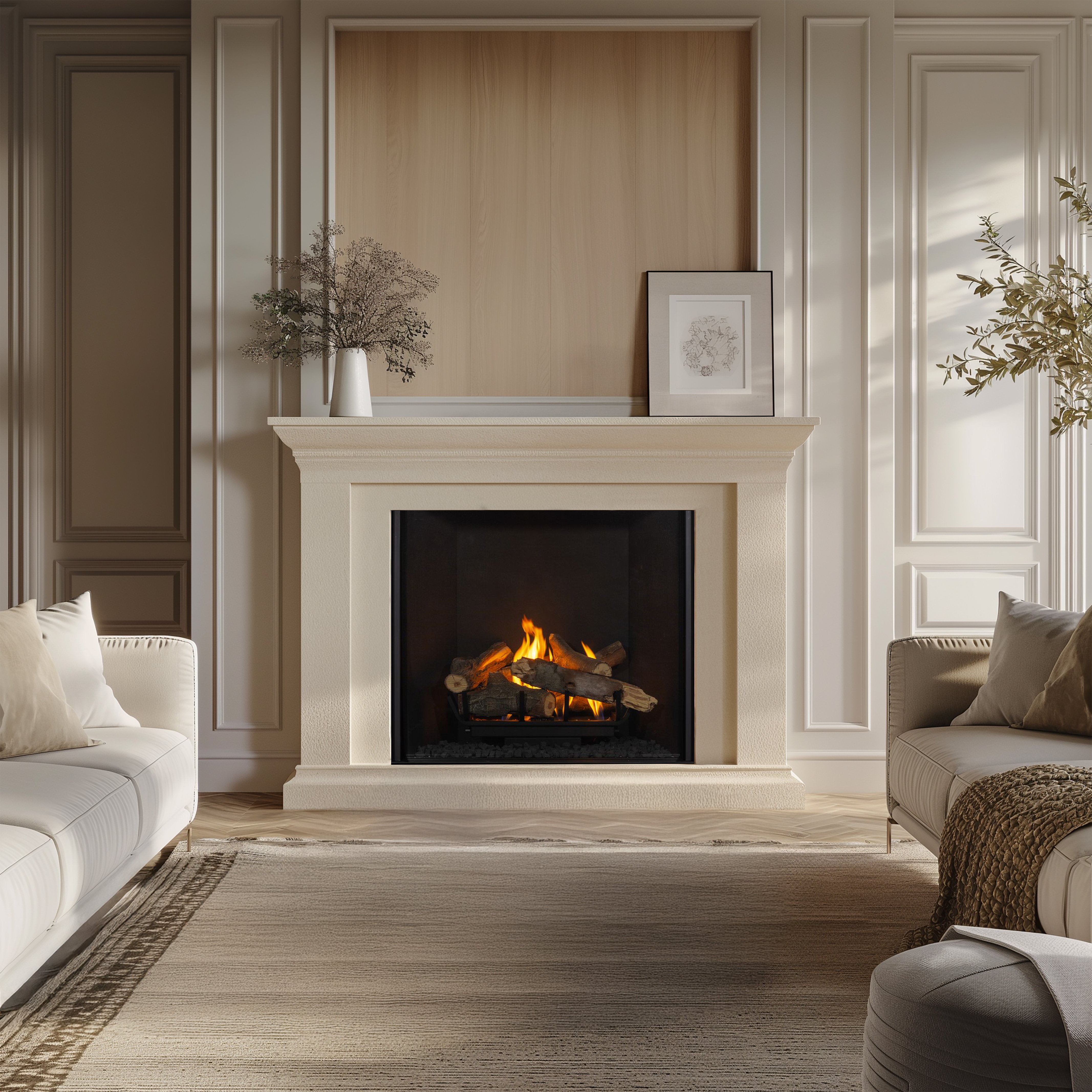
Ortal gives us an extraordinary amount to work with — a wall of fire, a cool surface above it, and the freedom to put it almost anywhere. Turning that freedom into a finished room — siting the firebox, planning the vent run, detailing the surround so the engineering disappears and only the fire remains — is exactly what Maxwell Fireplace does. It is, at full scale, a Creative FireSpace™.
Available in many sizes and configurations — front-facing, corner, three-sided, see-through, and island — in natural gas or propane. Cool Wall and Power Vent options are specified to your room, so let's plan it together.
Endless design, that you control.
Questions people tend to ask
Can I hang a television directly above it?
Yes, and this is the engineering people come for. Ortal’s Passive Cool Wall Technology draws the convective heat up and releases it into the room before it can collect behind the wall — continuously, with no fan, no extra wiring and no background hum. The wall directly above the glass stays remarkably cool, which is why you can do the thing most fireplaces forbid: hang a television, or art, or simply finish in a material that would otherwise scorch, right above the fire.
Can the fire go on an interior wall, away from any outside wall?
It can, and this is the option that decides where a fireplace is possible at all. A conventional direct-vent fireplace has to sit near an outside wall, because the flue can only run so far. Ortal’s Power Vent changes the arithmetic entirely: a fan-assisted vent moves the exhaust as far as 165 feet from the firebox, through long runs, around as many as twelve bends, even downhill. The fire can live in the centre of a floor plan, or in the room that has the view rather than the room that happens to have the chimney.
How large is the opening?
Larger than most people picture. A Front Facing 44H opens nearly forty-four inches across and twenty-two high, and the larger frames run wider still. The fireboxes read less like an appliance hung on a wall than an opening cut into one — a landscape of fire rather than a porthole.
What configurations does it come in?
Front-facing, corner, three-sided or bay, see-through tunnel, island, and indoor-outdoor, in natural gas or propane. Which form a room wants is usually decided by how it is lived in rather than how it is drawn, so it is worth settling that before the finish.
What does the fire burn over?
Your choice of bed: realistic split logs, smooth river pebbles, or crushed glass, set against a black reflective interior that mirrors the flame and gives it depth.
Does the flame still look right turned down?
It does. The fire is tall, full and even across the whole width, with no cold corners and no gaps — lit low on a quiet evening or run hard on a cold night, it holds its picture.
Do the Cool Wall and Power Vent options come as standard?
They are specified to your room rather than assumed. Both change what the wall and the vent run have to do, so they are decisions to make early — during planning, not after the framing is closed.
A fireplace is only half of it. The other half is who places it.
Maxwell Fireplace is North Vancouver’s Creative FireSpaces™ — and we stay involved in every part of the job. The fireplace itself is ours from the first conversation to the final flame: design and placement, permitting, delivery, installation, and the care that comes after. When the work runs to a surround, a mantel, tile or millwork, we plan it with the trades doing it — yours, or ones we bring in — so the fire and the wall are drawn as one thing rather than two. One point of contact, and nothing lost in the gap between trades.
It’s exactly why an Ortal belongs with us. Cool Wall and Power Vent between them let a wall of fire go almost anywhere and carry a finish or a television directly above it — freedom that only becomes a finished room once the firebox is sited and the vent run planned — and that is the difference between an appliance and a centrepiece. We serve homeowners and contractors across Greater Vancouver, the North Shore, and the Sea to Sky Corridor — Squamish to Whistler and Pemberton — and we’d love to show you what’s possible for your room.