Spartherm 600, 700 & 800 — The Fire That Fits the Wall You Have
A German wood fire in three sizes, built as a masonry insert, a zero-clearance fireplace or a freestanding stove — one wide pane of clear glass, and the certification stated on the page.
Most wood fireplaces begin with a question about the wall. Is there a hearth already, or are we making one? Spartherm answers by building the same fire for either. The 600, 700 and 800 are one family of wood-burning fireboxes — a wide front glass, a hinged door, a firebox kept deliberately plain — offered as a masonry insert for an opening you already have, as a zero-clearance fireplace framed into a wall that does not exist yet, and as a freestanding stove on a base of its own. Choose the size for the room; choose the form for the wall.
The maker is a family firm from Melle, in Lower Saxony, founded in 1986 by Gerhard Rokossa, who had built his first open fireplace in the early 1980s from unused clinker bricks. It now makes about fifty thousand fireplaces a year and sends roughly a third of them abroad. What it offers on this side of the Atlantic it describes, with some pride, as the reduced European design: a fire in a plain black frame, a smooth flame behind clear glass, and very little else to look at.
Begin with the question that ends most wood-fire projects before they start. The 600, 700 and 800 are the EPA-certified side of Spartherm’s range, the models it tests for North America, and EPA certification is one of the two standards Metro Vancouver’s Bylaw 1303 asks for, alongside CSA B415.1. Spartherm’s own flyer lists the 800 at 1.3 grams of particulate an hour. For the 600 and 700 the figures in its papers run from about 1.1 to 1.8 grams an hour, depending on the document and the version, so we read the certificate for the exact unit before anything is ordered. The registration, and the best-burning-practices declaration that goes with it, are the homeowner’s to hold; we prepare them with the permit. Spartherm’s decorative Arte and Varia fireplaces are a different matter, and they have a page of their own.
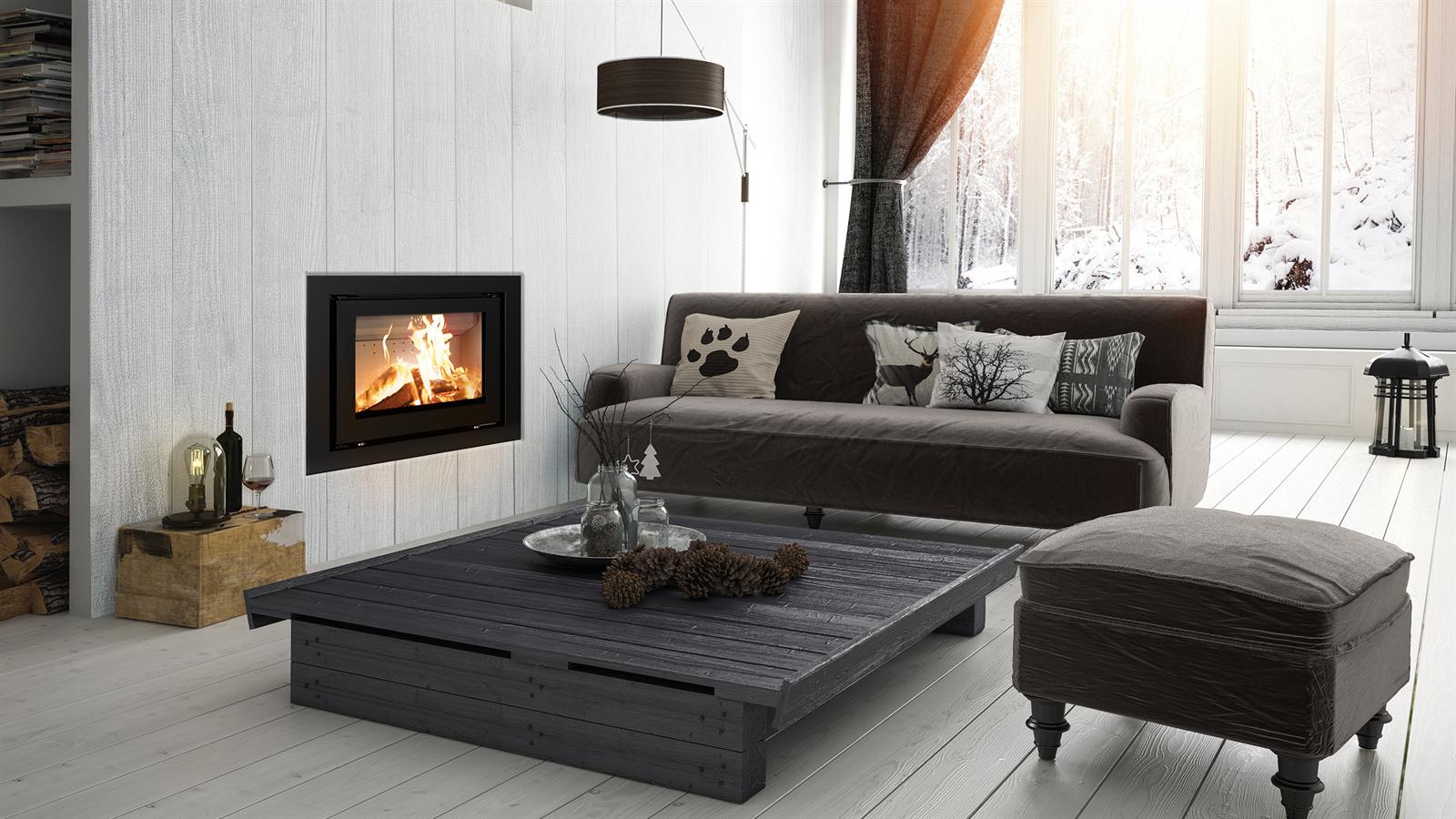
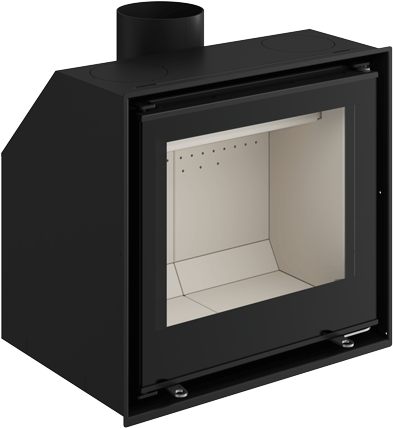
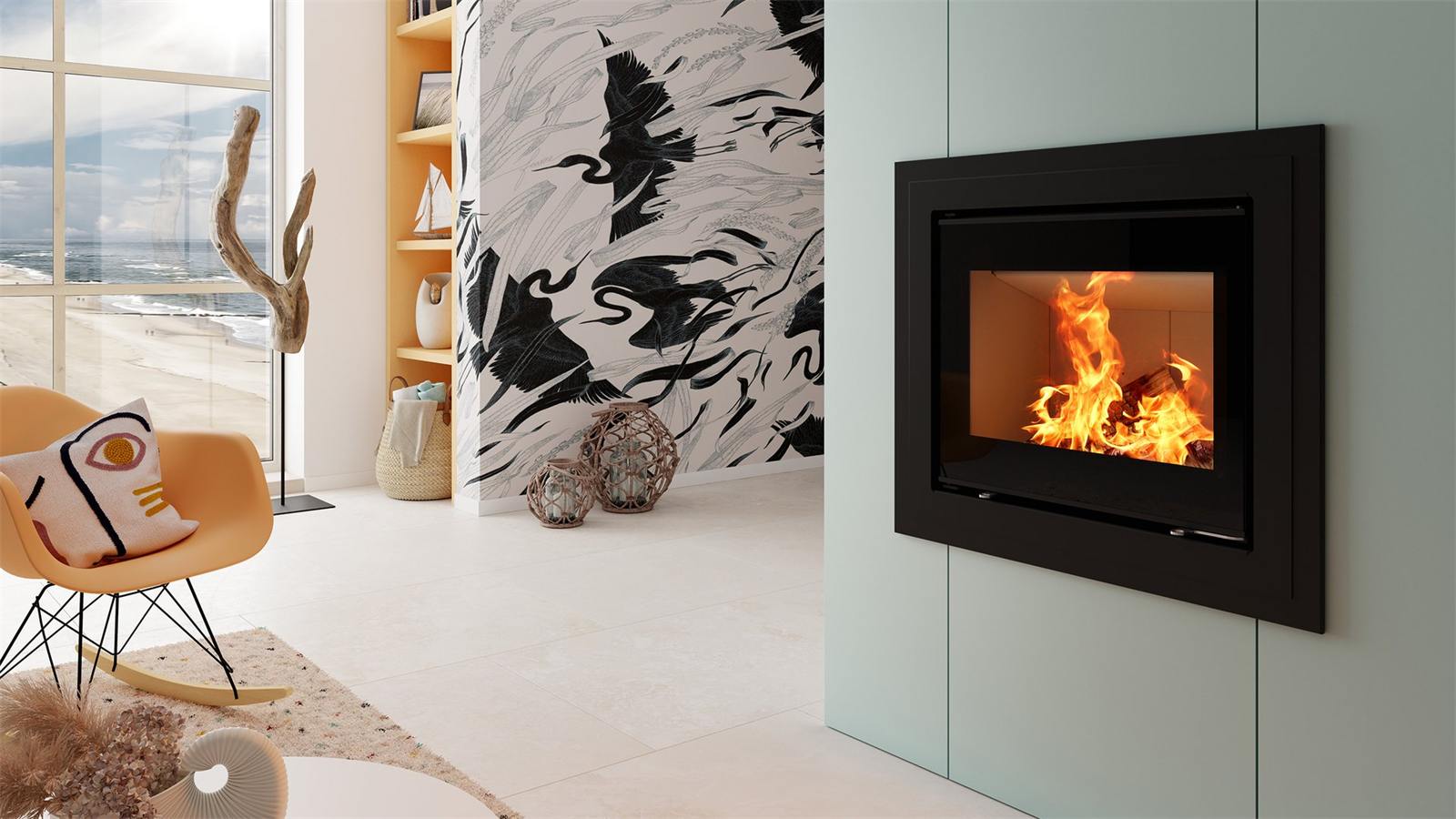
The insert is the answer for a masonry fireplace you already have and would like to use properly. The 800 insert stands about 24 inches high, 31 wide and 19 deep and weighs 286 pounds; a finishing frame in three widths, 60, 80 or 100 millimetres, closes the gap between it and the old opening, and its 6-inch flue leaves from the back or the top. The masonry stays and the fire inside it changes: the heat comes into the room instead of going up the chimney, and the glass stays clear.
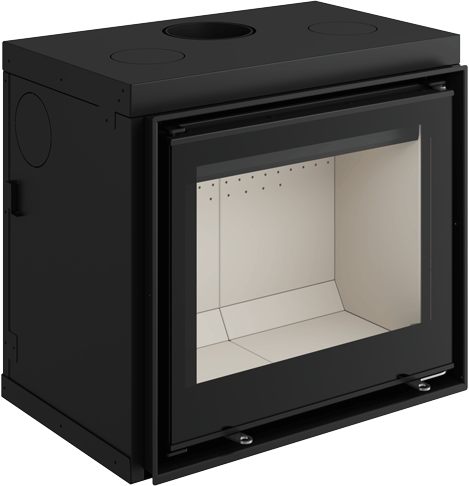
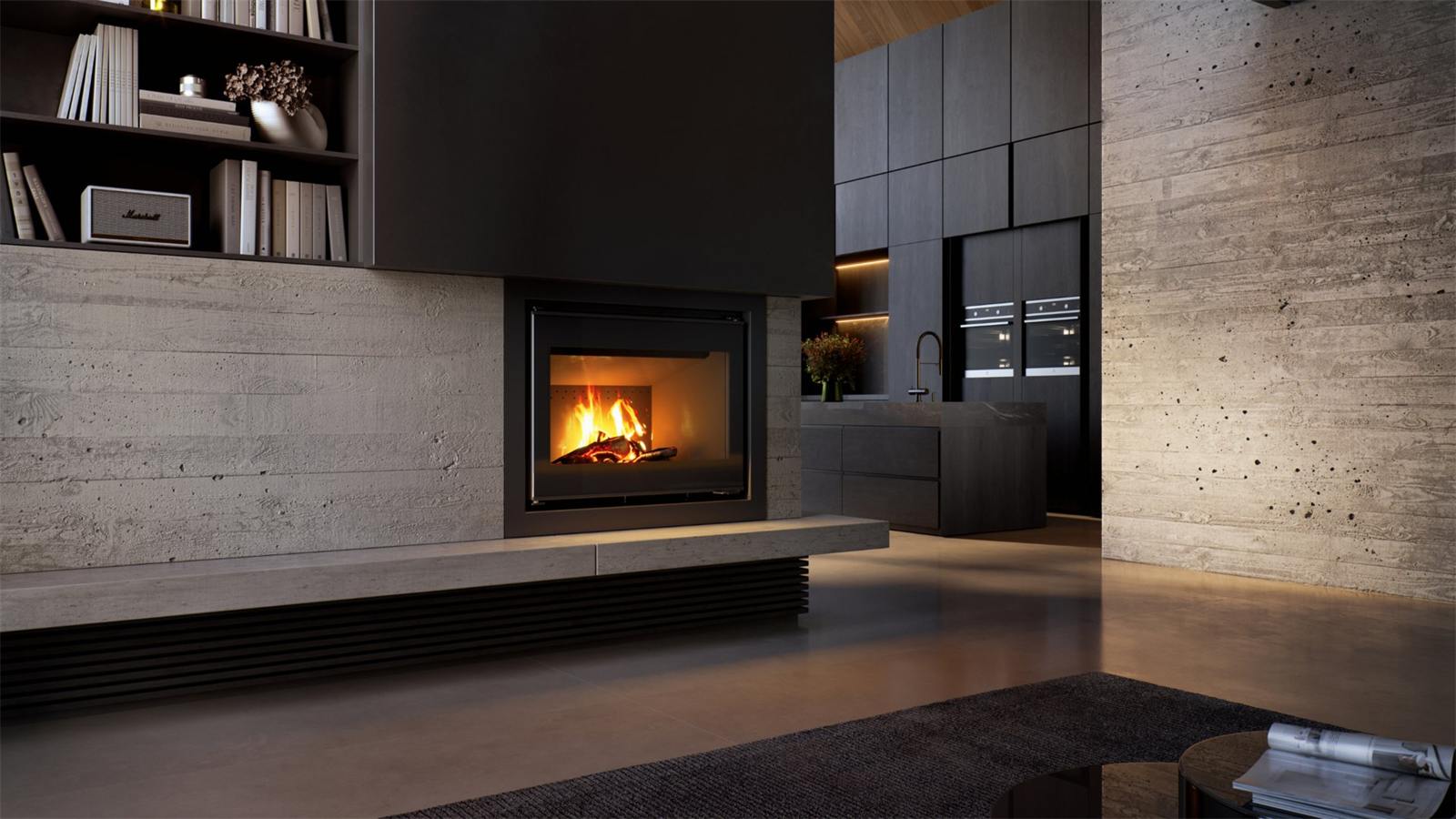
The zero-clearance fireplace is the answer for a wall that is still to be built. It is a fireplace in its own right, listed by CSA to UL 127 and ULC S610, the North American standards for factory-built fireplaces, and framed into the house on a listed chimney with its combustion air brought in from outside through a 5-inch pipe. Spartherm’s manual puts the 600 at 265 pounds and the 700 at 298, figures the framing and the floor have to know before the first drawing is made.
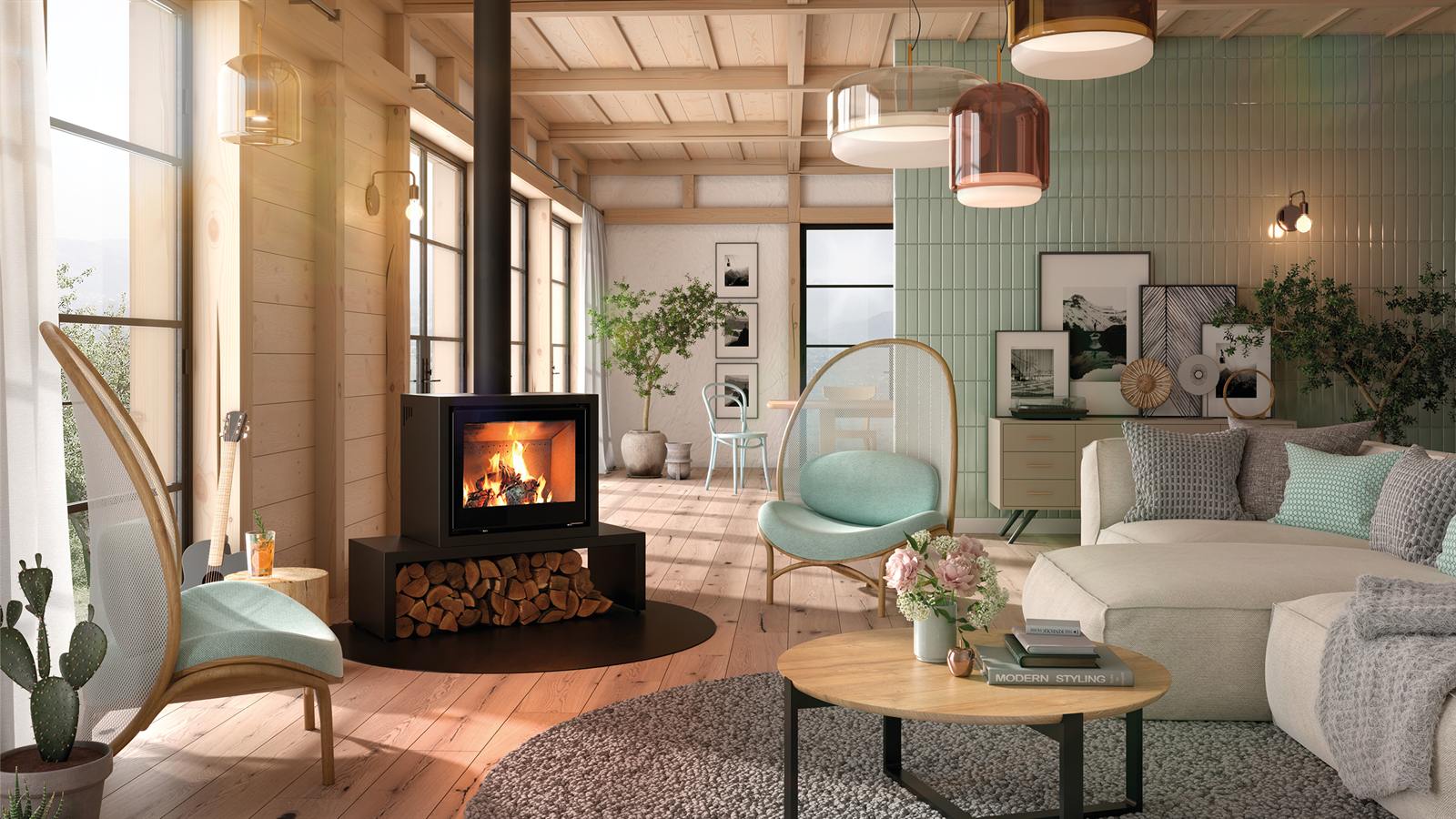
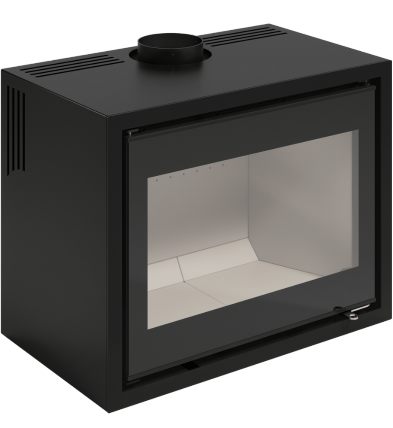
The freestanding stove, above, takes the same firebox out into the room on a base: in Spartherm’s picture, a low black plinth that keeps the evening’s logs under the fire. It wants a hearth, clearances honoured to the inch and a flue that draws, and it is the form for a house with no fireplace at all.
Certified for installation in Metro Vancouver, model by model. Spartherm lists the 800 and the current 2.0 versions of the 600 and 700 as EPA approved for the United States and Canada, and publishes the 800 at 1.3 grams an hour. Inside the Urban Containment Boundary the appliance must be registered before it is used, and the owner files a best-burning-practices declaration renewed every three years; individual municipalities can add requirements of their own. We check the exact model and its certificate against the bylaw before anything is ordered, and prepare the registration with the permit.
A fire like this is decided at the wall, which is where the work of Maxwell Fireplace begins: choosing the size for the room and the form for the wall, measuring the opening or the framing, the flue run and the clearances, pulling the permit and preparing the Bylaw 1303 registration, and installing the fire with our own crew. The frame finishes an insert; the plaster, tile or timber around a zero-clearance fireplace we plan together with the trades doing it — yours, or ones we bring in. Tell us which wall, and we will tell you which of the three it wants.
Images courtesy of Spartherm.
Questions people tend to ask
Are the Spartherm 600, 700 and 800 certified for installation in Metro Vancouver?
They are Spartherm’s EPA-certified models, and EPA certification is one of the two standards Metro Vancouver’s Bylaw 1303 accepts, alongside CSA B415.1. Spartherm’s flyer gives the 800 a tested particulate rate of 1.3 grams an hour; for the 600 and 700 its papers give figures between 1.14 and 1.8 grams an hour depending on the document and the version, so we read the certificate for the exact unit. Inside the Urban Containment Boundary the appliance has to be registered before it is used, and the registration is the homeowner’s to hold; we prepare it with the permit.
What is the 2.0, and which version would I get?
The 2.0 is the current version of the 600 and 700. Spartherm’s own listing shows the 2.0 models and the 800 as EPA approved for both the United States and Canada, with a single-setting burn rate and a preset combustion-air setting, so there is no air control to learn. It shows the earlier 600 and 700 as available for Canada only, with an EPA certificate that expired in November 2024. Spartherm does not say what else changed, so we confirm the version and read its certificate before anything is ordered.
What is the difference between the insert, the zero-clearance fireplace and the stove?
The insert goes into an existing masonry fireplace and is vented up the old chimney. The zero-clearance fireplace is a fireplace in itself, framed into a new wall and vented through a listed chimney; the 600 and 700 take their combustion air from outside through a 5-inch pipe. The stove stands in the room on its own base and needs its clearances and a flue of its own. The firebox, the glass and the certification are the same; the wall decides which one you need.
Can a Spartherm insert go into any fireplace?
Only a masonry one. Spartherm names the 600-IN, 700-IN and 800-IN masonry inserts, and a wood insert belongs in a masonry fireplace whatever the brand, because there is no UL or ULC standard written for fitting one into a factory-built fireplace. Where the wall is framed, or there is no fireplace at all, the zero-clearance version is the answer. We look at the opening and the chimney before we recommend either.
How much heat do they give, and how big a room is that?
Spartherm publishes heat-output ranges rather than room sizes: 10,500 to 47,000 BTU an hour for the 600, 13,500 to 49,000 for the 700 and 19,600 to 52,000 for the 800, with logs of 18 inches in the 600 and 21 inches in the 700 and 800. An oversized fire in a well-sealed house spends its life turned down and smouldering, so we would rather size the fire to the room than to the top of its range.
What does an installation need beyond the fire?
A listed chimney or a new liner, a 6-inch connection on Spartherm’s leaflet, the right hearth and clearances for the form you choose, and a permit. The whole range can take a 5-inch outside-air connection, and the zero-clearance 600 and 700 require one. We measure the opening or the wall, the flue run and the clearances first, then handle the permit, the Bylaw 1303 registration and the installation with our own crew.
Creative FireSpaces™
A fireplace is only half of it. The other half is who places it.
Maxwell Fireplace is North Vancouver’s Creative FireSpaces™ — and we stay involved in every part of the job. The fireplace itself is ours from the first conversation to the final flame: design and placement, permitting, delivery, installation, and the care that comes after. When the work runs to a surround, a mantel, tile or millwork, we plan it with the trades doing it — yours, or ones we bring in — so the fire and the wall are drawn as one thing rather than two. One point of contact, and nothing lost in the gap between trades.
It’s exactly why a fire like the Spartherm 600, 700 or 800 belongs with us. A wood fire only pays off if it was sized to the room, set to its clearances to the inch, registered under the bylaw before it was lit, and given a flue that draws — and that is the difference between an appliance and a centrepiece. We serve homeowners and contractors across Greater Vancouver, the North Shore, and the Sea to Sky Corridor — Squamish to Whistler and Pemberton — and we’d love to show you what’s possible for your room.