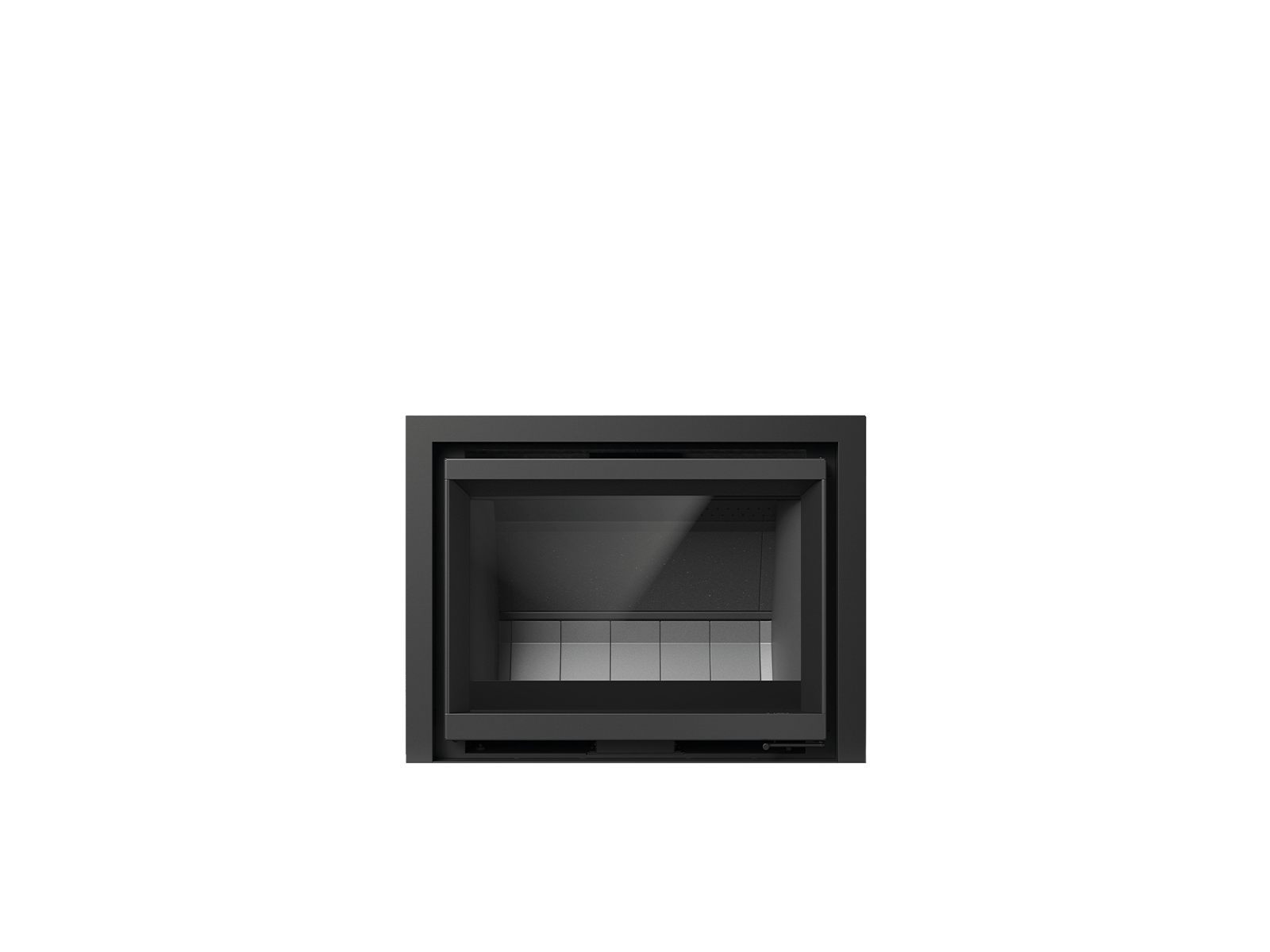
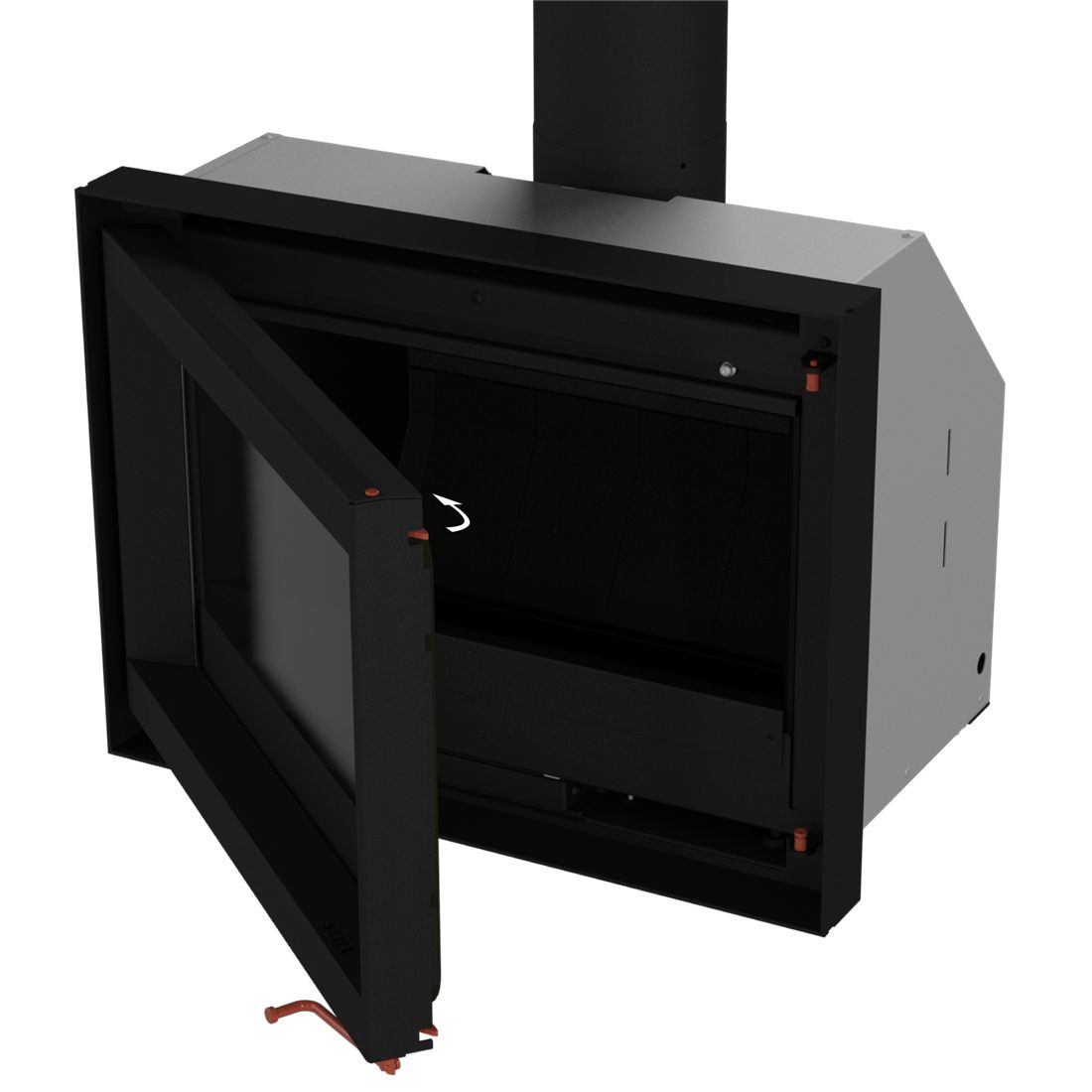
Everything else is aimed at making it easy to live with. The lightweight support casing comes apart from the heavier cast-iron combustion chamber, which makes the insert far simpler to set into an old opening than its weight suggests. The flue can leave vertically or at an angle, useful when the chimney sits off to one side. Two metal plates at the base of the chamber expand at different rates as it warms and steer the air for a cold start. And the air is already set: the intake is calibrated at the factory, so there is no damper to nurse. You light the fire and let it be.
There are three sizes, named by the opening they suit in centimetres: the 66/50, the 76/55 and the 76/60. Stûv rates them to warm roughly 1,000, 1,300 and 1,400 square feet, with EPA efficiencies of 67, 68 and 69 percent, and publishes particulate emissions of 1.8, 1.9 and 1.2 grams an hour. It is a gentle heater by design: right for a smaller room, or for a house that is already well heated, where a wood fire is there for the evening and not for the whole winter.
A steel finishing frame closes the gap between the insert and the old masonry: a thin-edge frame for a near-frameless look, picture frames of 2, 4 or 6 inches for wider openings, or a three- or four-sided custom frame cut to the hearth.
It is also certified, and that is not a footnote. Stûv lists the 6-in as certified UL, ULC, EPA and CSA B415.1-22, which is what Metro Vancouver’s Bylaw 1303 asks of a wood-burning appliance, at between 1.2 and 1.9 grams an hour of fine particulate depending on size. Inside the Urban Containment Boundary it must still be registered, and since 15 September 2025 an unregistered appliance may not be operated at all.
At Maxwell Fireplace we measure the opening, inspect the chimney, line it to suit the insert, prepare the permit and the registration paperwork, and set the insert with our own crew. We WETT-certify the wood-burning appliances we install. For a larger opening there is the Stûv 16-In, the same idea at a bigger scale.