Stûv 16 Wood Stove — Concealed by Design
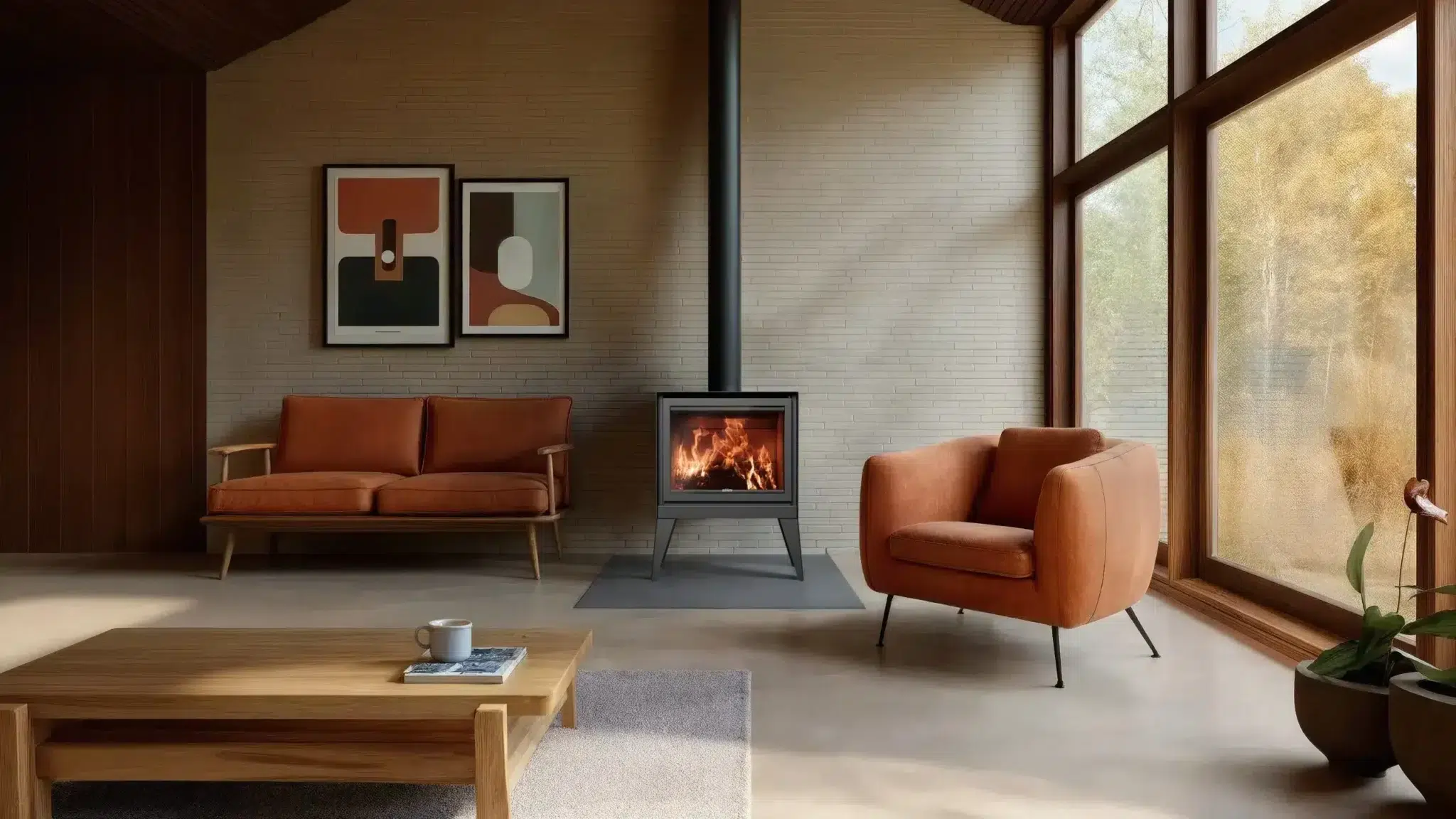
There is a particular Belgian discipline at work in a Stûv. The Stûv 16 family — three configurations of one careful idea — is what happens when a brand decides that engineering should be felt, not seen. Handles are absent. Convection grills are nowhere to be found. The hinged door is opened with a small removable key, kept somewhere quiet, returned when the door closes. What's left is the fire, the form, and almost nothing else.
All the cleverness is still there — Stûv simply refuses to let it interrupt the room. Heat doesn't escape through visible vents; it slips out through an engineered gap between the combustion chamber and the outer envelope of the stove. The mechanisms are ingenious. The point is that you'll never have to think about them.
Operating one is even simpler. Light the logs. That's it. The Stûv 16's single burn rate (SBR) automatic control manages combustion on its own — no air damper to fiddle with, no learning curve, no second-guessing. You strike the match and the stove takes over, burning the wood the way the wood was meant to burn: cleanly, efficiently, and with no environmental compromise.
It comes in three forms, each a different conversation with the room. The Stûv 16 Cube is the purest expression — a self-contained block of fire. The 16H sits on a steel base with integrated log storage built right into the design. The 16V rises on a podium, lifted off the floor like sculpture. Pick the one that suits the geometry of your space; the fire inside is identical in each.
Within those three forms, three sizes, named by their width in centimetres, so the family scales to whatever room you're working with. The 16-58 takes a 17-inch log and warms up to roughly 1,400 square feet: a reading nook. The 16-68 takes a 21-inch log and about 1,650: a great room. The 16-78 takes a 25-inch log and about 2,100: a cabin loft above the trees.
The same fire also comes built in. For an existing masonry fireplace there is the Stûv 16-In wood insert; for a new wall, the zero-clearance Stûv 16-Z.
Stoves this disciplined deserve to be installed with the same kind of care. At Maxwell Fireplace we treat a Stûv 16 as a Creative FireSpace™ in miniature — every detail, from the hearth pad to the flue routing, considered in advance and finished in-house. One conversation, one team, one quiet stove that lasts a generation.
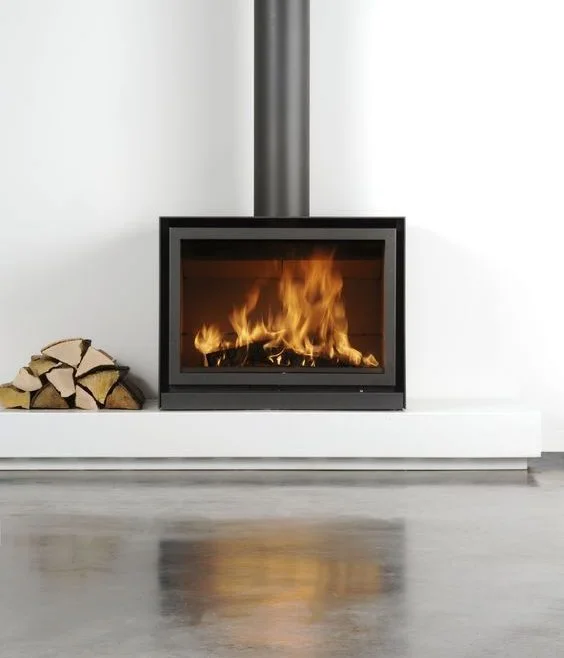
Stûv 16 CubeA self-contained block of fire.
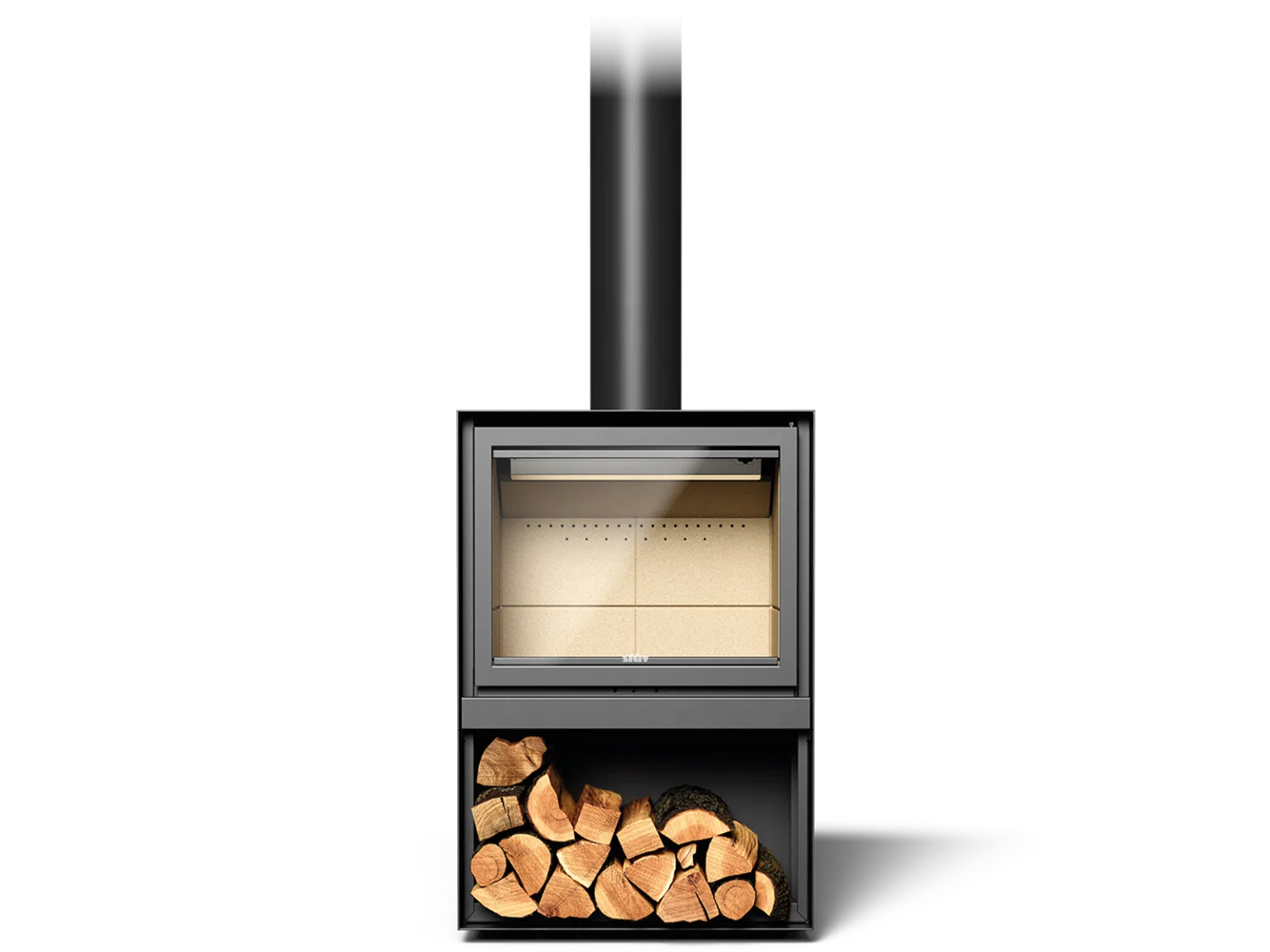
Stûv 16HOn an H-base with log storage built in.
Stûv 16VLifted off the floor on legs.
Fire in its purest form.
Questions people tend to ask
Is the Stûv 16 certified for installation in Metro Vancouver?
Certification runs model-by-model across the family, so we check the exact form and size you are considering against CSA B415.1 or the EPA 2015 standard, and against Metro Vancouver’s Bylaw 1303, before anything is ordered. It is the first thing we look at on any wood-burning project — it is the one question that can stop a plan outright, and it is far better answered in week one than in week six.
Does a wood stove have to be registered here?
Yes, if it sits inside the Urban Containment Boundary. Since 15 September 2025 an unregistered eligible appliance may not be operated at all. The registration is the homeowner’s to hold, along with a best-burning-practices declaration renewed every three years, and we prepare that alongside the permit rather than leaving it to be discovered later.
What is the difference between the Cube, the 16H and the 16V?
Three forms of one idea, and the fire inside is identical in each. The Cube is the purest expression — a self-contained block of fire. The 16H sits on a steel base with log storage built into the design. The 16V rises on a podium, lifted off the floor like sculpture. Pick the one that suits the geometry of the room; you are choosing a silhouette, not a different stove.
Is there an air control to learn?
There is nothing to learn. Light the logs and stop. The single burn rate (SBR) automatic control manages combustion on its own — no damper to fiddle with, no second-guessing, no kneeling in front of it mid-evening. You strike the match and the stove takes over.
Where are the vents? I can’t see any.
There aren’t any to see, and that is deliberate. Heat leaves through an engineered gap between the combustion chamber and the outer envelope of the stove rather than through visible convection grills. All the cleverness is still there; Stûv simply refuse to let it interrupt the room.
How do you open the door with no handle on it?
With a small removable key, kept somewhere quiet and returned when the door closes. It is the same discipline as the missing grills — the mechanism exists, it just declines to hang off the front of the stove for the other twenty-three hours of the day.
What sizes does it come in: the 16-58, 16-68 or 16-78?
All three, in each of the three forms, so there is a 16 Cube 68 and a 16-V 78 and every combination between. The number is the width in centimetres. The 16-58 takes a 17-inch log and Stûv rates it for about 1,400 square feet; the 16-68 takes a 21-inch log and about 1,650; the 16-78 takes a 25-inch log and about 2,100. Those are generous figures, though. Which one a room actually wants depends on its volume and how well sealed it is, and that is a conversation worth having before you choose on looks alone.
How much does a Stûv 16 cost?
The stove is only part of the figure. The form and size you choose matter, but so do the hearth pad, the flue and how it has to travel through the house, the permit, and how the stove is finished into the room. Two homes with the same 16 Cube can arrive at quite different numbers. The honest way to a figure is a conversation and a look at the room. Call us, send a photograph and a rough floor plan, or visit the showroom, and we will tell you plainly what yours involves.
What does installing a Stûv 16 involve?
We confirm the certification and the clearances for your room, then plan the flue route through the ceiling or the wall, prepare the permit and the Metro Vancouver registration, set the hearth pad, and install the stove and chimney. Every step is handled in-house by our own team, down to how the flue meets the ceiling, because on a stove this spare, those are the details you will see every day.
More from Stûv
This is one of the Stûv stoves, inserts and fireplaces we carry and install at Maxwell Fireplace in North Vancouver. See the whole Stûv range, or read on.
- Stûv 6-H — the small, essential wood stove
- Stûv 30 Compact — the stove that turns to face the room
- Stûv 16-In — the wood insert for the masonry fireplace you already have
- Stûv 6-in — the small wood insert for a small masonry hearth
- Stûv 21 — the guillotine-glass wood fireplace, built in or Clad
Planning for a Whistler home? Fireplaces for Whistler homes.
A fireplace is only half of it. The other half is who places it.
Maxwell Fireplace is North Vancouver’s Creative FireSpaces™ — and we stay involved in every part of the job. The fireplace itself is ours from the first conversation to the final flame: design and placement, permitting, delivery, installation, and the care that comes after. When the work runs to a surround, a mantel, tile or millwork, we plan it with the trades doing it — yours, or ones we bring in — so the fire and the wall are drawn as one thing rather than two. One point of contact, and nothing lost in the gap between trades.
It’s exactly why a Stûv 16 belongs with us. A stove this disciplined deserves an installation to match — the hearth pad, the clearances and the flue routing settled in advance rather than solved on the day, so that nothing visible interrupts the room — and that is the difference between an appliance and a centrepiece. We serve homeowners and contractors across Greater Vancouver, the North Shore, and the Sea to Sky Corridor — Squamish to Whistler and Pemberton, with Whistler a regular destination for us — and we’d love to show you what’s possible for your room.